
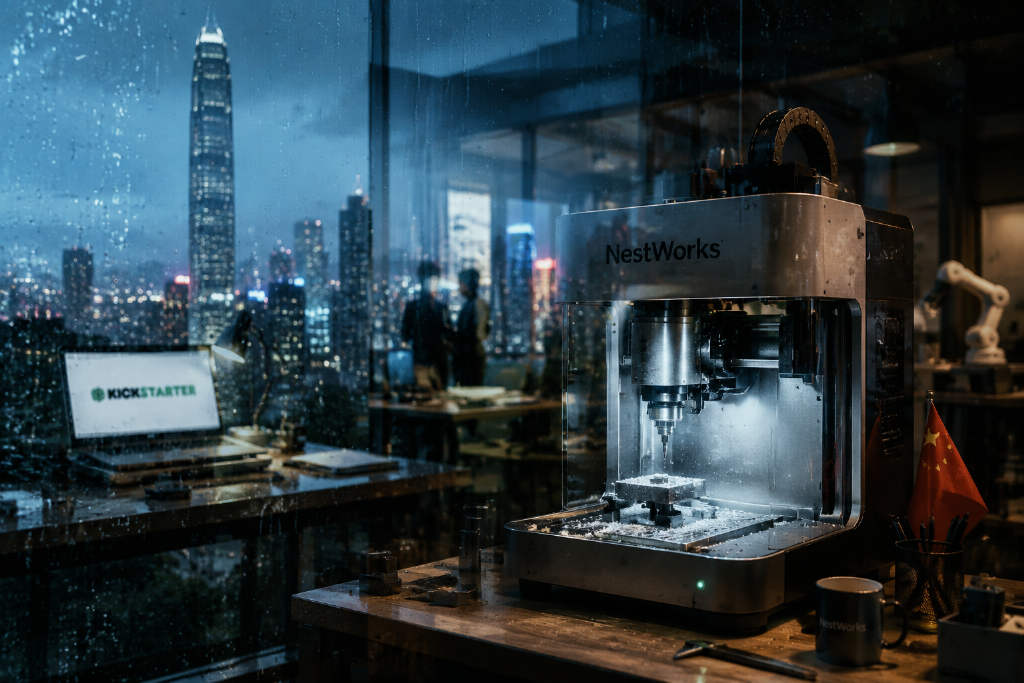
Desktop CNC brand NestWorks has completed angel and angel-plus funding totaling several hundred million yuan, with Sequoia China, Lanchi Ventures, CDH Capital, Vertex Ventures and Unity Ventures participating. Gaohu Capital served as the exclusive financial adviser for follow-on fundraising.
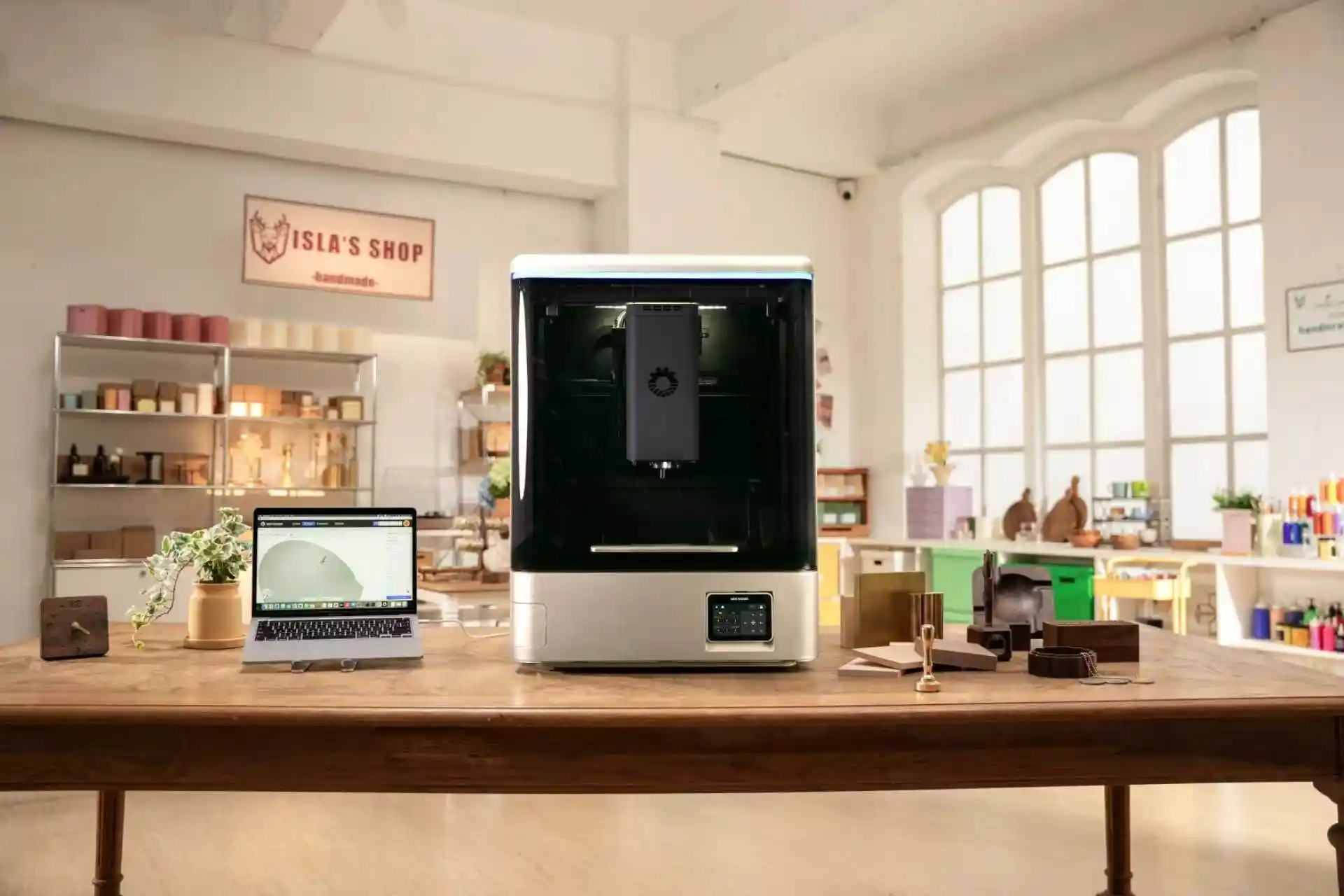
The brand was incubated within Elephant Robotics and was formally established in November 2025. Elephant Robotics, a robotics company with a history of more than 10 years, previously launched products including the myCobot desktop collaborative robotic arm and the metaCat bionic cat. NestWorks said its first product raised more than $13 million after going live on Kickstarter.
A desktop CNC product born from internal demand
Co-founder Song Junyi said the team entered CNC because it was itself the target user. Song started his first venture while studying at the University of Melbourne, then returned to China and co-founded Elephant Robotics with fellow co-founder Wu Qilin. The two went through the full cycle from research and development to mass production and delivery of more than 100,000 robots.
Inside Elephant Robotics, the R&D team had long needed to machine large numbers of structural parts for robotic arms every year. Sending parts to outside factories created a familiar loop: engineers produced drawings, waited a week for factory scheduling and samples, assembled the parts, found issues, revised the drawings, and then waited another week for the next run.
That routine pushed the team toward a simple idea: place a machine in the office so structural engineers could get physical parts soon after finishing a design, without leaving the workplace or waiting for factory slots. NestWorks said that recurring pain point shaped the feature definition of its first product, the C500.
C500: industrial machining ability in a desktop format
NestWorks said the machine had to meet two conditions at the same time. It needed real machining capability, including the ability to cut aluminum alloy, stainless steel, brass and different engineering plastics. It also needed to be approachable enough for engineers familiar with 3D printers, but without formal CNC training, to operate directly.
On the hardware side, the C500 initially comes with an 800W spindle and a top speed of 18,000 RPM. The company also introduced MQL, or minimum quantity lubrication, in a desktop CNC setup for the first time, according to the report. Beyond wood and plastics, that power configuration allows the machine to cut metal materials including aluminum alloy, brass and stainless steel.
The product also includes automatic tool changing and an intelligent tool management system. When a complex part requires multiple tools, the machine can switch tools on its own and match the corresponding machining parameters for each tool, reducing the need for manual setup.
NestWorks said fitting that capability into a desktop-sized machine required extensive trade-offs and coordination across structure, heat dissipation and motion control.
The company framed the product not as a shrunken industrial machine tool, but as an attempt to extract industrial machining capability and lower the threshold for use, so ordinary engineers can produce metal prototypes at their own workstations.
Software and AI take over experience-heavy decisions
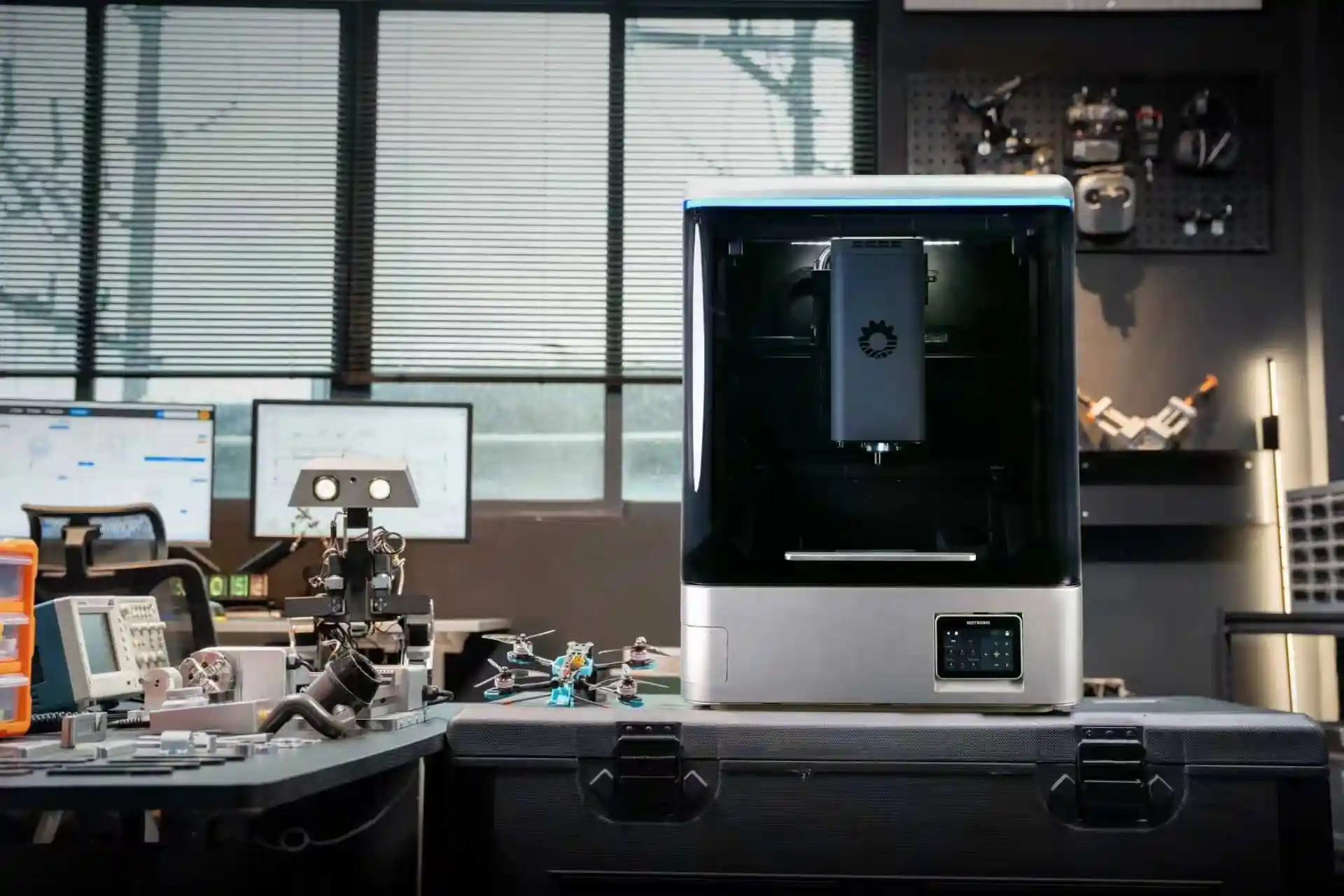
NestWorks said the bigger difference between the C500 and conventional compact CNC machines lies in how the product is used. Traditional CNC workflows rely heavily on tacit knowledge held by specialists. Tool selection, toolpath planning and cutting parameter settings often depend on personal experience, with little standardized, reusable process logic.
That is why the company sees one core challenge in the CNC ecosystem as turning implicit manufacturing know-how into digital systems. In the C500, software and AI algorithms take on that role.
According to the report, the software stack already connects the full chain from model import to machine execution. Model analysis, CAM process generation, toolpath planning and machining simulation are handled inside one closed loop. Users do not need to become CNC process experts; they only need to define the part they want and send instructions to the machine.
As usage accumulates, the system can also retain drawings, machining results and process data, which NestWorks says can help improve machining efficiency and finished-part quality over time.
Why the ecosystem challenge is about manufacturing knowledge
NestWorks said the test for any professional tool trying to reach a broader market is ecosystem building. In 3D printing, community sharing has already shown commercial value: users can find a model in a community and send it directly to a machine for printing. The report argues that this approach cannot be copied directly into CNC.
The reason is that the unit of sharing is different. In 3D printing, the model file is the core asset, and under the same machine and material conditions, output tends to be relatively stable. CNC is different. Drawings are more private, and the process is affected by many variables. Even with the exact same part model, changing the tool, feed parameters or fixturing plan can produce a very different physical result.
That means a CNC community cannot rely only on the circulation of non-private design drawings. It also has to accumulate a full layer of manufacturing knowledge, including material selection, tool matching, machining parameters and practical process experience.
NestWorks said the value of a CNC community at this stage is not only to share what to make, but also to share how to manufacture it, with the goal of building a new ecosystem around digital manufacturing.
Starting with small business users, then expanding outward
The desktop CNC sector has long lacked a settled answer on whether the first core users are businesses or consumers. NestWorks said that, in the near term, the clearest demand and strongest willingness to pay still come from engineers, designers, research institutions and small-batch production businesses.
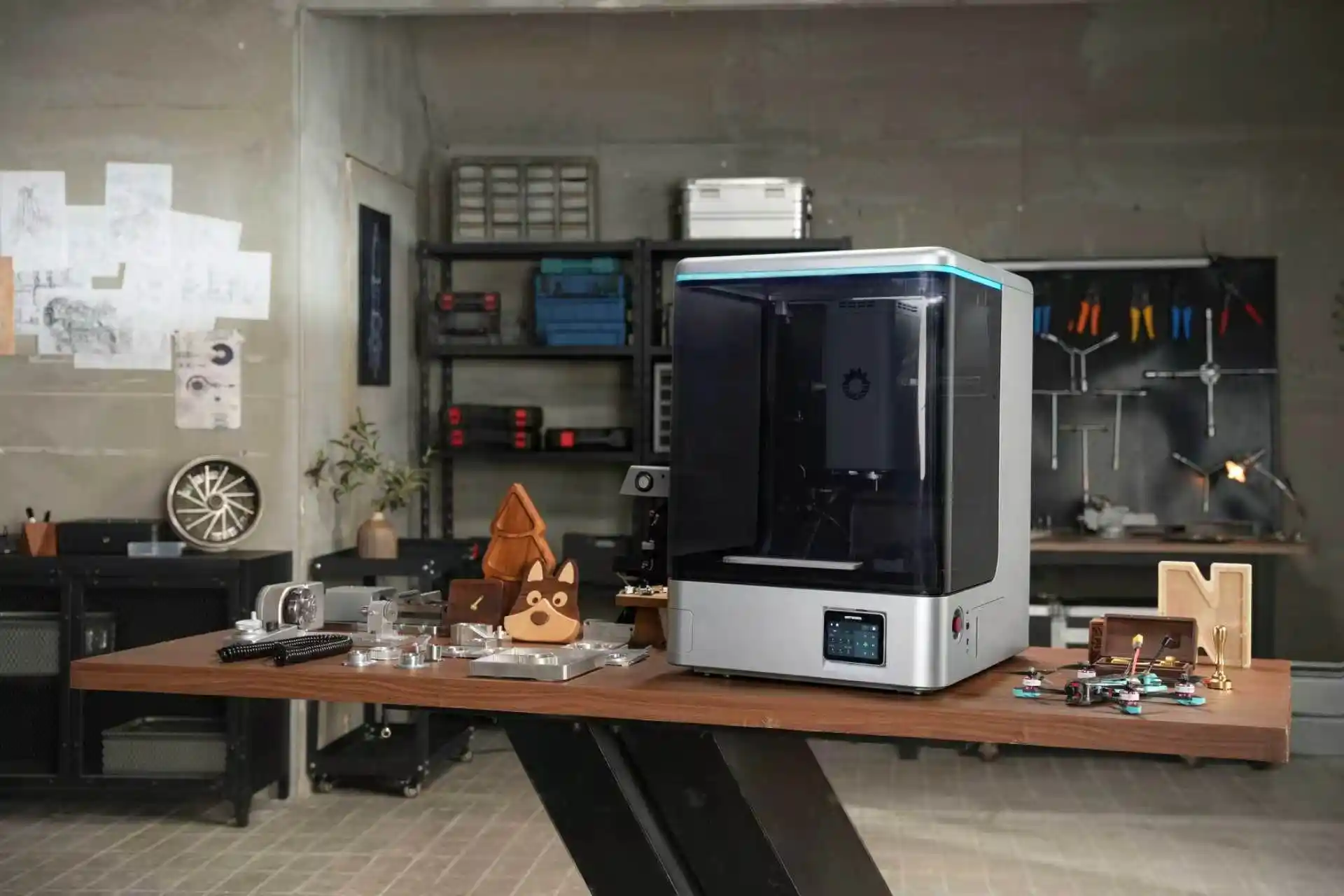
Those users buy equipment to solve real problems in product verification and rapid iteration, the company said. They place high demands on machining capability and reliability, are more willing to try new tools, and are more likely to share their experience. Their price sensitivity, by comparison, is lower. Sole proprietors, small studios and research institutions make up a broader middle layer of the market.
As prices come down, software gets easier to use and content ecosystems become richer, NestWorks expects the user boundary to keep moving outward.
AI is part of that picture. The company pointed to stronger AI 3D generation, AI CAD and natural-language modeling tools, saying the threshold for turning ideas into manufacturable digital models is dropping.
NestWorks said a large amount of creative demand could be released once the design barrier falls sharply, which would then drive demand to turn digital ideas into physical objects. In that view, business users and consumer users are not opposing camps. They sit on the same continuum: business users provide early product validation and an initial revenue base, while consumer-side growth may appear later as software ease of use improves and pricing declines.
Physical limits still shape the market path
NestWorks also acknowledged that desktop CNC still faces structural physical constraints on its way toward a broader market. Subtractive manufacturing naturally creates dust, noise and chips, which puts clear demands on the operating environment. A machine weighing more than 100 kg is also far less portable than a 3D printer.
Because of those characteristics, the company said desktop CNC is unlikely, at least for now, to follow the same path as 3D printers moving directly into the home. A more realistic route is gradual expansion from professional settings outward: engineers’ workbenches, school laboratories, maker spaces, small studios, and then individuals with clear manufacturing needs.
NestWorks described that as a step-by-step diffusion path rather than a consumer-electronics-style breakout curve.
Long-term ambition goes beyond a single machine
The company’s longer-term plan is not limited to one CNC product. NestWorks said it wants to build a full ecosystem around design, machining and manufacturing. The end goal, in its words, is not to put a CNC machine in every person’s hands, but to make manufacturing tools accessible enough that people can turn ideas into physical objects when they need to.
NestWorks added that the process will take time and continued capital support. It believes building a new category worth tens of billions from zero to one depends on repeatedly turning technical capability into products and then using those products to reach product-market fit. In its view, the teams that last will be the ones with both capability and patience.