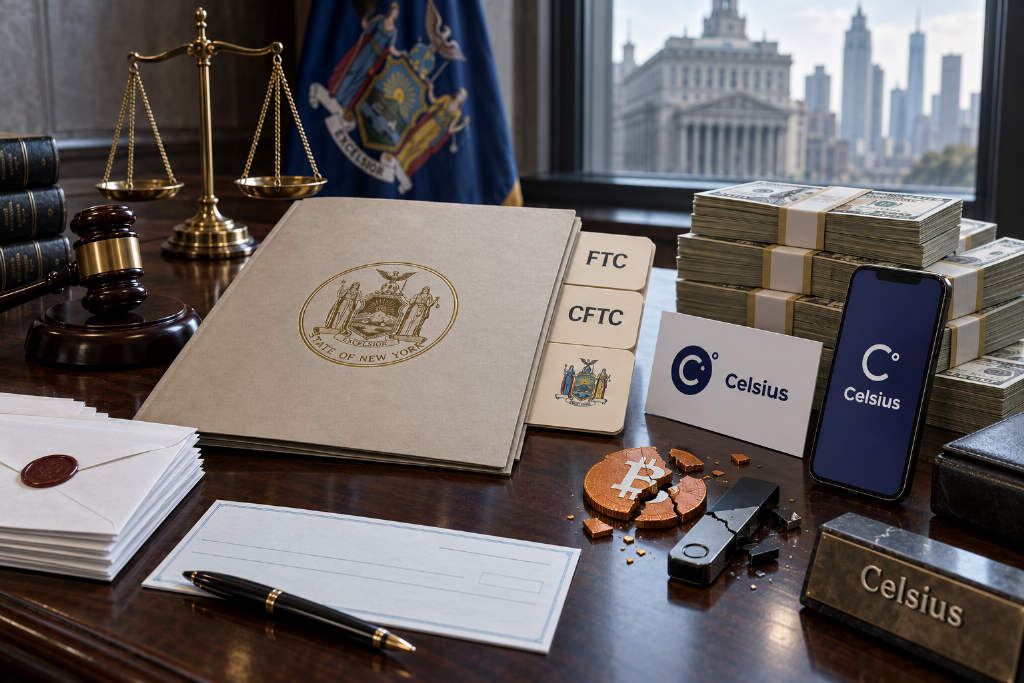
New York Attorney General Letitia James said on Oct. 9 that her office had secured a conditional settlement tied to fraud allegations against former Celsius CEO Alex Mashinsky. Under the agreement, Mashinsky could be required to pay as much as $35 million in restitution and would be permanently barred from the securities, commodities, and cryptocurrency industries. The announcement adds to earlier actions taken by U.S. regulators, as both the Federal Trade Commission and the Commodity Futures Trading Commission had already imposed industry bans on Mashinsky. He is currently serving a 12-year prison sentence. Separately, Celsius creditors have received more than $3.4 billion in recoveries through the company’s bankruptcy process. The case marks another regulatory development tied to the collapse of the crypto lender and its aftermath for investors and creditors.
New York Attorney General Letitia James said Friday, Oct. 9, that her office had reached a settlement with former Celsius CEO Alex Mashinsky over allegations that he defrauded investors.
Under the settlement, Mashinsky faces conditional restitution of up to $35 million and would be permanently barred from the securities, commodities, and cryptocurrency industries.
The move follows earlier action by U.S. regulators. The Federal Trade Commission and the Commodity Futures Trading Commission had already imposed industry bans on Mashinsky. He is currently serving a 12-year prison sentence.
Separately, Celsius creditors have recovered more than $3.4 billion through the company’s bankruptcy proceedings.
This article was originally published by Bit.Fan. For more cryptocurrency news and market insights, visit www.bit.fan. Disclaimer:
The market information, project data, and third-party content displayed on this platform are for industry information sharing only and do not constitute any form of investment advice or return commitment.
Cryptocurrency trading carries high risks. Users should fully assess their risk tolerance and make independent decisions. All profits, losses, and legal responsibilities are borne by the users themselves.