
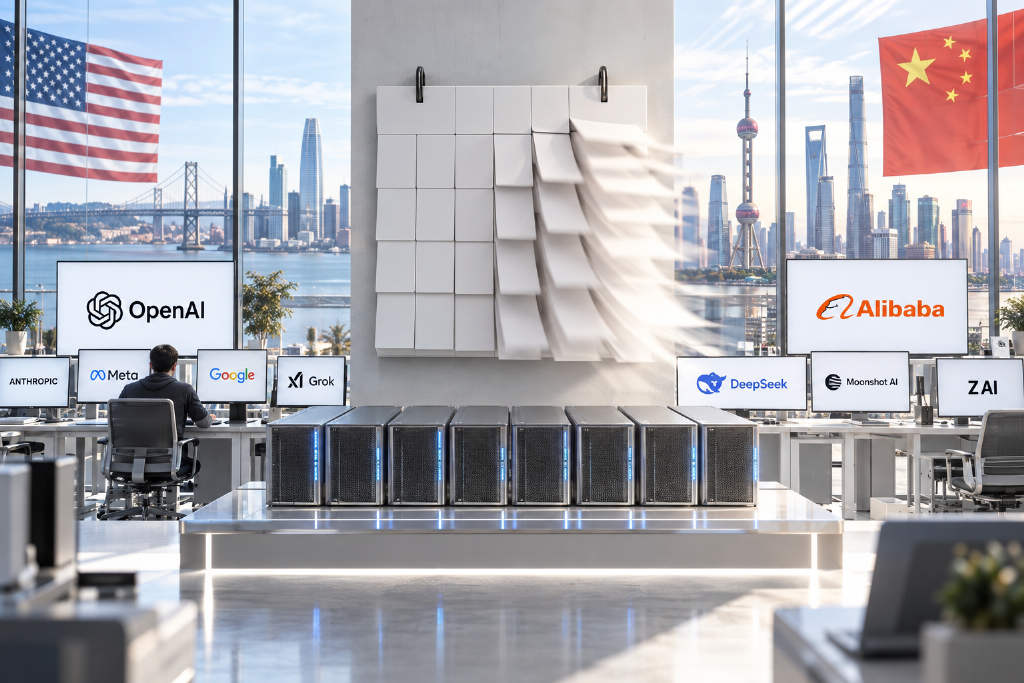
According to ChainCatcher, citing Nikkei, the average release cycle for new artificial intelligence models in China and the United States has shortened to 44 days since April 2026, roughly one-third of the previous pace.
Nikkei tracked five U.S. companies, including Anthropic and OpenAI, and four Chinese companies, including Alibaba Group and Moonshot AI. It said the average interval between releases was 125 days from January 2023 to March 2026. From April to September 2026, that figure dropped to 44 days.
U.S. companies stepped up update frequency
In September, OpenAI and Anthropic each released their latest models. Meta has upgraded Muse Spark every month since July. Google released an updated version of Gemini on Sept. 2 after a three-week turnaround. Through August, Grok had launched new models for three consecutive months.
Chinese developers also increased the pace
On the China side, DeepSeek has updated monthly since July. After August, Alibaba and Z.AI, the company behind the GLM series, also released new models.
AI took on a larger role in development work
Anthropic said on Sept. 17 that, as of August, AI held the leading role in 26% of its development work, while more than 90% of that work involved AI participation. In February this year, the share led by AI was close to zero.
OpenAI said that in August, AI agents logged 3.1 times the runtime of human researchers. Ordinary researchers used about $600 per day in AI agents on average, while the top 10% spent more than $7,000 per day. The company also said the amount of code written through programming in August reached seven times its 2025 average.