
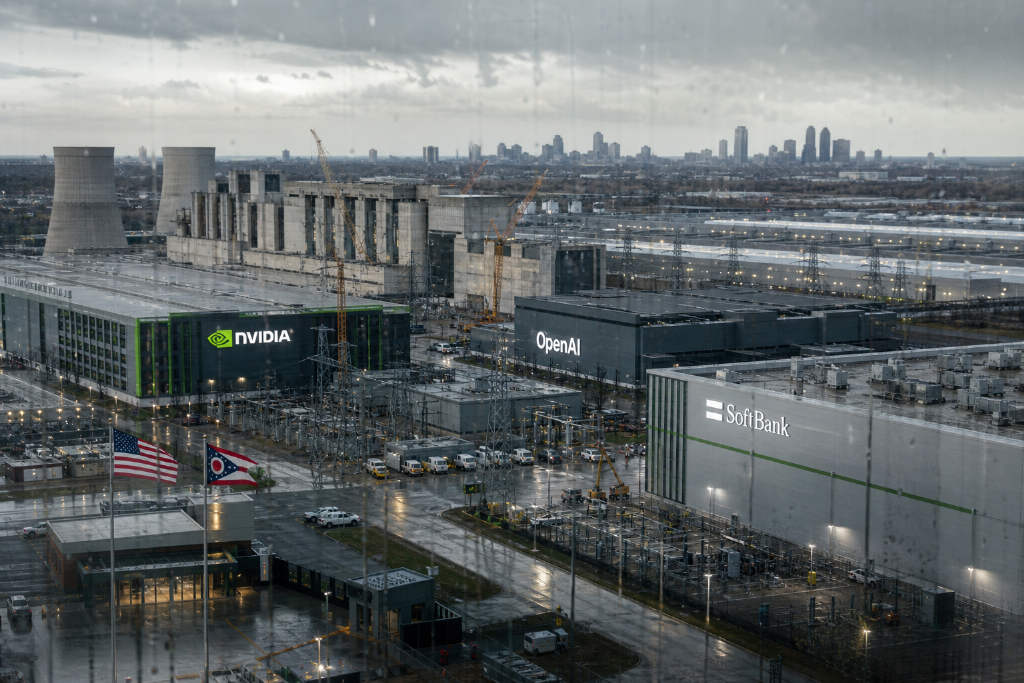
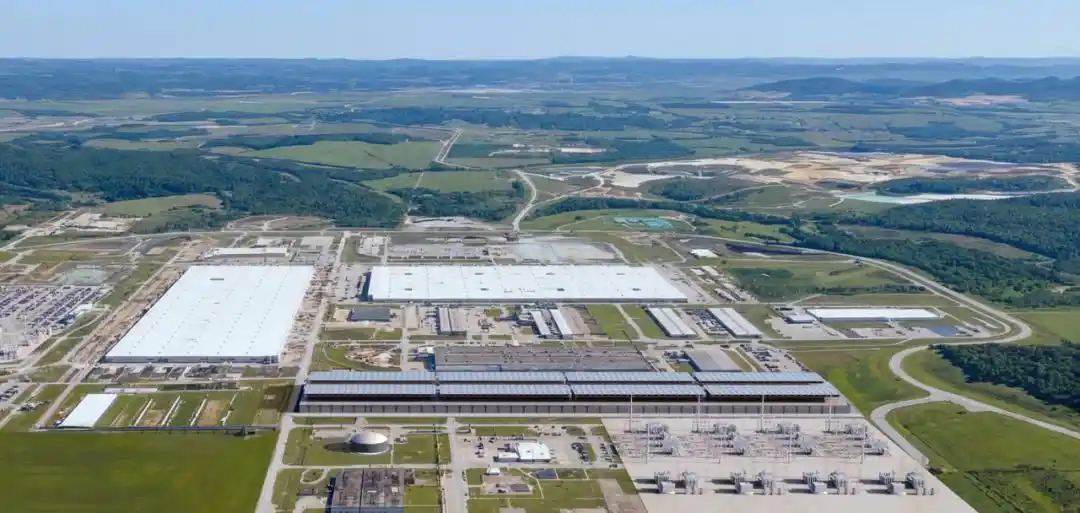
MarsBit, citing a WeChat article from New Intelligence with byline ASI Qishilu, reported that Nvidia, OpenAI and SoftBank are planning to redevelop a former uranium enrichment site in Ohio into a massive AI computing campus. The land had been idle for more than half a century after its Cold War-era role in nuclear weapons production, according to the article.
The report describes the site as roughly equal to 4.5 Central Parks and large enough to hold nearly 590 supercarriers. It says the companies want to turn that property into the world’s largest AI super factory.
An 8 GW power target sets the scale
The article says the project’s ultimate power plan calls for 8 gigawatts. At that level, it would require output on the scale of several large nuclear power plants, enough to supply electricity to millions of homes, and close to one-seventh of all data-center power consumption worldwide last year, based on the comparison in the source text.
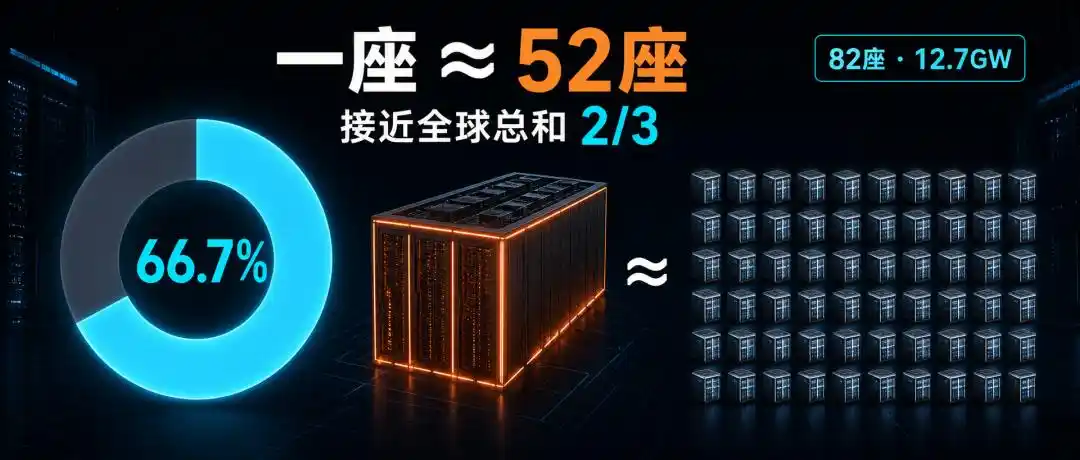
For context, the article identifies xAI’s Colossus 2 as the largest existing AI compute center and says it is still below 1 GW. It also cites Epoch AI tracking that puts the combined infrastructure power of the world’s 82 largest dedicated AI data centers at about 12.7 GW.
Using that benchmark, the source says the Ohio project, once fully loaded, would amount to nearly two-thirds of the total capacity of those 82 facilities. On an average-size comparison, it would be equivalent to about 52 top-tier AI supercomputing centers.
The article also quotes OpenAI’s chief research officer as saying that 8 GW is “just the beginning” for AI.
Three-way structure: SoftBank builds, OpenAI leases, Nvidia backs
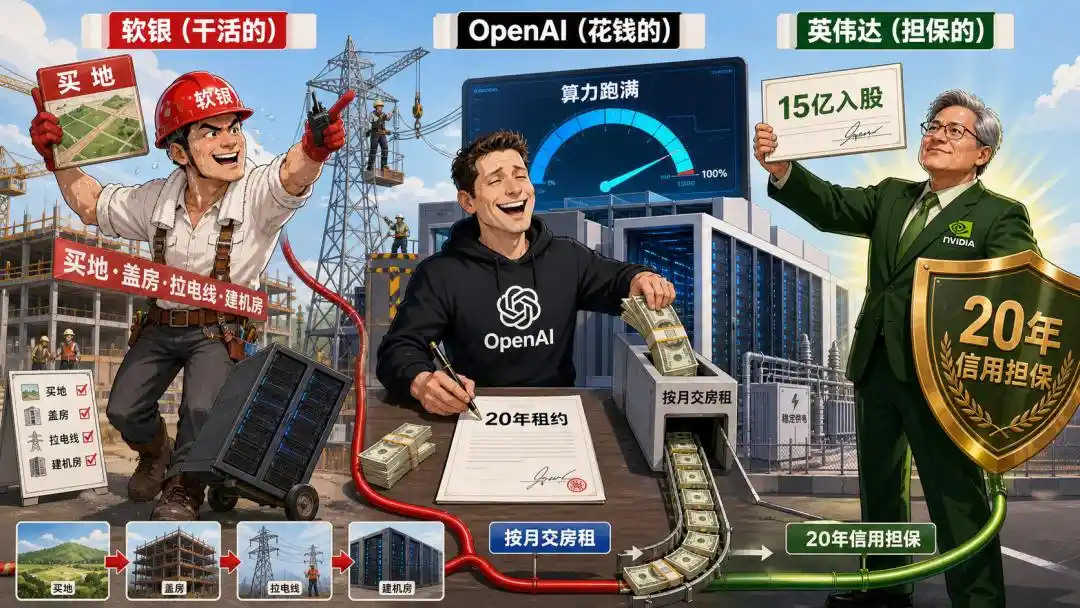
According to the report, Nvidia will invest $1.5 billion into a SoftBank-affiliated company and provide credit support for as long as 20 years.
OpenAI has signed a 20-year lease and will take the site’s full computing capacity, the article says. It also says OpenAI will provide up to $84 million in Codex credits to 844,000 students in Ohio.
SoftBank, meanwhile, has committed to bringing 1 GW of additional generation online and spending $4.2 billion to modernize the local power grid, according to the source.
- SoftBank: acquire land, build facilities, connect power and construct the data-center infrastructure
- OpenAI: commit to a long-term lease, pay rent and consume the compute output
- Nvidia: invest equity and stand behind the long-duration infrastructure financing
The article’s core argument: AI is running into land and power limits
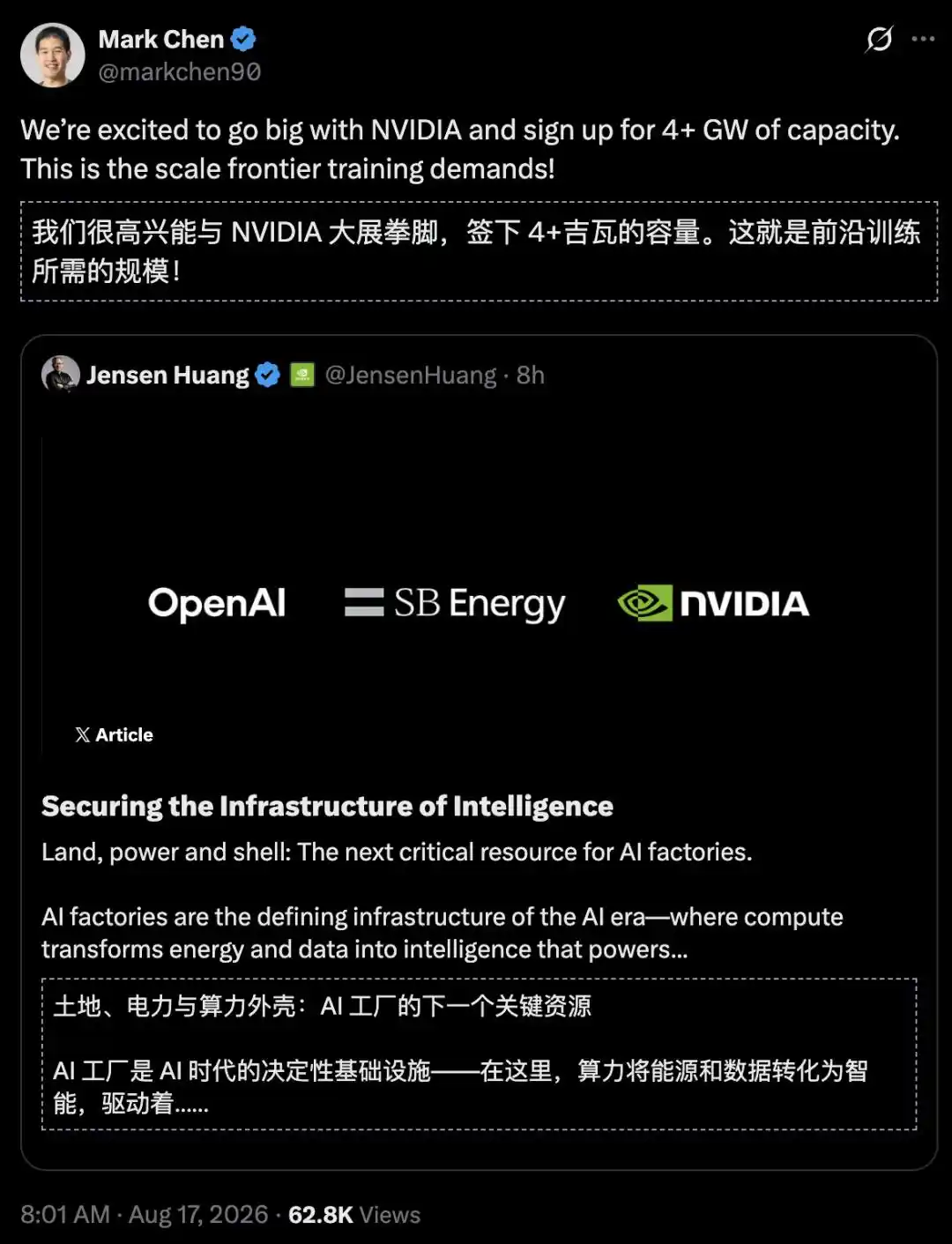
The source frames the transaction as evidence that AI’s next constraint is no longer only chip supply. It says Nvidia CEO Jensen Huang wrote in a blog post that a functioning AI factory needs three basic inputs in addition to advanced chips: land, electricity and buildings.
The article contrasts that with the focus of recent years, when industry attention was centered on TSMC capacity, memory supply and GPU output. Its point is that the bottleneck has shifted toward access to buildable sites, power connections and usable industrial space.
It also argues that newer AI companies can struggle to secure multi-decade energy and land commitments because those projects require long timelines and major upfront infrastructure spending.
Why the source sees Nvidia’s $1.5 billion move as strategic
The article says Nvidia is doing more than selling GPUs. In its reading, the company is applying the same locking strategy it used in the chip supply chain to land and electricity.
It quotes Huang as saying, “OpenAI pays its own rent. I’m not subsidizing a cent.” Based on that statement, the article argues that Nvidia is using a $1.5 billion investment and a 20-year credit guarantee to secure prime AI sites and power access ahead of rivals.
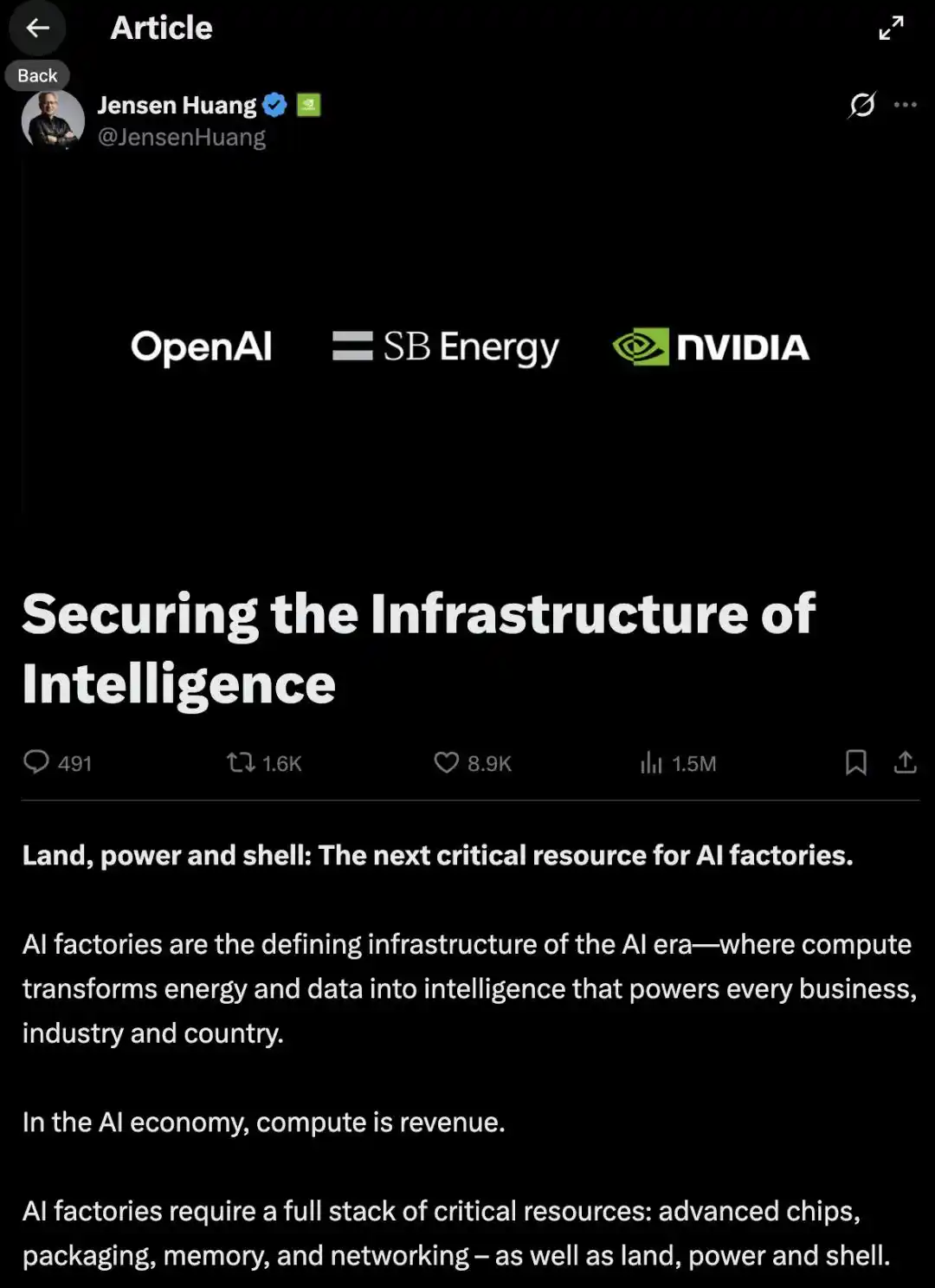
The source also says the project is set up so that only Nvidia chips are used there. It presents that as part of a broader infrastructure moat, where the advantage comes from controlling the real-world inputs needed to keep AI hardware running over long periods.
Revenue math cited in the article
The source then lays out a financial case based on figures it says were included in the announcement:
- The first phase is planned at 4.25 GW
- Each generation of systems can hold about 1.5 million top-end GPUs
- Each hardware generation could produce around $150 billion to $200 billion in sales
- OpenAI’s existing and planned orders already account for 12 GW of Nvidia compute demand, with room to expand to 16 GW
From those numbers, the article concludes that OpenAI alone could represent a $600 billion revenue opportunity for Nvidia by 2030.
It also stresses the mismatch in asset lives: buildings and grid infrastructure can last 20 years, while chips are replaced every two to three years. In that framework, land, transmission lines and data halls stay in place while the GPUs inside them can be refreshed repeatedly, generating new hardware sales each cycle.
Reuse and re-leasing are part of the logic described
The article addresses the risk of a long lease by arguing that Nvidia has a fallback if OpenAI ever walks away. Because CUDA is widely used across the industry, it says the facilities, power connections and installed GPUs could be leased to cloud providers, large companies or startups.
That is how the source explains the resilience of the structure: Nvidia benefits if the original tenant stays, and still has options if the capacity is reassigned elsewhere.
From chip race to competition over land and energy
The article closes by arguing that the AI race is widening from nanometer-scale chip manufacturing to square-kilometer-scale competition for land and power. In that telling, the path from semiconductor plants to abandoned nuclear sites reflects a broader shift in what determines AI build-out speed.
It says Huang is using $1.5 billion to influence the next 20 years of AI infrastructure, and that building facilities, securing power and controlling sites are becoming central parts of the competitive playbook.
The source for this report is the MarsBit article, which states that the original piece came from the WeChat account New Intelligence and was written by ASI Qishilu.