
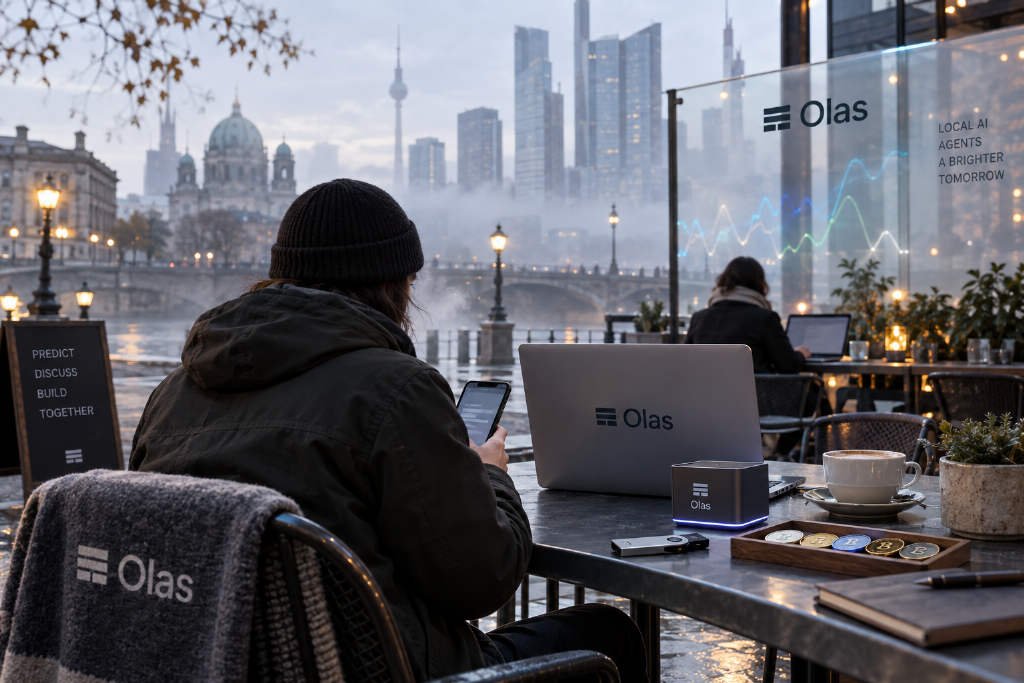
Olas, formerly Autonolas, is positioning its self-custodial AI agents as a tool for prediction market users who are just getting started. In a conversation with Laura, co-founder David Minarsch said the project lets users spin up customizable local agents that can work with specialized agents to improve how they trade in prediction markets.
Local agents and pay-per-request model access
Minarsch said Olas users can run local agents and connect them to specialized agents, while also tapping frontier models from labs such as Anthropic and OpenAI on a pay-per-request basis. He described that setup as a way to make more advanced agent-based trading available to newcomers rather than only to highly technical users.
He also argued that asking a model for a prediction and placing a trade based on that answer alone is a naive way to trade. The product, as described in the discussion, is built around a more modular agent structure instead of a one-shot prompt-and-trade workflow.
More than 14 million agent-to-agent transactions
According to Minarsch, Olas has facilitated more than 14 million transactions between AI agents. The discussion also focused on ownership. He said Olas users actually own what they use within the system and can decide what they want to share and what they want to pay for.
For settlement, Olas uses USDC and xDAI onchain. That puts the final settlement layer on blockchain rails rather than inside a closed internal ledger.
Privacy concerns and dependence on remote AI models
The conversation moved into privacy concerns around frontier models during the dispute over whether OpenAI stole the work of a researcher tied to a Navier-Stokes proof. Minarsch teased an Olas solution, though the summary did not include further details.
Part of the Olas model, as presented in the episode, is that users choose what information they share and what requests they want to pay for. The team is also preparing an update on reducing dependence on remote AI models.
Project roots, Connect tool, and upcoming launch plans
Minarsch said Olas traces its roots to Fetch.ai in 2019, and that the launch of ChatGPT changed everything. He also highlighted Olas Connect, a tool launched a couple of months ago that gives a local Claude Code or Codex session its own wallet.
That setup allows developers to build custom agents that trade on Polymarket without using Pearl’s default app. Minarsch said Olas plans to launch on Robinhood in the coming weeks with new DeFi-focused products. He also teased a blog update in the next one to two weeks covering efforts to reduce reliance on remote AI models.