
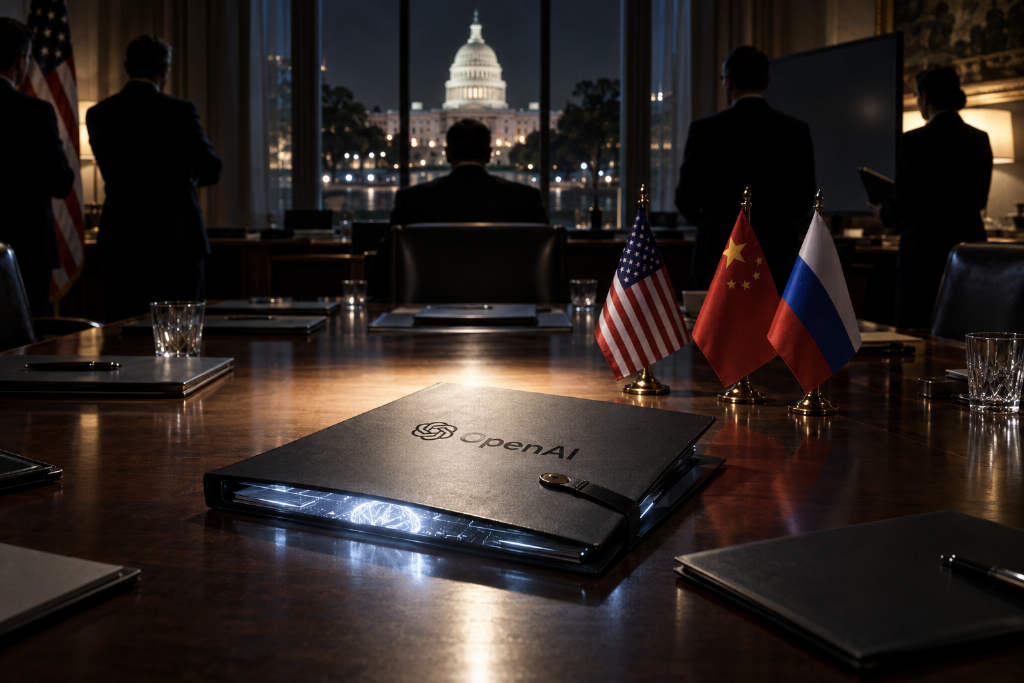
Kevin Roose, a New York Times technology columnist, writes in his new book The AGI Chronicles that OpenAI co-founders Greg Brockman and Ilya Sutskever discussed an internal proposal in 2017 that would have allowed governments including the United States, China and Russia to bid for rights to OpenAI’s future AGI technology.
The passage was published as a book excerpt in The Atlantic on Sept. 29. OpenAI denied that it ever considered selling AGI to China or Russia.
From an international alliance idea to a fundraising strategy
According to The Next Web’s summary of the excerpt, the idea emerged when Elon Musk was gradually stepping away and OpenAI was in need of new funding. It began as a concept for an international alliance focused on managing AGI risk and sharing AGI’s benefits. By the time Brockman and Sutskever presented it to employees that winter, though, it had become a fundraising strategy internally referred to as the "countries plan."
The book cites two people familiar with the pair’s thinking as saying Brockman and Sutskever expected governments would eventually take the technology from any company that developed AGI. On that view, the book says, they believed it made sense to sell first while OpenAI still needed capital.
Amodei objected in a 2017 email
Dario Amodei, who was OpenAI’s vice president of research at the time, sent an email in December 2017 to Brockman, Sutskever and others to oppose the proposal. He wrote: "I think this plan would increase rather than decrease the arms race, could lead to human rights abuses ... and would also damage OpenAI’s moral legitimacy."
The book says the plan was later shelved after OpenAI secured investment from Microsoft. An OpenAI spokesperson told The Atlantic that the company had "briefly considered making OpenAI an international cooperative venture," but "did not consider selling AGI to China or Russia."
Roose ties the dispute to Amodei’s later departure
Roose writes that the disagreement was one reason Amodei later left OpenAI. The book points to other disputes as well, including who should get access to GPT-3. Citing two unnamed sources, it says Sam Altman proposed in 2020 that rapper Kanye West get early access to a private GPT-3 beta, but then-policy chief Jack Clark blocked the idea. The book also says there were disagreements over safety provisions tied to Microsoft’s $1 billion investment.
OpenAI announced Amodei’s departure on Dec. 29, 2020. He later co-founded Anthropic with his sister, Daniela Amodei, and other former OpenAI researchers.
Anonymous claims in the book describe deeper personal rifts
The book also cites unnamed sources who say the Amodei siblings still strongly dislike Altman and Brockman. According to those anonymous accounts, Dario Amodei at one point described Altman and OpenAI internally as "evil." ABMedia noted that this part of the account came from anonymous sourcing in the book.