
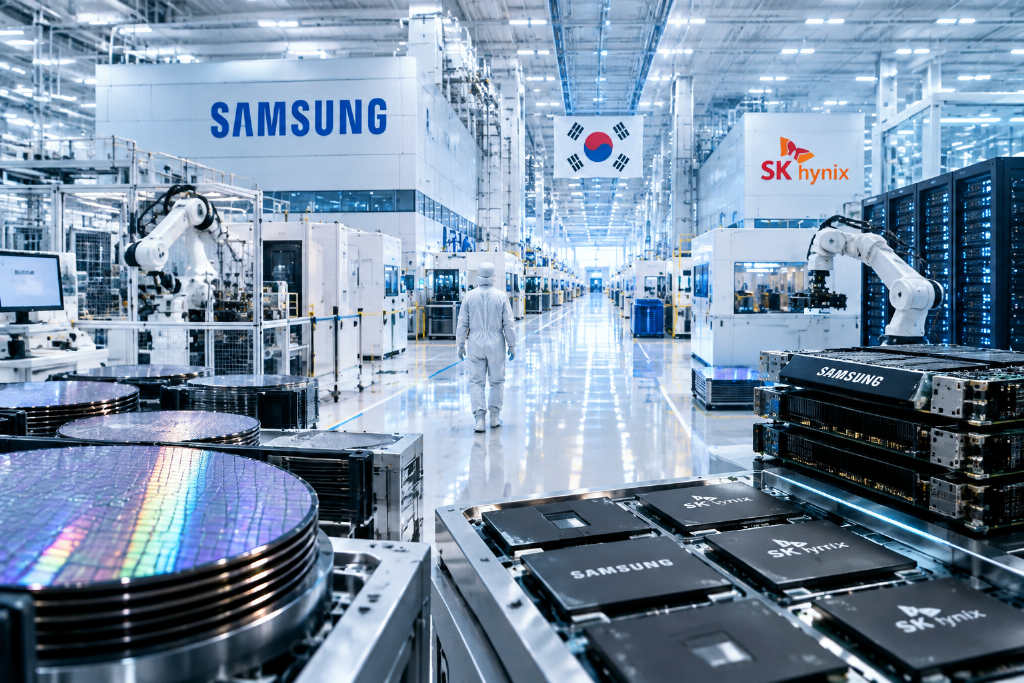
OpenAI Astra Launch Drives Storage Chip Rally
The unveiling of OpenAI's flagship model Astra has reignited investor appetite for AI infrastructure, pushing storage chips into the spotlight. The sector led gains across global semiconductor stocks last week.
On Friday, U.S. chipmakers posted strong gains: Micron Technology climbed over 6%, while SanDisk jumped nearly 12%. The momentum carried into Asian markets on Monday, with SK Hynix rising about 8%, Samsung Electronics gaining more than 5%, and Kioxia advancing roughly 10%.
Analysts believe the rapid improvement of cutting-edge AI models will further boost demand for computing power, potentially exacerbating bottlenecks in storage and networking. High-bandwidth memory (HBM) and DRAM are poised to reemerge as central pillars of the AI infrastructure trade.
Goldman Sachs and Morgan Stanley project that global AI capital expenditure will hit $1.3 to $1.5 trillion by 2027, with more than half allocated to memory infrastructure. Charu Channa, Chief Investment Strategist at Saxo Bank, commented: “The Astra launch reinforces the view that AI spending will continue to grow. The rising computing demands of frontier models will benefit storage chipmakers such as SK Hynix and Samsung Electronics.”
While earlier AI rallies were largely driven by GPU-related plays, the “compute trade” is now expanding to include storage, with HBM and DRAM taking center stage. Storage chips are emerging as a key beneficiary in the next wave of AI infrastructure investment.