
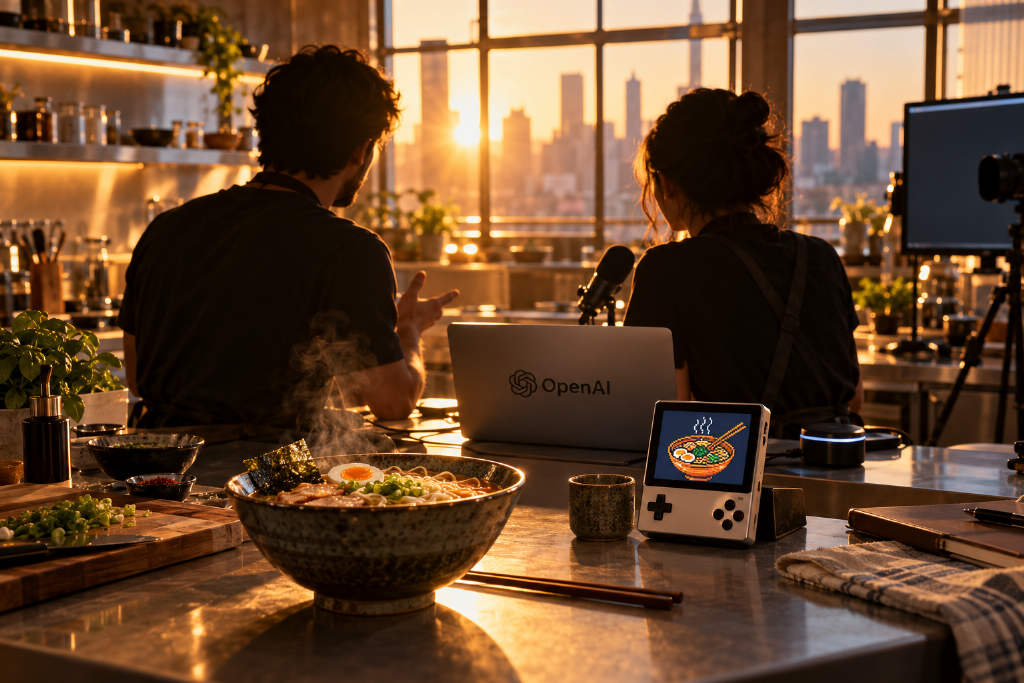
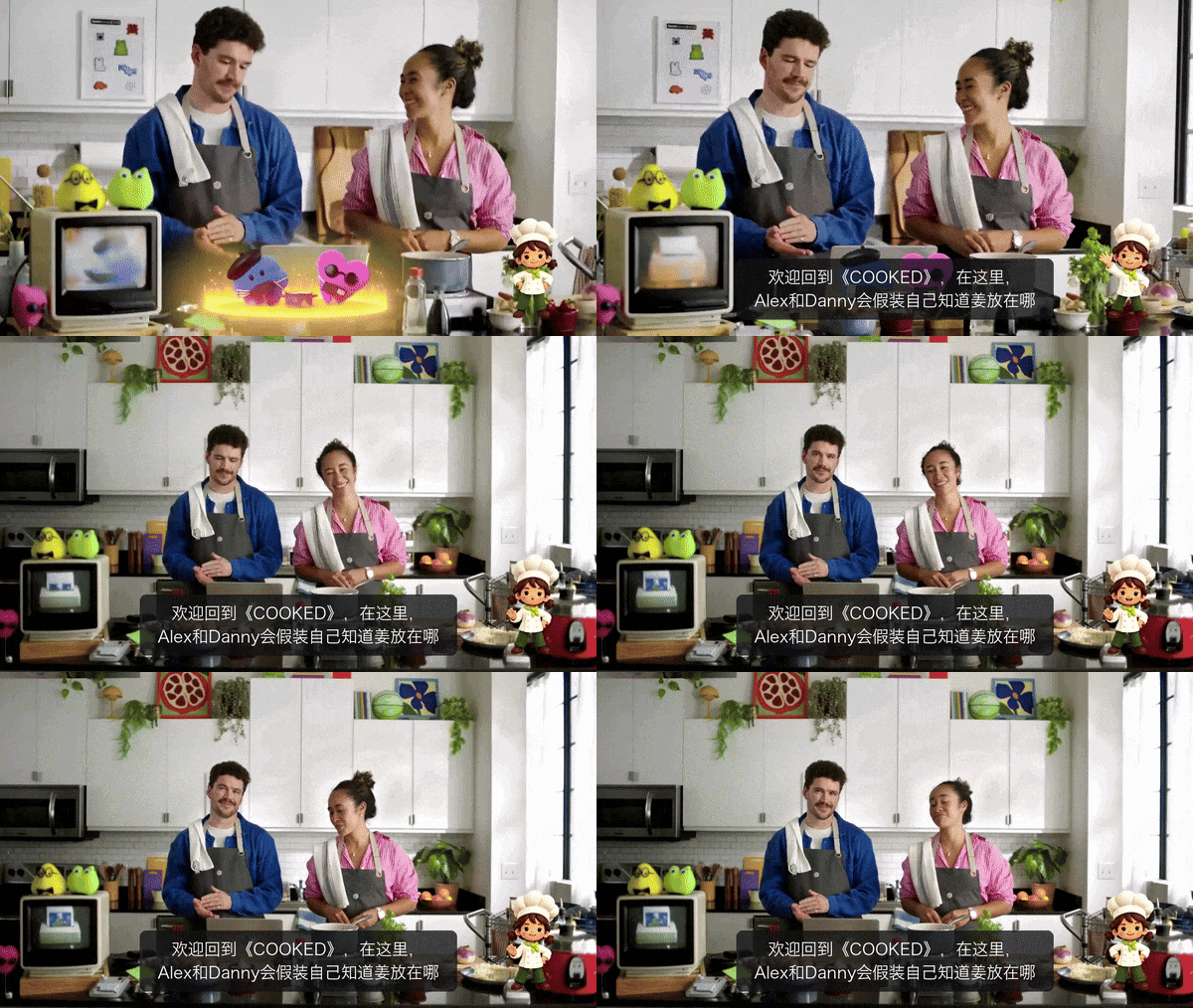
OpenAI’s developer account has launched a kitchen show called COOKED, and the centerpiece of the episode was a live Codex demo that turned a spoken prompt into an 8-bit ramen game that ran on a ModRetro handheld.
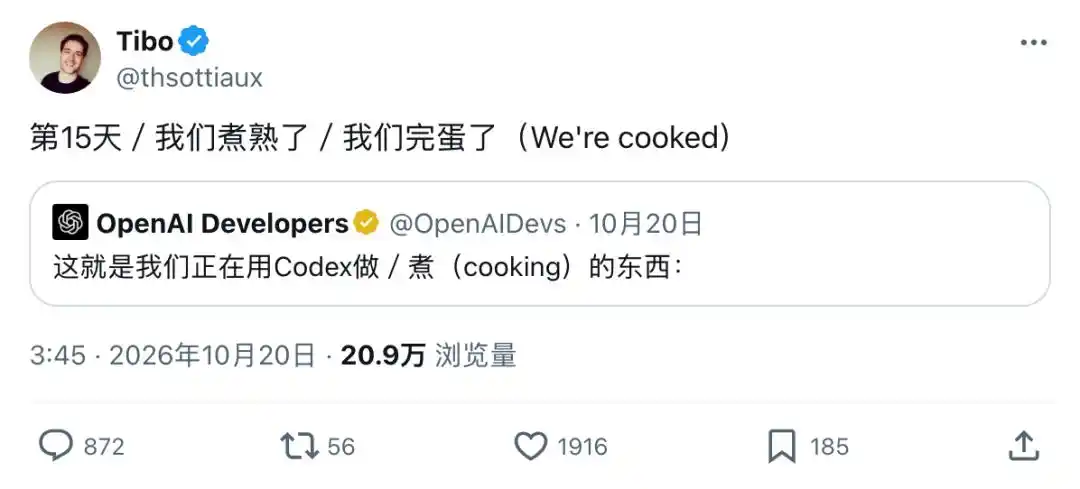
The title carried a joke of its own. Codex lead Tibo had used the phrase 「We’re cooked」, which can mean food is done, but also that something is finished in the worst way. The episode landed on day 15 of his 28-day pledge to ship one improvement every day or reset limits for everyone.
Four days earlier, Tibo had teased the reveal on X. What arrived in the end was, quite literally, a bowl of cooked ramen and a game built around making it.
A ginger shot, then Codex starts coding
The episode was hosted by Danny and Alex, with AI creator Matthew Berman and his editor Brian Knepprath as guests. The challenge was simple: drink a small cup of fresh ginger juice in one shot, then use Codex in Ultrafast mode to build a game for the new ModRetro handheld.

The show leaned into the double meaning of “one shot” as well. It referred both to downing the ginger in one go and to the AI idea of generating something from a single pass.
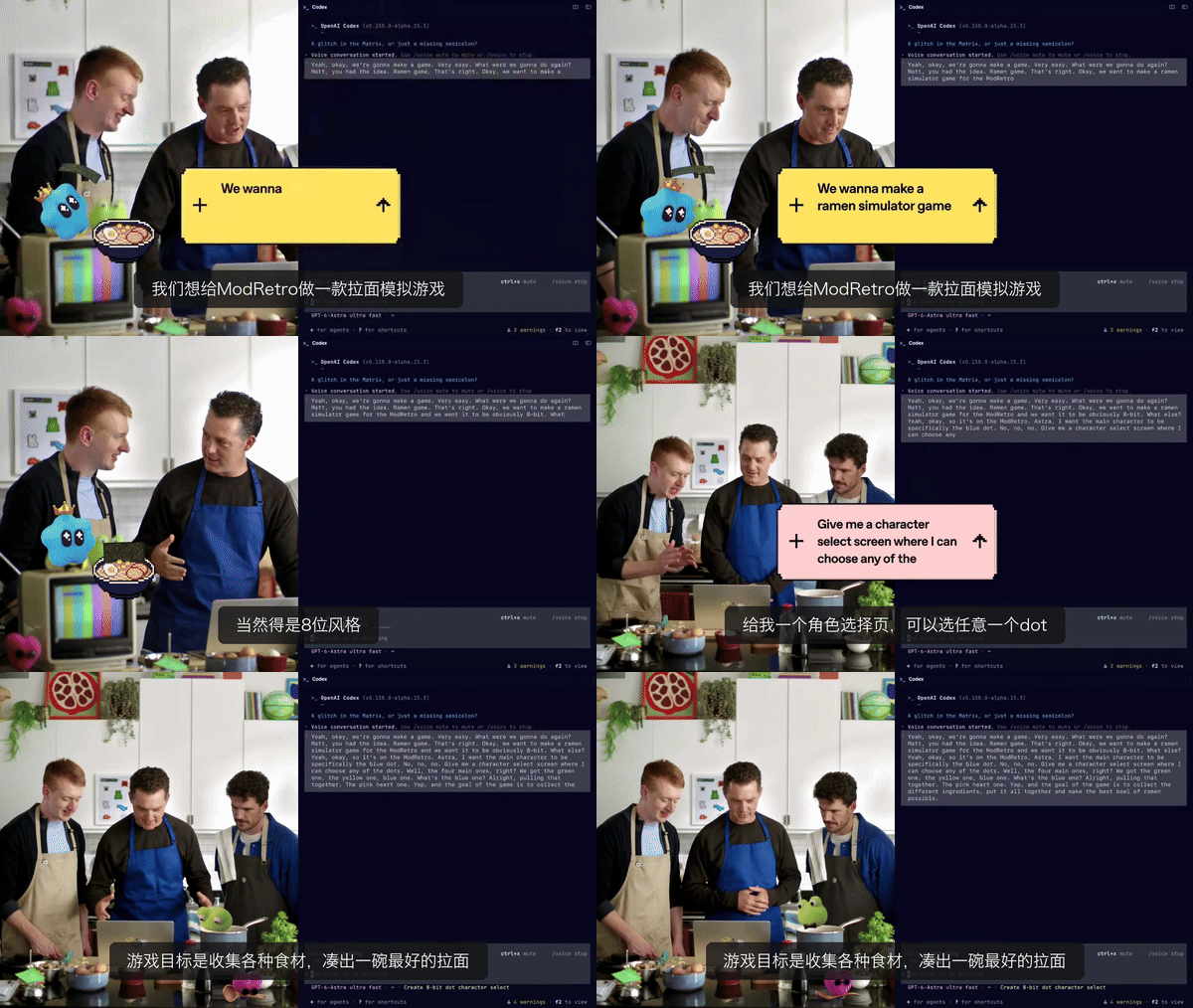
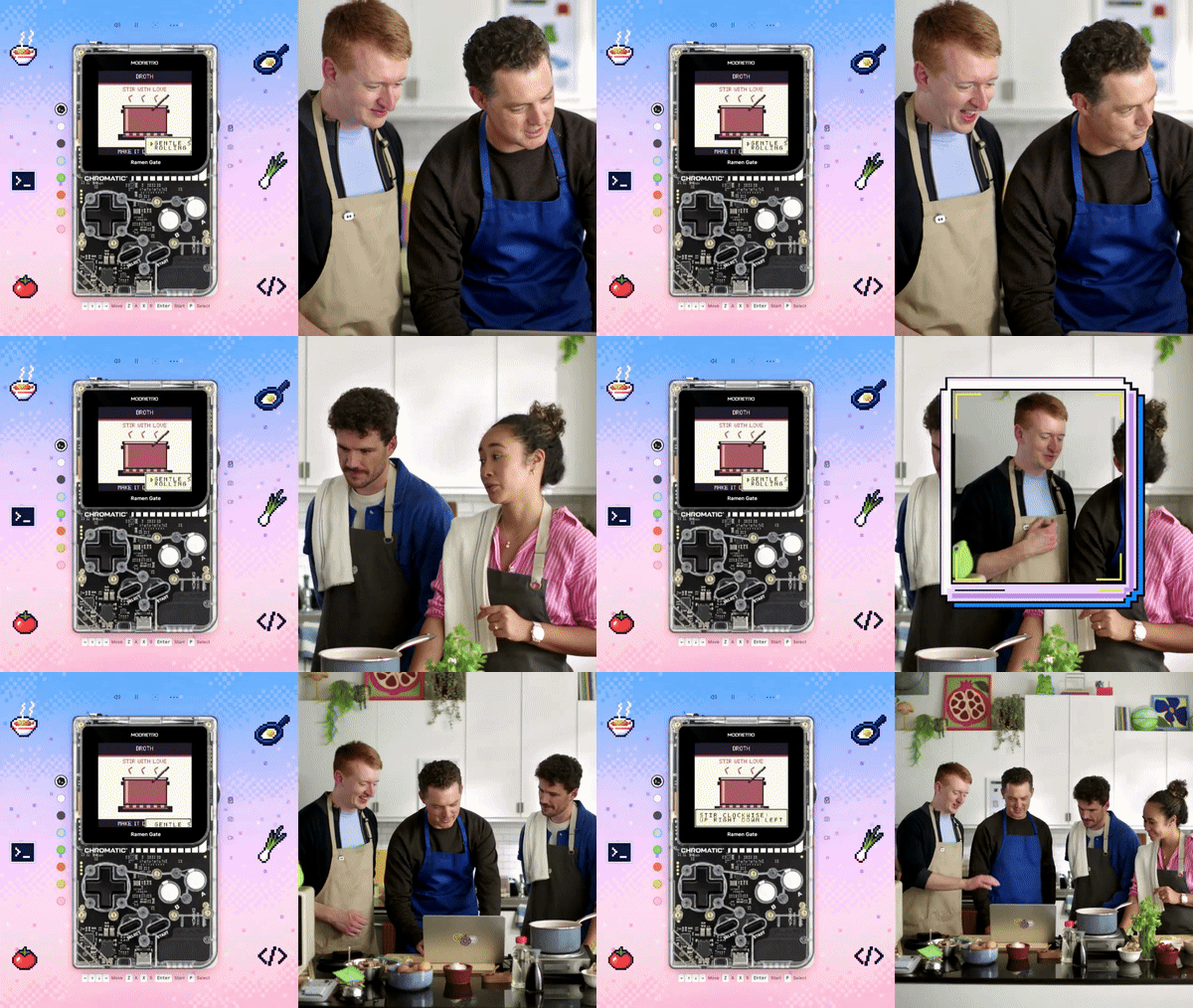
After the ginger shot, Berman spoke directly to the Codex terminal. He asked for an 8-bit ramen simulation game in which the player picks a dot as the main character, gathers ingredients, and tries to make the best bowl of ramen. The terminal displayed GPT-6-Astra ultra fast at the bottom.
Codex then began working. Someone on set said, “It’s moving,” and another person answered with the obvious line: “You could say we’re cooking.”
First on an emulator, then on the handheld
The game first ran in an emulator on a computer. Players controlled a small dot character, went to the fridge for noodles and broth, chose the heat level, and stirred clockwise.

After the first bowl was finished, the game rated it as “a little overcooked, still pretty tasty.” Near the end of the episode, the game was loaded onto the ModRetro handheld. Berman played it again, and this time the screen showed “broth silky” and “noodles perfect.”
The segment walked through the full chain from spoken request to a playable result.
Another AI copilot at the stove: GPT-Live-1
The game was not the only part handled by AI. Before filming, one of the hosts photographed the ingredients and sent them to dot, which organized the recipe. The article describes dot as a persistent agent introduced by OpenAI at DevDay, able to keep working in the background.
dot then placed the recipe and prep steps into ChatGPT Space so the group could follow along at the counter.
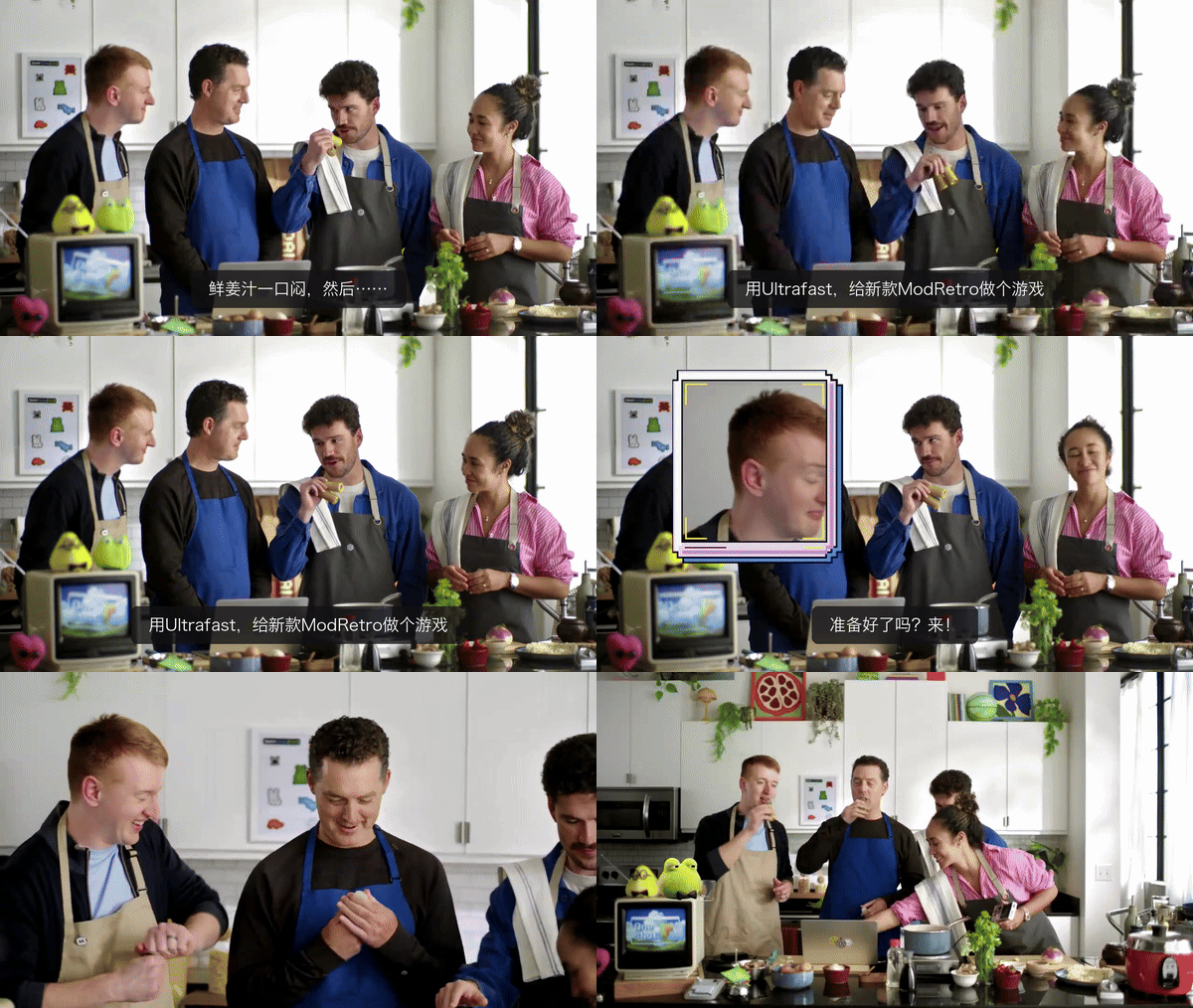
At the stove, the voice copilot was powered by GPT-Live-1. It opened by mocking the two hosts, then added another jab after they complained. Only after that did it begin guiding them through the ramen step by step.
According to the episode, GPT-Live-1 is a full-duplex model that can listen and speak at the same time. One host tested that claim on camera by dragging out his words and adding an extra “um” in the middle. The AI did not interrupt. It waited until he finished, then replied, “Yeah, I was waiting for my turn.” It even gave itself a gold star.
The point of the demo was straightforward: when people cook, chop, and think while talking, pauses are normal. Older voice assistants often treated silence as a cue to jump in. A full-duplex model keeps listening while it speaks, so it can tell the difference between a finished sentence and a pause before the next one.
Codex cloud execution, a refreshed CLI, and community projects
The episode also pushed Codex’s cloud workflow. Jobs ran on OpenAI-hosted machines, which meant Codex could keep working even after a developer closed the laptop.
A mock “sponsor ad” in the middle of the show focused on a refreshed Codex CLI. In the version shown on screen, the tool had a fullscreen interface, could watch multiple agents at once, and accepted spoken input directly in the terminal.
The community project review kept the same running joke. Judges held up signs with only two ratings: cooked and undercooked. A retro space shooter and a game where players drew their own horse and raced it both received cooked. The horse game also got the first “double cooked” of the episode.
The best project of the day went to one that used Astra to decode a secret letter from Napoleon.
At the close, one host said, “I think we really did cook something.” The person carrying the bowl answered only, “I came prepared,” then lifted the lid and served the ramen.
Commenters were not focused on ramen. They wanted reset.
Once the episode was framed as day 15 of Tibo’s challenge, the reaction changed.
The article says Tibo made the pledge on Oct. 5. On day 2, OpenAI shipped four updates at once, but the community vote still called for a reset, and Tibo accepted it. Over the following half month, product improvements and reset demands alternated. Tibo even said people had chased him from the timeline into the street asking for reset.
By day 15, the replies under COOKED were filled with variations of the same request: “just give us a reset,” “then reset,” and “reset, please.” Some commenters mocked the episode as OpenAI having cooked up “nothing,” saying there was no practical value in it.
Behind those jokes was a direct complaint about usage limits. The article says many users argued that ChatGPT limits disappear too quickly, with some hitting the cap within a single day and saying the experience does not feel worth $200.
In the episode itself, the only one who actually said “reset” was the AI sous-chef. When a host said he did not know how to cook at all, it answered with a line that the article described as the closest the entire day 15 came to reset.
The closing point was less about the kitchen than about workflow. OpenAI showed a setup where a person says one sentence and agents handle the rest. But for the users in the comments, once the limit is gone, the agents stop too. The 28-day challenge still has 13 days left, and by the time day 15 ended, commenters had already started deciding what Tibo should post for day 16.


