
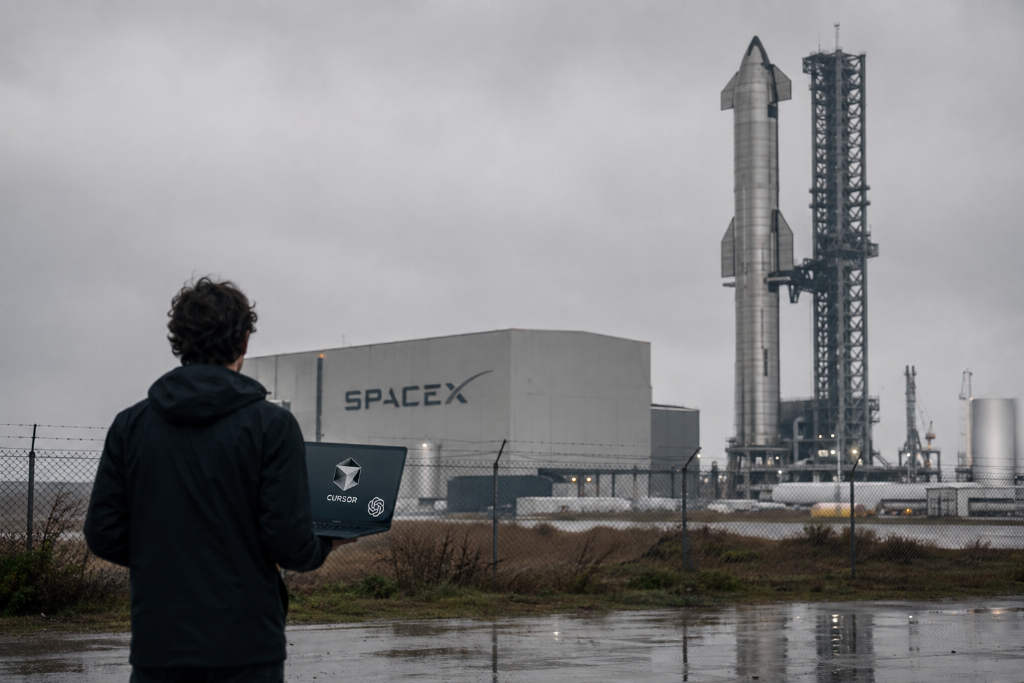
OpenAI said late Friday that it will gradually wind down its relationship with AI coding tool Cursor, saying it does not trust SpaceX, the company that recently acquired Cursor for $60 billion, to use OpenAI technology within the bounds of its service terms.
OpenAI says past dealings with Musk-linked companies drove the move
In a post on its official blog, OpenAI said it made the decision because, based on its experience with contract violations by companies tied to Elon Musk, it could not be certain that SpaceX would use its technology in a way that complies with the terms of service.
The report said that earlier this year, Musk acknowledged in OpenAI litigation that xAI, which has now been folded into SpaceX, had partly used OpenAI models to train its own models. OpenAI treated that admission as a key piece of evidence behind the break with Cursor.
Wired says Cursor had become one of OpenAI’s biggest customers
The financial cost is substantial. Wired reported exclusively that Cursor was one of OpenAI’s top five customers at the beginning of 2026. By spring, OpenAI internally estimated that Cursor could generate more than $1 billion in annualized revenue for the company.
Those figures had not been disclosed before. The report said they show how much revenue OpenAI was willing to leave on the table in order to avoid doing business with Musk.
IPO preparations add pressure to show stability
According to the report, OpenAI is preparing to go public next year and is trying to show investors a more stable business profile, without relying too heavily on a workable relationship with Musk.
The report added that OpenAI’s annualized revenue has already exceeded $40 billion, coming from subscriptions, ChatGPT advertising, Codex and other product lines. Losing Cursor is therefore less damaging financially than it would have been in the past, though OpenAI also acknowledged that cutting off the partnership could hurt developer trust.
Public back-and-forth follows the announcement
After SpaceX acquired Cursor, co-founder Michael Truell moved to the SpaceX team. He responded to OpenAI’s announcement on X by saying OpenAI models accounted for only about 5% of Cursor traffic, suggesting the split would have limited practical impact on Cursor.
OpenAI core product lead Thibault Sottiaux pushed back, saying token usage is not a proxy for revenue or value, and asked Truell to disclose the algorithm behind the 5% figure.
A partnership-competitor relationship finally breaks
Cursor had long wanted to remain an open platform supporting both OpenAI and Anthropic models. Even so, some people in the AI industry had already viewed a breakup as inevitable, because OpenAI’s own Codex business was growing into a major AI coding operation that competed directly with Cursor.
For more than a year, the two companies had been partners and rivals at the same time. That balance ended after Musk took control of Cursor.
Anthropic plans to stay on the platform
After OpenAI announced the split, Anthropic co-founder Tom Brown said Claude would remain available on Cursor.
The report also noted that Anthropic depends on SpaceX for $45 billion in data center capacity, which may limit how far it can go in openly breaking with Musk.