

OpenAI has brought dots to mobile. Users who already have access can now open ChatGPT on iOS or Android and create a dot directly from the app, completing setup on a phone instead of going through the web or desktop client.

The update was presented by OpenAI employee Tibo as part of the company’s Day 5 rollout. He said many users had already been creating dots on the web and desktop, and that the next step was to expand that reach by moving creation to mobile.
dots creation moves from desktop to phones
The report says OpenAI introduced dots on Sept. 29 as an "always-on personal AI agent." It is powered by GPT-6 Astra. Unlike a standard ChatGPT conversation, a dot is described as having its own cloud computer and browser, with plugin connections to more than 4,000 apps. Within the scope of a user’s authorization, it can keep working on tasks and proactively report progress.
OpenAI’s framing, as cited in the report, is that a dot can act as a user’s double. It learns how the user works, spots items that need attention, and uses its own computer to move projects forward.
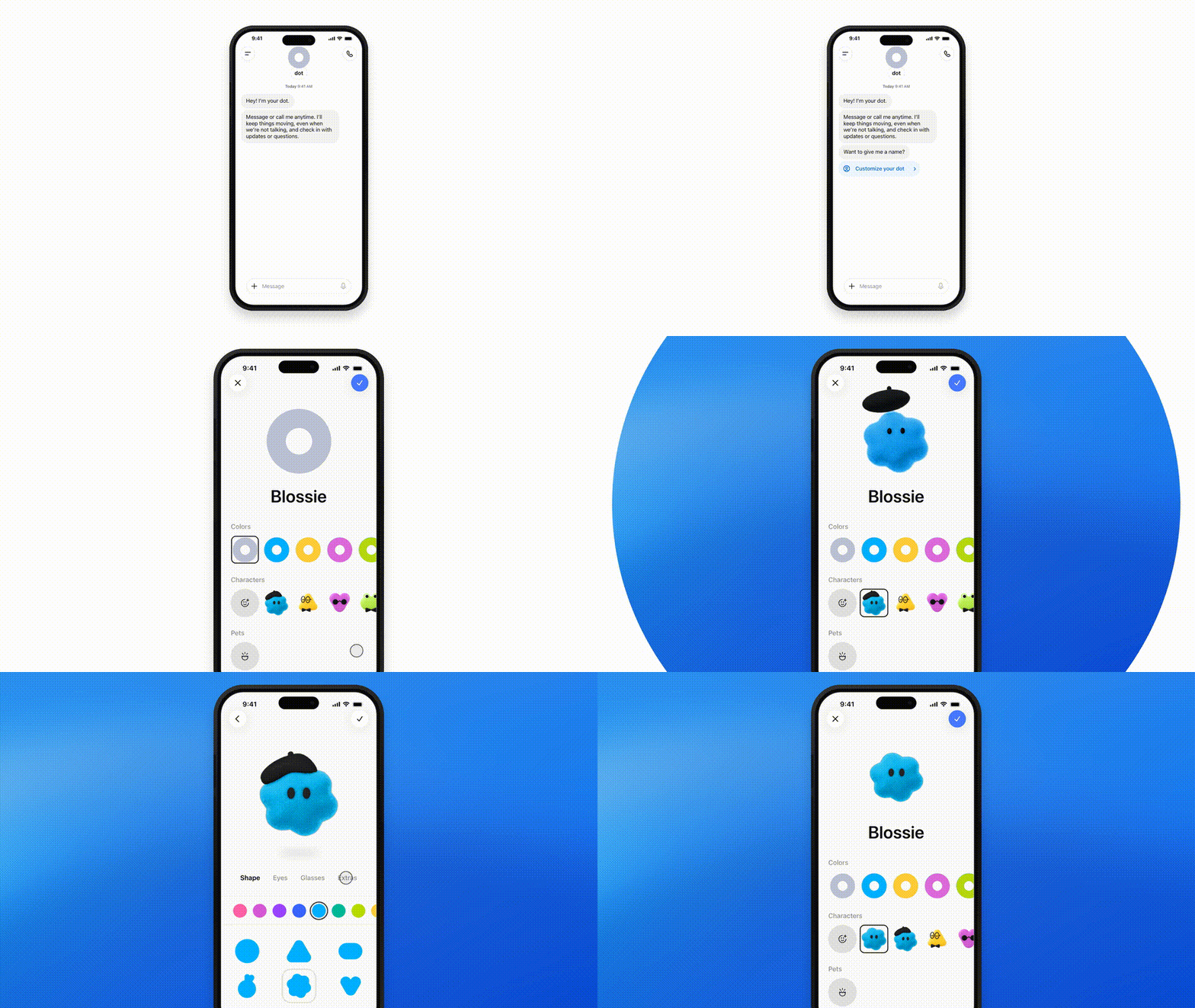
Before this update, creating and configuring a dot still required the desktop app or the web. That restriction has now been removed. Users can name the dot, choose its appearance, and connect apps from inside the ChatGPT mobile app.
OpenAI strengthens the dots-Codex workflow
Mobile access is only one part of the release. The other part is a tighter workflow between dots and Codex. In the report’s description, Codex handles the coding itself, while dot acts more like a personal assistant that organizes the work.
dot could already assign work to Codex. What changed here is the handoff. The system is now better at deciding whether to continue an existing thread or open a new one, and at carrying over the right background information. Development requests discussed earlier can continue in the same thread, with prior context easier to recover.

The report breaks the changes into three parts:
- Finding relevant context: dot can search ChatGPT conversations and pull context from existing Codex threads and automation tasks. Earlier requirements and past attempts can be reused instead of restated.
- Thread management: dot is better at deciding when to continue an old thread and when to start a new one, reducing the chance that related work gets split apart.
- Following up and handling scheduled tasks: dot can check and edit scheduled tasks in ChatGPT Work, so users can ask about upcoming work or adjust recurring jobs through the agent.
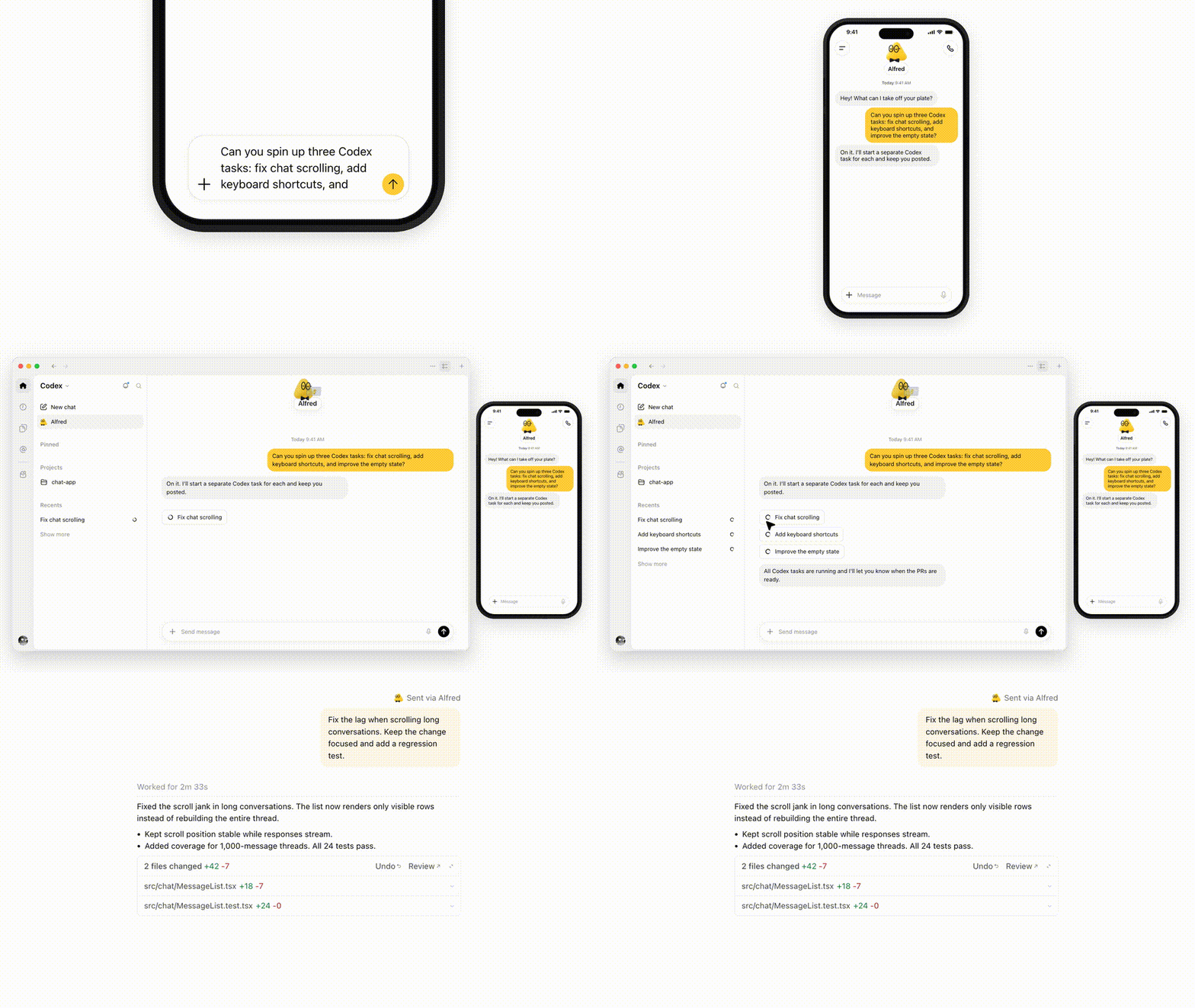
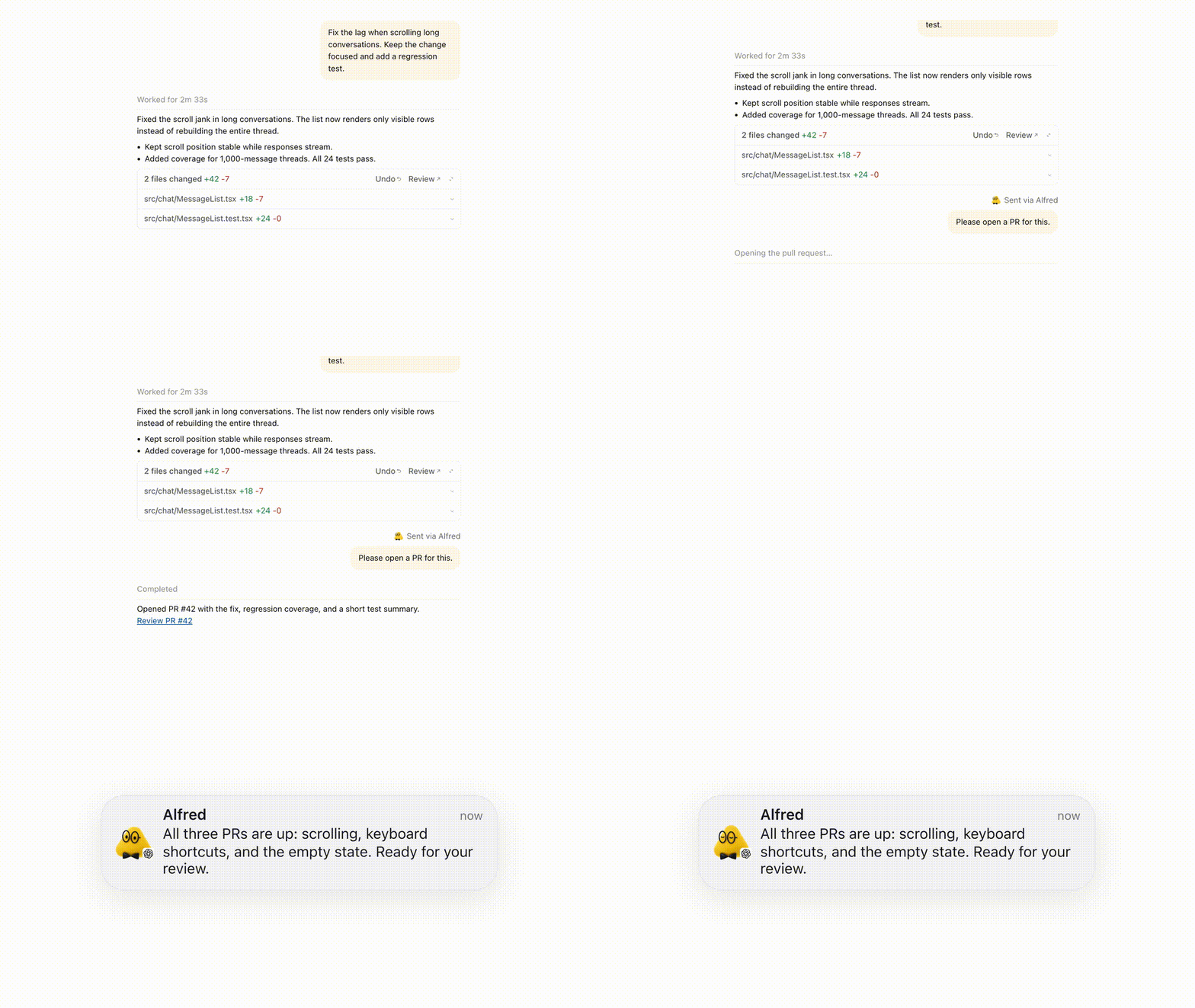
In the demo cited by the report, dot keeps messaging after Codex finishes a change, asks for a PR to be opened, and then summarizes the results waiting for review. The article compares the setup to a project manager working with an engineer: dot coordinates, Codex writes the code.
The workflow is straightforward. A user opens the ChatGPT app, creates a dot, gives it a goal, and lets it pass the programming work to Codex. Progress can be checked on a phone, approvals can be handled there, and extra instructions can be added at any time.

OpenAI also shipped a batch of smaller fixes for dots. The report lists faster browsing, smoother scrolling, fewer unnecessary notifications, and clearer display for code blocks and attachments. It also says Outlook setup, plan descriptions, and retry behavior after failures were improved, while enterprise access on the web and in voice calls became more reliable.
Codex gets message prediction in Composer Predictions
Ninety-two seconds before the dots mobile update, Tibo also posted another Day 5 feature: Composer Predictions.
The feature lets Codex guess the user’s likely next full message after a response. Pressing Tab inserts the suggestion into the input box. The user can edit it before sending, ignore it, or type something else entirely.

The report points to several demo examples. After Codex finishes a game, the input box suggests the next instruction: "put the game on my Chromatic." In another scene, the suggestion is "CENTER THE DIV." A more routine closing step also appears: "ok, clean this up and open a PR."
Two other suggestions shown in the demo move beyond code edits: explain a paper more briefly and in simpler language, or keep the current design while making it work properly on mobile. The next step, in other words, can be explanatory or product-focused.
The report notes that Claude Code previously offered a similar next-prompt suggestion feature. OpenAI employee Sharif Shameem said that, in his own use, Codex predicts about a quarter of the messages he is about to send. He also relayed a colleague’s description of the predictions as "scarily accurate." The article adds an important caveat: the one-quarter figure is a personal account with no disclosed sample size, so it should not be treated as an official accuracy metric.
External user Ivan Ciraj said he had already used the feature many times that day and that it felt like returning to the era of Tab-completing code, except much stronger. Thomas Ricouard said he accepted about 90% of the suggestions. The report presents both as individual user feedback.
For now, the beta is available to eligible individual Pro users aged 18 and older. It supports local and SSH threads in Codex desktop, as well as GPT-6 Astra and GPT-6.1 Sol.
Tibo also highlighted a pricing detail: predictions are included in the Pro plan and do not consume usage by themselves. The report says the free part is the generation of the suggestion. If the user sends the message and has Codex continue working, normal metering still applies.
OpenAI is targeting the moment work begins
Seen together, the two updates point to the same product direction. dots takes in the goal, organizes the background, and delegates the task. Codex then suggests the next step after a round of work is done.
The report argues that OpenAI is trying to own the moment when a user has a goal in mind but has not yet decided which tool to open. Gathering context across tools, splitting work, and collecting feedback usually means constant switching. If that chain can run smoothly, users spend less time moving between products and more time reviewing results.
The references cited in the article are posts from ChatGPT and OpenAI Devs on X. The piece itself was originally published by the WeChat account Xinzhiyuan, written by ASI Qishilu and edited by Taozi and Moses, according to the source report.