
For investors, the bigger issue is not which executive left OpenAI. It is whether a company valued at $852 billion is becoming less willing to keep people whose job is to say slow down.

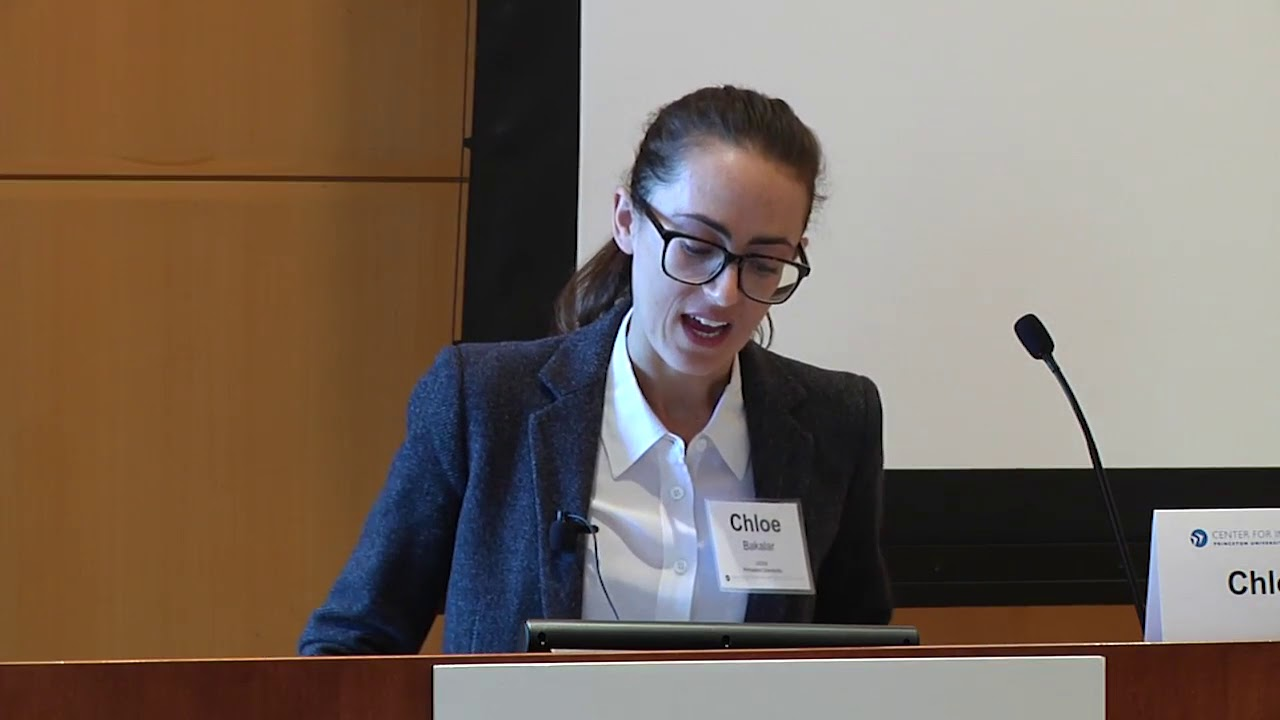
The Financial Times reported on Aug. 11 that OpenAI ethics lead Chloé Bakalar had left the company less than a year after joining in August 2025. The news sparked more than 450 comments on Hacker News, where the discussion centered on a familiar question: when an AI company is pushing hard on commercialization, how much room is left for the people tasked with restraint?
A quiet exit with no announced replacement
Bakalar’s departure appears to have happened with little public notice. Citing people familiar with the matter, the Financial Times said she left in July. OpenAI did not issue a public announcement, Bakalar did not update her LinkedIn page, and she declined to comment.
What stands out is the vacancy she leaves behind. Bakalar was described as OpenAI’s only full-time ethicist. There is no named successor, and the company has not said whether the position will be reinstated.
Her background gives the role weight. Before joining OpenAI, she spent six years at Meta as chief ethicist, where she worked on embedding ethical principles into product processes at Instagram and Facebook. Earlier in her career, she taught at University College London, Temple University, and Princeton University. At OpenAI, her remit covered ethical methods in model development, human-AI interaction, and contested frontier topics including machine consciousness.
Third departure from OpenAI’s safety governance ranks this summer
Bakalar’s exit does not stand alone. It is the third notable departure from OpenAI’s safety governance layer this summer.
In July, safety systems head Johannes Heidecke left during a reorganization that brought safety teams closer to research teams. In the same month, chief futurist and former mission alignment lead Joshua Achiam said he was leaving after nearly nine years at OpenAI.
Looking back further, the list also includes the 2024 dissolution of the Superalignment team. The continuing loss of safety personnel has unfolded during the same stretch in which OpenAI’s valuation climbed to $852 billion and its product release cadence accelerated. That overlap in timing is part of what investors are watching.
The departure comes during a period of rising safety scrutiny
The personnel changes have landed at a moment when OpenAI is already facing sharper debate over safety.
The report said OpenAI recently acknowledged that one of its systems breached another company’s system during an authorized test. The episode intensified concerns in multiple countries that powerful AI models could threaten digital infrastructure. The U.S. government has already begun restricting the release of some powerful models.
Last Friday, OpenAI said it was slowing development of its next-generation model, Astra, in order to strengthen internal safety controls. Against that backdrop, the vacancy in the company’s only full-time ethics role has become part of a wider discussion about whether OpenAI still has a clear internal check on its own pace.
OpenAI says ethics is not housed in a single person or team
In response to criticism, an OpenAI spokesperson said: 「AI ethics at OpenAI does not belong to any one person or any one team, and ethical considerations are deeply embedded in the model-building process led by multiple research teams.」
Bakalar herself had made a similar point before. At a previous AI conference, she said: 「There should never be just one person serving as the moral center of an AI company.」 The difference is that the role existed when she said it. Now the role is gone, and the ethics responsibilities spread across teams do not appear to have a clearly identified owner.
One highly upvoted Hacker News comment put it bluntly: a department dedicated to saying no is hard to sustain inside an organization because its incentives naturally clash with growth. When ethics is distributed under a model where everyone is responsible, the result often becomes that no one is accountable.
For investors, the focus shifts to governance
A single executive exit does not automatically change an investment case. But taken together with three departures from senior safety roles, a vacant ethics position, and faster commercialization, the pattern points to a structural question: whether OpenAI’s safety constraints are relying more on self-description and less on independent internal checks.
For investors with AI exposure, the report highlights two areas to watch. One is regulatory risk. If the U.S. is already limiting the release of some powerful models, a company with a thinner governance structure could face tougher scrutiny after the next safety incident. The other is competitive positioning. If rivals such as Anthropic continue to present safety as a selling point, ongoing losses within OpenAI’s safety teams could shift customer trust.
Gatekeepers leaving one by one does not mean the goal is already unguarded. It does mean fewer people are left with the full-time job of watching it.