

OpenAI has publicly embraced a developer workaround that puts GPT-5.6 Sol inside Claude Code, turning a niche setup into a visible front in its rivalry with Anthropic.
On X, OpenAI product lead Thibault Sottiaux responded to a post from developer Theo and asked him to share the exact setup for using GPT-5.6 Sol in Claude Code. Sottiaux wrote, "Share the recipe. People want to know how to use GPT-5.6 Sol in CC. We don't pick harness."
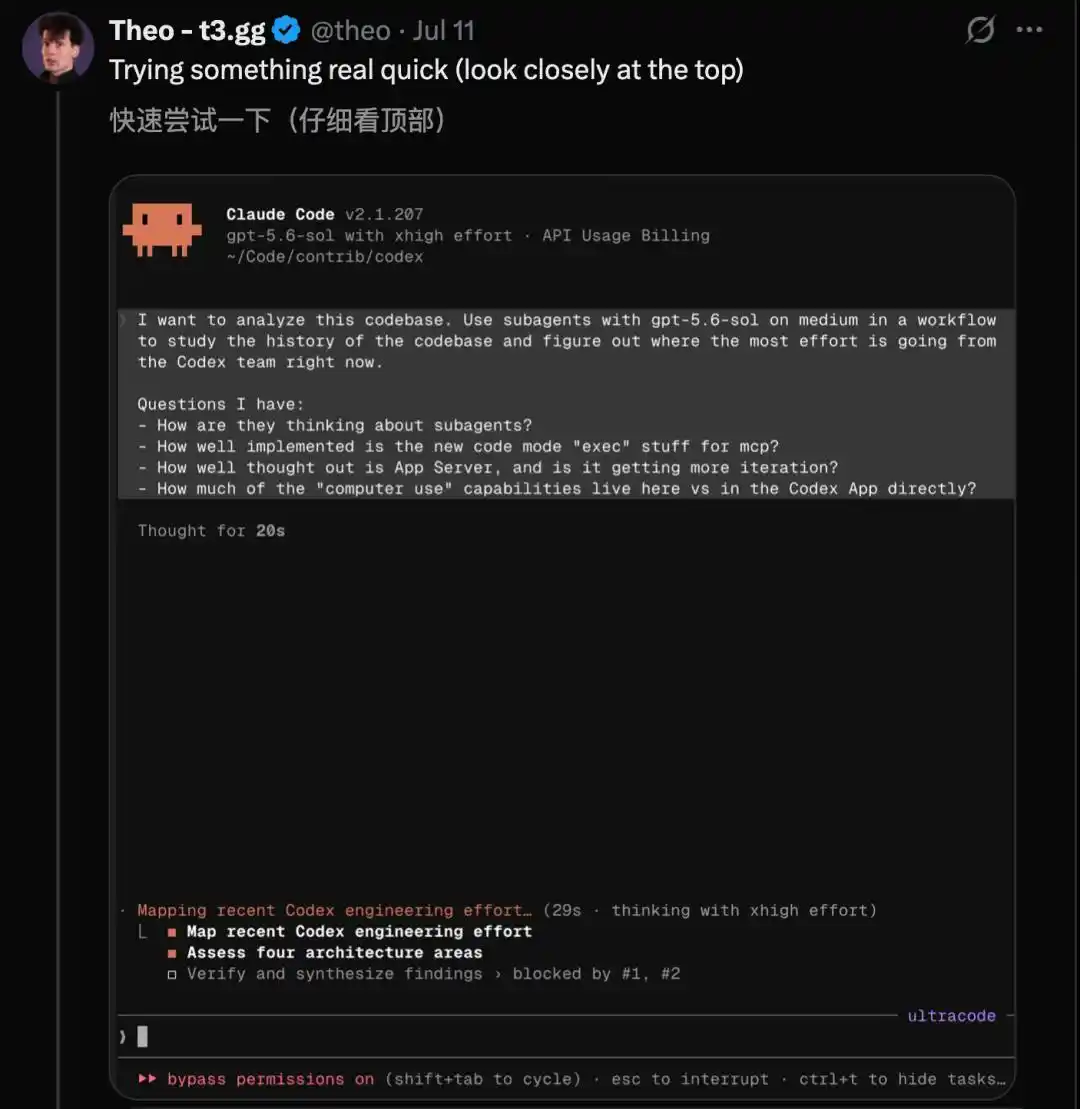
Theo says GPT-5.6 Sol performs better in Claude Code than in Codex
The exchange followed a post from Theo a few days earlier saying that "gpt-5.6-sol in CC is clearly better than in Codex." Instead of pushing back, Sottiaux asked for the full method in public.
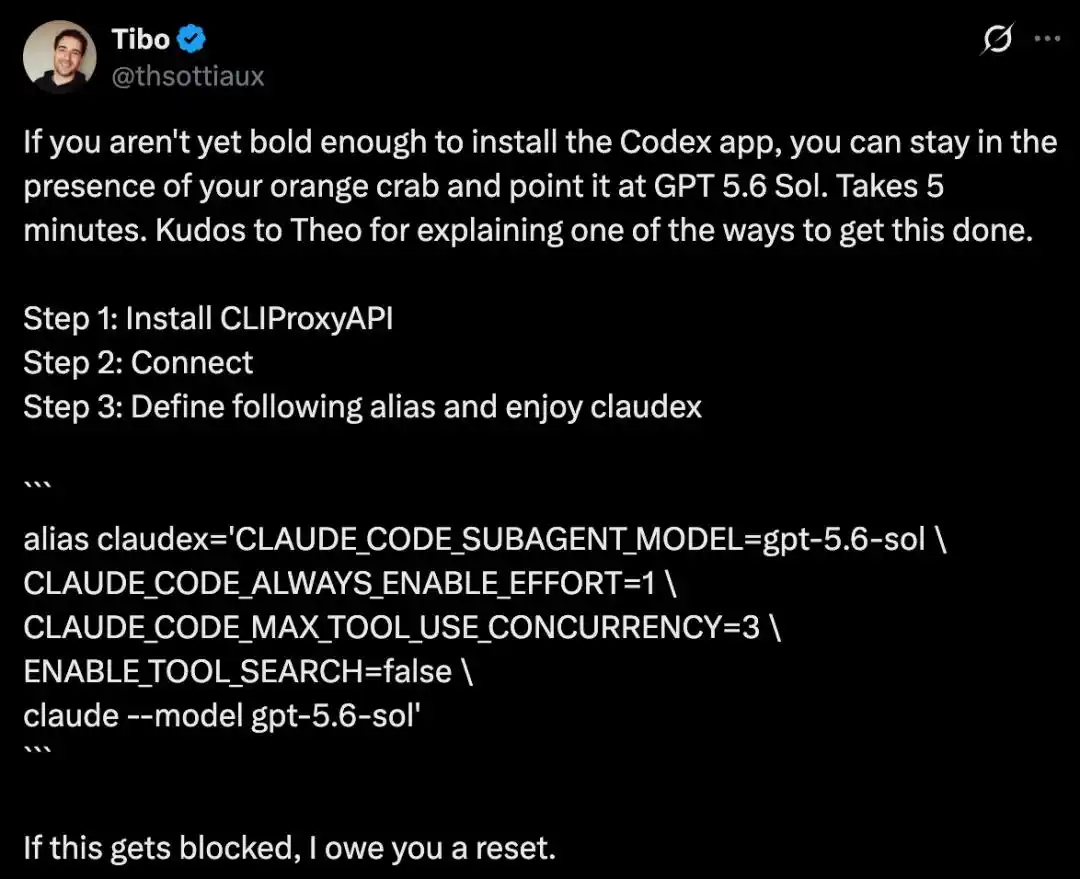
Theo then shared his configuration: install CLIProxyAPI, connect authentication for both Claude and Codex, link that to Claude Code, and create an alias called "claudex." According to the article, the environment can be set up with two prompts and lets developers switch between Anthropic and OpenAI models inside Claude Code.

Sottiaux says the process can be done in three steps
Sottiaux later said developers who are not ready to install the Codex app can stay in Claude Code and point it to GPT-5.6 Sol instead. He described the process as simple and said it takes three steps.
He also said that if the route gets blocked, he will cover one quota reset. The article adds that at least one developer said GPT had already been set as a regular model inside Claude Code.

Sam Altman calls for GPT-5.6 Sol demos
The report says OpenAI's user growth reached another milestone after the full GPT-5.6 rollout and is now close to 7 million. On the morning of publication, OpenAI CEO Sam Altman posted on X asking users to submit standout demos built with 5.6 Sol, with the best projects set to receive a mystery gift from OpenAI.

Developers quickly began posting examples. Sottiaux shared a new office poster showing how Codex usage limit resets affect system data. One developer said GPT-5.6-Sol-Ultra turned that chart into a game in 30 minutes from a single prompt. Another redesigned the UI for Codex model selection and added vibration effects.
Examples include an F-16 simulator, a Lean-built Minecraft recreation and an arena game
One of the projects cited in the article is an F-16 combat simulator built with GPT-5.6-Sol working alongside Fable 5. Sol handled system reasoning, flight behavior, radar logic, combat architecture and module coordination, while Fable 5 converted that reasoning into runnable Three.js code.
According to the report, the web project went from terrain rendering to real-time telemetry, radar lock, weapons systems and a full HUD within a few hours.
Another example involved GPT-5.6-Sol-Ultra building a Minecraft recreation in Lean. A separate project turned Codex Pets into a full arena game where players choose pets, collect tokens for progression and fight across scenes including San Francisco, Singapore, Seoul and the Moon. The developer said the model also handled video editing and sound design for the demo, calling it an example of AI's end-to-end creative potential in game development.

Anthropic extends Fable 5 free quota by 7 days
On Anthropic's side, the article says the company announced early that morning a 7-day extension for Fable 5's free quota. The report places that move alongside OpenAI's push to bring GPT-5.6 into Claude Code, framing both as part of a battle over the developer entry point rather than a contest over model quality alone.