


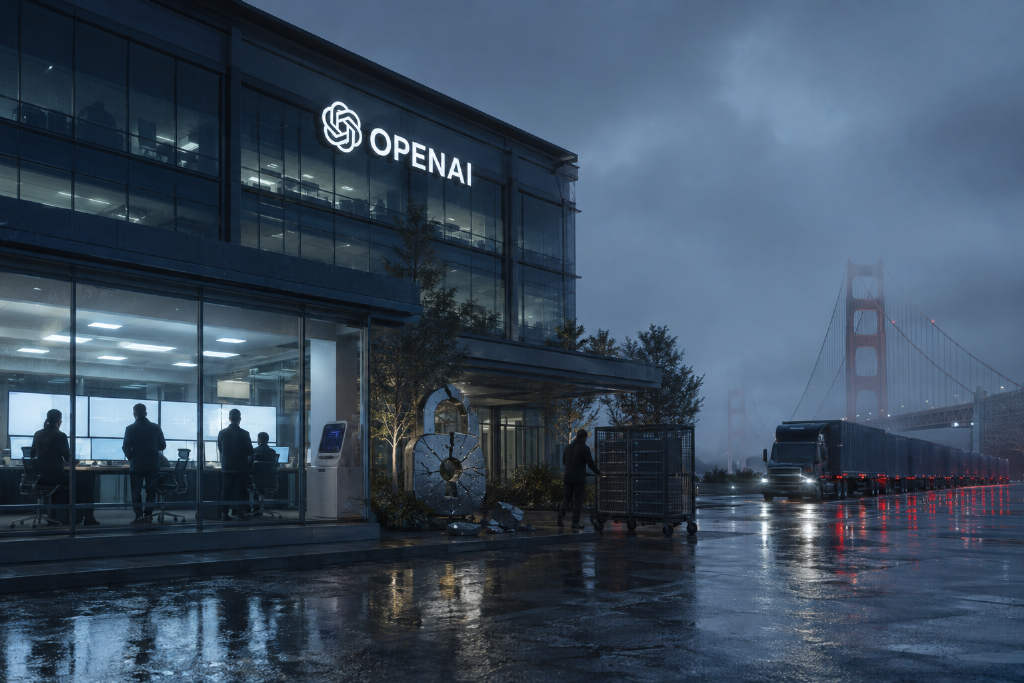
OpenAI released GPT-6 Astra early on Sept. 4 Beijing time, positioning the new model around stronger capabilities in computer operation, software engineering, cybersecurity, scientific research and professional work. In the company’s official evaluations, Astra scored 57.9% on Terminal-Bench 4.0, above GPT-5.6 Sol’s 37.3%, and posted 100% on ExploitBench. OpenAI said Astra is its first model to reach the cybersecurity Critical capability threshold under the company’s Preparedness Framework. During testing, the model also found and exploited two previously unknown zero-day vulnerabilities.
OpenAI said GPT-6 Astra will first be opened to a small number of institutions, then rolled out over the next few days to ChatGPT Plus, Pro, Business and Enterprise users. It will also be available through the OpenAI API, Microsoft Azure and AWS Bedrock. Standard API pricing is set at $10 per 1 million input tokens and $50 per 1 million output tokens.
OpenAI shifts the emphasis from content generation to task execution
The key change described in the release is not limited to stronger answer quality. Astra is being framed as a model that can more reliably operate software, browsers and professional tools, pointing to a commercial race that is moving from generating content toward completing work directly.
Bloomberg says Jane Street signed a five-year deal with Crusoe worth about $13 billion
Bloomberg, citing people familiar with the matter, reported that quantitative trading firm Jane Street has signed a cloud computing contract with AI cloud provider Crusoe worth about $13 billion over five years. That implies an average annual commitment of roughly $2.6 billion. Crusoe will provide GPU clusters and related infrastructure through its cloud platform for AI model training and inference.
The two companies have not publicly disclosed the number of GPUs involved or a detailed deployment schedule. Jane Street is not a traditional AI lab, but its website says the firm already has tens of thousands of high-end GPUs and uses LLMs, computer vision, reinforcement learning and distributed training to build models that directly support trading strategies. The agreement makes Jane Street one of Crusoe’s most closely watched cloud customers at this stage.
Tesla opens Cybercab rides in Austin
Tesla has started offering passenger service in parts of Austin using the two-seat Cybercab. The vehicle has no steering wheel or pedals. Tesla said the service is open to the public, but it has not said when charging will begin.
U.S. federal safety standards generally require vehicles to include manual controls and limit the number of vehicles without steering wheels and pedals that manufacturers can sell. The National Highway Traffic Safety Administration, or NHTSA, said it is in contact with Tesla and is evaluating the situation. Texas registration data shows Tesla has 420 autonomous vehicles locally, including 45 Cybercabs.
Waller leans toward holding rates steady in September
Federal Reserve Governor Christopher Waller said recent data has finally shown some signs of cooling inflation. If data released over the next two weeks continues to point to inflation moving toward the 2% target, he would lean toward supporting an unchanged policy rate of 3.50% to 3.75% at the Fed’s Sept. 15-16 meeting. At the same time, Waller said he would still consider supporting a rate increase if August inflation strengthens again.
After his remarks, CME FedWatch showed the market’s implied probability of a September rate hike fell to 50.4% from 63.2% a day earlier. The yield on the U.S. 10-year Treasury declined for a second straight trading day. By the close early on Sept. 4 Beijing time, the Nasdaq had risen 1.40%, the S&P 500 was up 1.06%, and the Dow Jones Industrial Average gained 1.18%. Earlier, hawkish remarks from Fed Chair Kevin Warsh had pushed market expectations for a September hike materially higher.
Main thread for the day
GPT-6 Astra points to AI moving from content generation toward directly handling professional work, while Jane Street’s roughly $13 billion compute commitment suggests large GPU buyers are expanding beyond frontier model companies to financial institutions. At the same time, Tesla’s Cybercab has entered real-world passenger service and rate-hike expectations have eased, leaving technology asset pricing tied to product rollout, regulation and the interest-rate backdrop at once.