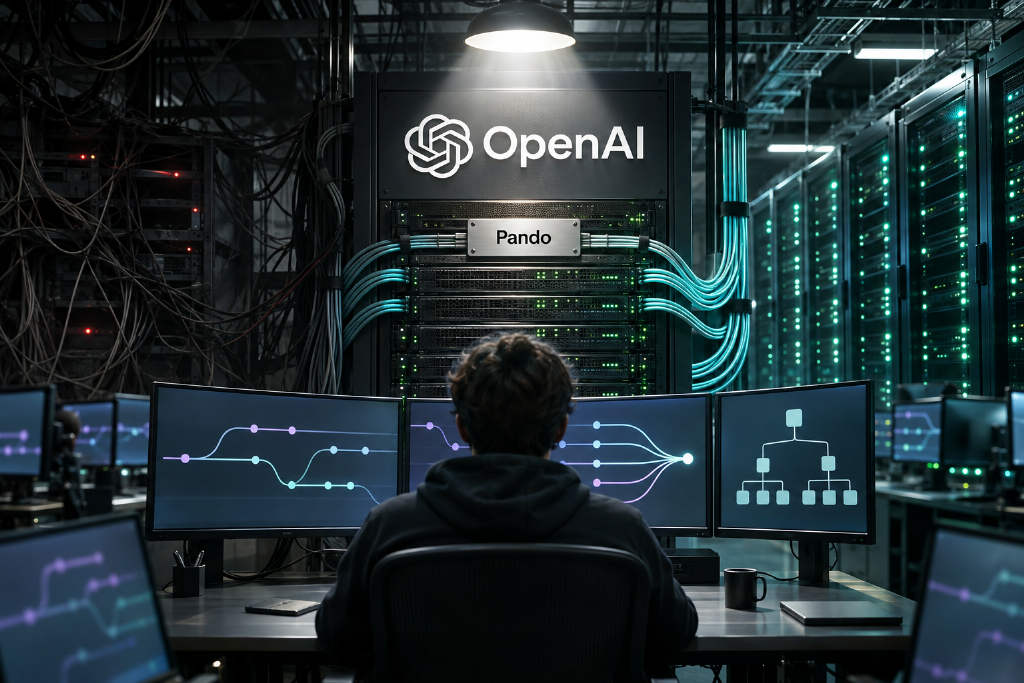
OpenAI has introduced Pando, an in-house Git backend that has already taken over the company’s main code repository, according to ChainCatcher. The move comes after a year in which Codex enabled engineers to dispatch large numbers of coding agents at the same time, driving up the volume of branches, pushes, merges, and pull requests. Under that load, OpenAI’s previous system reportedly suffered frequent slowdowns and merge failures, with reliability at one point falling below 90%.
The report said one engineer led the core architecture design while several Codex agent teams helped build the system, and Pando was put into production in 10 weeks. OpenAI said the new backend allows code pushes from different branches to be processed in parallel instead of waiting in line. For code pulls, it reuses existing Git packfiles and distributes them through cache rather than generating a separate package for each client.
After the change, median push latency fell by nearly 80%. The system now distributes nearly 1 PB of data per day and posts a cache hit rate above 99%, though different branches no longer guarantee the exact same point-in-time view. Unlike Anthropic’s Scion, which drops Git, OpenAI kept the Git client and protocol and rebuilt only the backend, leaving existing workflows for engineers and agents largely unchanged.
OpenAI has disclosed Pando, an in-house Git backend that now runs the company’s main code repository, according to ChainCatcher.
The change follows a year in which Codex let engineers send out large numbers of agents to write code at the same time. That increased the number of branches, pushes, merges, and pull requests. OpenAI’s previous system at one stage saw frequent slowdowns and merge failures, and its reliability reportedly fell below 90%.
Pando reached production in 10 weeks
The report said one engineer handled the core architecture design, while multiple Codex agent teams took part in implementation. Pando was moved into production in 10 weeks.
The backend allows code pushes from different branches to be processed in parallel, removing the need for them to wait on one another. When developers pull code, the system no longer generates a separate data package for each client. Instead, it reuses existing Git packfiles and distributes them directly through cache.
Median push latency cut by nearly 80%
After the overhaul, median code push latency was reduced by nearly 80%. The system now distributes nearly 1 PB of data each day, and its cache hit rate is above 99%. OpenAI also noted that different branches no longer guarantee the same point-in-time state.
Different path from Cursor and Anthropic
Cursor’s Origin remains Git-based and is mainly aimed at code hosting services positioned as an alternative to GitHub. Anthropic’s Scion abandons Git and moves commits, merges, and history queries to the server side.
OpenAI kept the Git client and protocol in place and rebuilt only the backend, which means existing development workflows for engineers and agents largely do not need to change.
This article was originally published by Bit.Fan. For more cryptocurrency news and market insights, visit www.bit.fan. Disclaimer:
The market information, project data, and third-party content displayed on this platform are for industry information sharing only and do not constitute any form of investment advice or return commitment.
Cryptocurrency trading carries high risks. Users should fully assess their risk tolerance and make independent decisions. All profits, losses, and legal responsibilities are borne by the users themselves.