
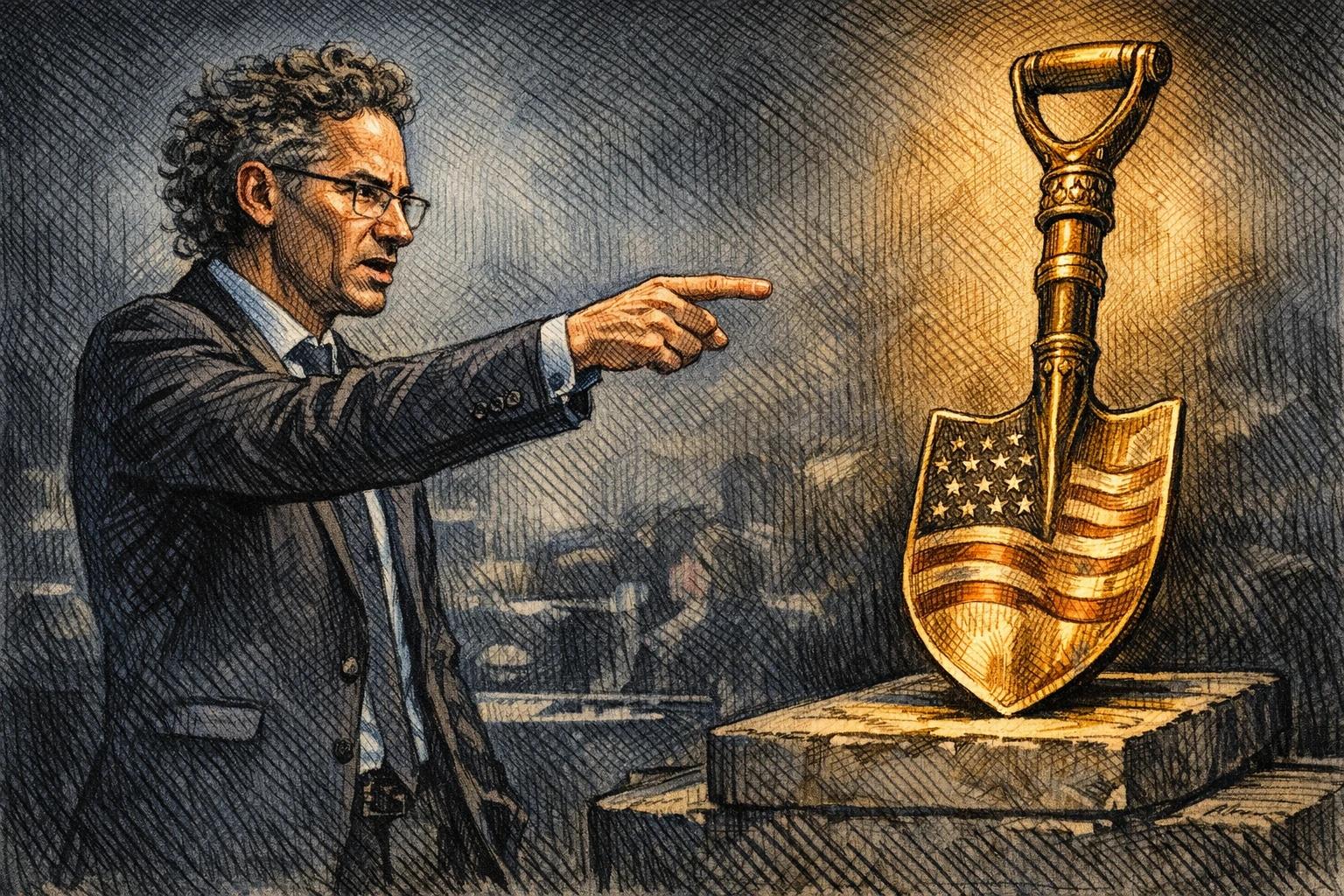
Palantir CEO Alex Karp used a July 1 appearance on CNBC’s Squawk Box to question the token-based pricing model used by AI providers such as OpenAI and Anthropic. Quoting what he said were complaints from enterprise customers, Karp said companies are paying for tokens that “create no value” and fear that model vendors are taking the “weights and alpha” of their business. The remarks pushed a central industry dispute into view: are customers paying for outcomes, or simply paying for usage.
Customers are challenging the gap between usage and results
Karp did not deliver the sharpest accusation in his own voice; he framed it as what clients are telling him. Still, the target was clear. His argument was that enterprises want control over their own compute, models, data stack, and alpha, rather than staying tied to external providers that bill by consumption. The underlying questions are blunt. Will the vendor keep my data? Will it eventually move into my industry?
That concern goes to the logic of token pricing itself. Tokens are the smallest billing unit in many AI services, and higher usage means a larger invoice. But more consumption does not automatically mean more business value. The source notes that Silicon Valley has even produced a term for this mindset, “tokenmaxxing,” where maximizing token usage becomes a goal in itself rather than a means to a useful result.
A familiar pattern for crypto audiences
The idea of treating consumption as proof of value is hardly new to crypto. In the last bull cycle, on-chain transaction volume, gas spending, and total value locked were repeatedly used as shorthand for whether a project mattered. Those numbers could look impressive. Prices could follow. Yet high volume did not always reflect real demand, and TVL could be inflated by capital moving in circles inside the same system.
The criticism now surfacing in AI has a similar structure. Token usage keeps rising, cloud providers can post strong numbers, and enterprise buyers still come back to the same question: what exactly did this spending produce.
Palantir is backing open weights and sovereign deployment
Karp’s answer is that organizations should control their own infrastructure instead of outsourcing the entire stack to token-metered providers. According to the source material, Palantir said in late June that it was expanding its partnership with Nvidia to deploy the open Nemotron model for the U.S. government in what it described as a “sovereign environment.” In plain terms, the model weights are brought into the customer’s own domain rather than left in someone else’s system.
That approach centers on data control and reflects a wider reassessment of self-hosted environments. The source does not claim that open-weight deployment will replace token billing across the board. It does show that two tracks are taking shape: buying closed-model access as a service, or running open-weight models inside infrastructure controlled by the customer.
Palantir is also selling a hard-to-verify story
The criticism cuts both ways. The source argues that Palantir’s own pitch is built on narratives that are not easy to measure directly either, including sovereignty, national security, and premium valuation expectations. In April, Karp released his “22-point manifesto,” arguing that Silicon Valley should do more than build apps and should also build weapons, while calling for the U.S. to restore conscription.
Palantir’s numbers are strong on paper. The company reported $1.63 billion in revenue for Q1 2026, up 85% year over year, while U.S. commercial revenue rose 133%. Yet skepticism remains. The source says Michael Burry argued in April that Palantir is, at its core, a low-margin SaaS outsourcing company and that Anthropic is taking its business.
Karp is questioning the commercial logic behind OpenAI and Anthropic. Burry is questioning Palantir’s own substance. Put together, the argument is less about one company being right and another being wrong, and more about a larger AI market problem: who is selling verifiable value, and who is selling a story that is harder to test.