

Last week, Polymarket and Kalshi both hit significant milestones. Polymarket opened a beta version of its perpetual contracts to a limited user base, with plans to expand access over the next four weeks. Meanwhile, Kalshi secured approval from the U.S. Commodity Futures Trading Commission (CFTC) to list its Bitcoin perpetual contract, BTCPERP. These developments underscore a shift: prediction market platforms are no longer satisfied with event-based binary trading; they are now moving into the higher-frequency, standardized derivatives arena. Odaily previously highlighted this trend, noting how the boundaries between prediction markets and exchanges have become increasingly blurred.
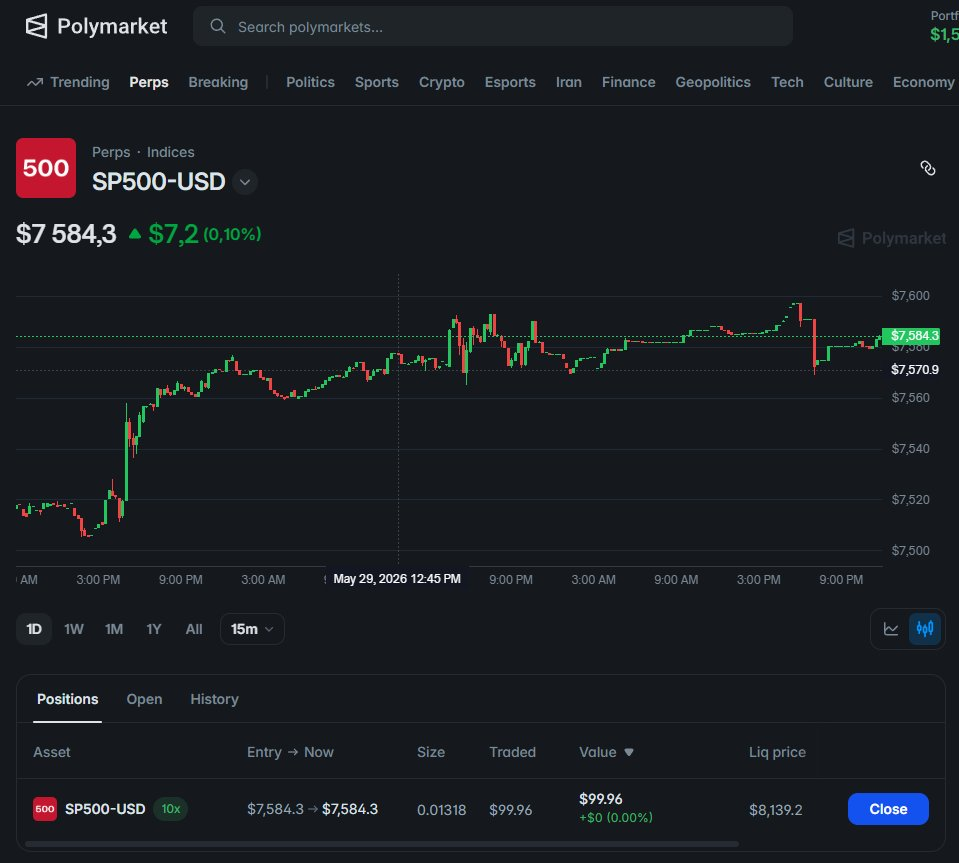
Polymarket Perps Beta: Iterating Through Limited Testing
Polymarket’s VP of DeFi Engineering, Josh Stevens, announced on X that Perps Beta is now available at polymarket.com for a select group of users and will gradually expand access over the next four weeks. He added that earlier, some applicants were manually added via direct message, but for now, the team will not onboard additional testers. The platform has yet to disclose the full list of supported trading pairs, leverage limits, margin rules, or funding rate mechanisms, indicating that this beta is primarily focused on gauging system stability rather than driving immediate trading volume.

Early feedback reveals that testers can already open positions—some have posted screenshots showing a BTC leveraged long, and the interface appears to include crypto assets and index products. However, community discontent has centered on testing access and KYC requirements. Eligibility was limited to users who reached out via X DM, and some participants had to complete identity verification. Rumors that restrictions might ease at full launch have done little to quell complaints about fairness, potential impact on airdrops, or point systems.

Deeper anxieties revolve around liquidity and user behavior. For a perpetual exchange, the real test lies in order book depth, slippage control, and fill reliability during volatile moves. As one community member put it, “perp liquidity is the real test.” Compounding this, Polymarket’s core user base is accustomed to binary event contracts—buying “Yes” or “No” and waiting for settlement. Perpetuals introduce leverage, liquidations, and funding rate management, which poses a steep learning curve and higher loss risks for these prediction-market natives.

Moreover, Polymarket has faced past criticisms of latency, order lag, and ghost fills. If similar issues surface in a leveraged trading environment, the impact would be far greater than in simple prediction markets, where a few seconds of delay may only mean a slightly worse price. Polymarket Perps is thus in a critical calibration phase: early feedback has not been overwhelmingly negative—many testers praised the clean interface and straightforward experience—but issues of access gatekeeping, liquidity, leverage risk, and trading stability must be resolved before scaling to a wider audience.
Kalshi BTCPERP: Regulatory Green Light for Compliant Perpetuals
On May 29, the CFTC approved Kalshi’s listing of the Bitcoin perpetual contract BTCPERP, which references the spot Bitcoin price and will be traded as a futures product. The CFTC found the contract in compliance with the Commodity Exchange Act and applicable core principles for designated contract markets (DCMs). This marks a pivotal moment: it places a product that has long existed mainly on offshore and crypto-native exchanges within the U.S. regulated framework, effectively opening a door for compliant crypto perpetuals. Kalshi has followed its established pattern of securing regulatory approval first and then leveraging that compliant identity to expand product lines, having previously packaged political, economic, weather, and sports event contracts as regulated offerings. Now it extends that approach to crypto derivatives, signaling a transformation from a prediction market platform to a regulated derivatives exchange.

Yet that regulatory blessing comes with clear boundaries. The CFTC noted that perpetual contracts are not suitable for all asset classes, and any uncovered assets would still require a regulatory review under the applicable rule. This means Kalshi’s expansion will be slower and more constrained by regulatory timelines compared to offshore counterparts, but its compliance identity and institutional narrative give it a distinct advantage. The BTCPERP approval is therefore not just a new trading product; it is a definitive signal of Kalshi’s evolving business identity.

The Perpetual Contest: Turning Event Traffic into Trading Traffic
Polymarket and Kalshi pursuing perpetual contracts simultaneously is not about adding another feature; it’s about pushing their business perimeter closer to that of a full-fledged exchange. Event trading has proven to be a profitable niche, but perpetuals are more standardized and better suited to absorb the capital and habits of seasoned traders. For these platforms, launching perps is a move to cultivate a second, more mature derivatives business alongside their event-focused franchises.
However, stepping into the perpetual arena pits them directly against entrenched crypto exchanges like Hyperliquid, Binance, OKX, and Bybit. Users will compare liquidity depth, slippage, matching stability, and risk controls head-to-head. The brand recognition and user traffic from prediction markets will not automatically translate into competitive edge in the contracts space. The ultimate challenge, therefore, is to convert event-driven traffic into sustained trading traffic—only when users open the platform not just for a major event but to routinely trade volatility and manage positions will these prediction market platforms truly have a foothold in the exchange business.