

A pivotal week for prediction markets saw two of the biggest names take parallel steps into perpetual contracts. On one side, Polymarket’s DeFi engineering VP Josh Stevens announced that the Perps Beta had been opened to select users, with access set to expand gradually over the next four weeks. On the other, the U.S. Commodity Futures Trading Commission formally approved Kalshi to list BTCPERP, a Bitcoin perpetual contract to be traded on its regulated exchange. One is a small-scale product test; the other is a full regulatory green light. Together, they mark the moment when prediction market platforms move decisively beyond event betting and into the high-frequency, standardized world of crypto derivatives.
This convergence has been building for months. An earlier analysis noted that prediction market platforms were expanding into perpetuals while exchanges were simultaneously dipping into event-based trading, blurring the competitive lines. Now that blur has become more concrete: Polymarket is betting on product-first testing to refine user experience and technical stability, whereas Kalshi is leveraging regulatory certainty to open a new asset class. The routes differ, but the destination is the same — neither wants to remain just a place to bet on election outcomes or sports results. They are chasing the far larger, more liquid derivatives market.

Polymarket Perps Beta: A Controlled Test Where Liquidity Is the Litmus Test
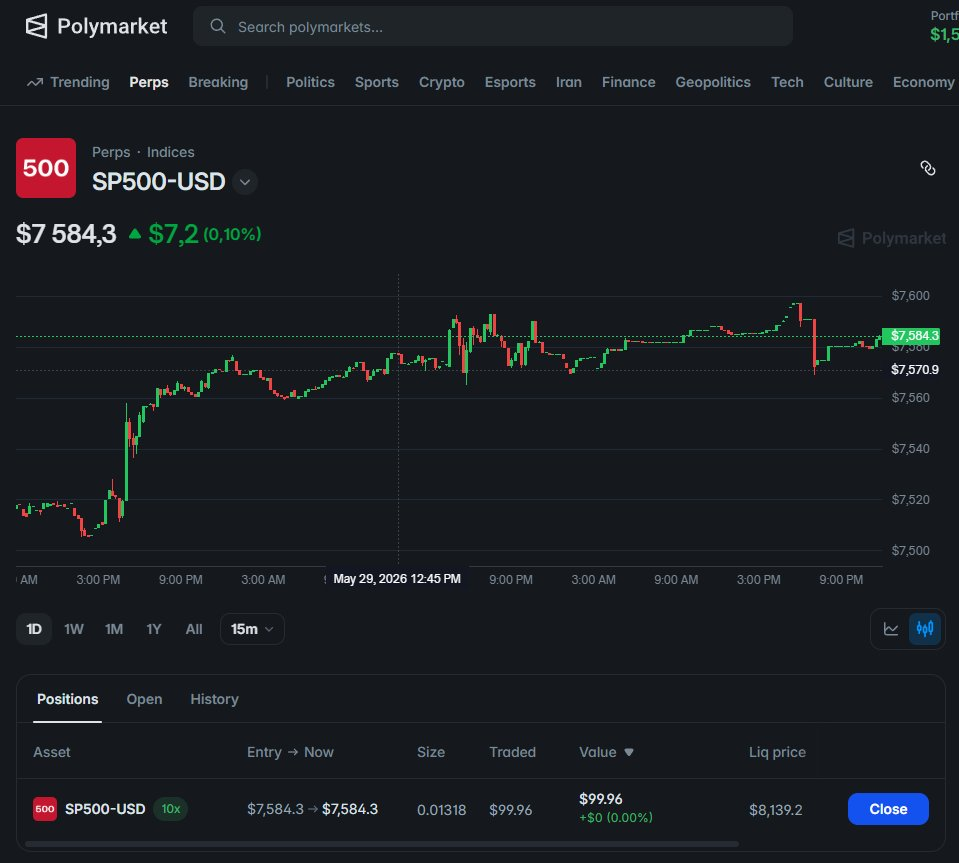
Stevens provided the bare outlines via X: the Beta is live on polymarket.com for a limited user group, with access scaling up over the next four weeks. He added that some applicants had already been added via direct message, and while a few more slots might open, no new testers will be added for now. Polymarket has not disclosed the full list of trading pairs, leverage limits, margin rules, or funding rates. This signals that the Beta is an internal stress test — the goal is not to gauge immediate revenue potential but to verify that the matching engine and risk systems can run reliably. Early screenshots from testers show long BTC positions and interface elements for crypto assets and indices, but the final feature set remains unconfirmed.

Community reaction quickly zeroed in on two pain points: access and liquidity. The invite-only approach and KYC requirement drew complaints about exclusivity and potential effects on future airdrops or loyalty points. But the deeper concern was liquidity. Order-book depth, slippage control, and fill stability under volatile conditions are what separate a usable perpetuals venue from a broken one. As one user bluntly put it, “Perp liquidity is the real test.” Equally problematic is user adaptation. Polymarket’s base is accustomed to binary event contracts — buy Yes or No and wait for settlement. Perpetuals introduce leverage, liquidation, funding rates, and continuous position management. For professional traders, these are familiar mechanics, but for the event-betting crowd, the learning curve and loss risk are steep. Moreover, Polymarket has been criticized in the past for latency, order lag, and ghost fills — problems that become far more damaging when leverage is involved, where a split-second glitch can wipe out a position.

Kalshi’s BTCPERP: The Regulatory Gateway Opens
Kalshi’s progress is on the regulatory front. On May 29, the CFTC reviewed and approved Bitcoin perpetual contract BTCPERP under the Commodity Exchange Act and Regulation 40.3, allowing it to be listed as a futures product. The significance goes beyond adding a single BTC pair: it places a product that has long existed almost exclusively on offshore or crypto-native exchanges into a U.S. regulated exchange framework for the first time. This follows Kalshi’s established playbook — securing regulatory permission first, then expanding asset coverage. The same platform that already offers regulated contracts on politics, economics, weather, and sports is now replicating the model for crypto derivatives.

The approval also comes with boundaries. The CFTC noted that perpetuals are not suitable for all asset classes and that market participants must continue to submit new contracts via Regulation 40.3 for review. This means Kalshi’s expansion will be slower and more measured than an offshore exchange, unable to swiftly roll out hundreds of pairs. Its moat is the regulatory certainty and institutional narrative, not speed. In that sense, BTCPERP is less about a new product and more about an identity shift: Kalshi is moving from being a prediction market platform to a regulated derivatives exchange.

Two Paths, One Goal: From Event Contracts to Exchange-Style Trading
The contrast between the two approaches is stark. Polymarket, with its crypto-native ethos, is putting a product into users’ hands first and iterating quickly based on live feedback. Kalshi is securing the legal high ground first and using that to open the door. The former benefits from rapid iteration and existing crypto traffic; the latter gains regulatory clarity and appeal to institutional players. But both are pushing the same strategic pivot. Prediction markets themselves have plenty of trading scenarios — elections, macro data, crypto prices — and are already proven revenue generators. Perpetuals add a layer of standardized, high-frequency trading that is more familiar to veteran traders and carries larger potential volumes. Platforms are not adding perps because event trading is unprofitable; they are doing it because it represents a distinct, adjacent business with its own growth curve.
The Real Test: Converting Event Traffic into Trading Habits
Entering the perpetuals arena means Polymarket and Kalshi now compete directly with established crypto exchanges like Hyperliquid, Binance, OKX, and Bybit. Users will compare liquidity, slippage, matching stability, leverage features, and risk controls. Brand recognition and event-driven traffic won’t automatically translate into derivatives dominance. The litmus test will be whether platforms can convert episodic, headline-driven visits into sustained trading activity — where users come not just for the Super Bowl or a Fed meeting, but to manage positions and trade volatility day in and day out. Only then will these prediction market pioneers earn a seat at the exchange table.