

Last week, Polymarket and Kalshi each took significant steps. Polymarket gave a limited group of users access to a Perpetuals beta, set to gradually broaden over the next four weeks. Kalshi secured CFTC approval to list the bitcoin perpetual contract BTCPERP. Though the paths differ—one is product testing, the other regulatory clearance—the signal is the same: prediction markets are no longer content with event-based trading and are moving into the higher-frequency, standardized derivatives market.
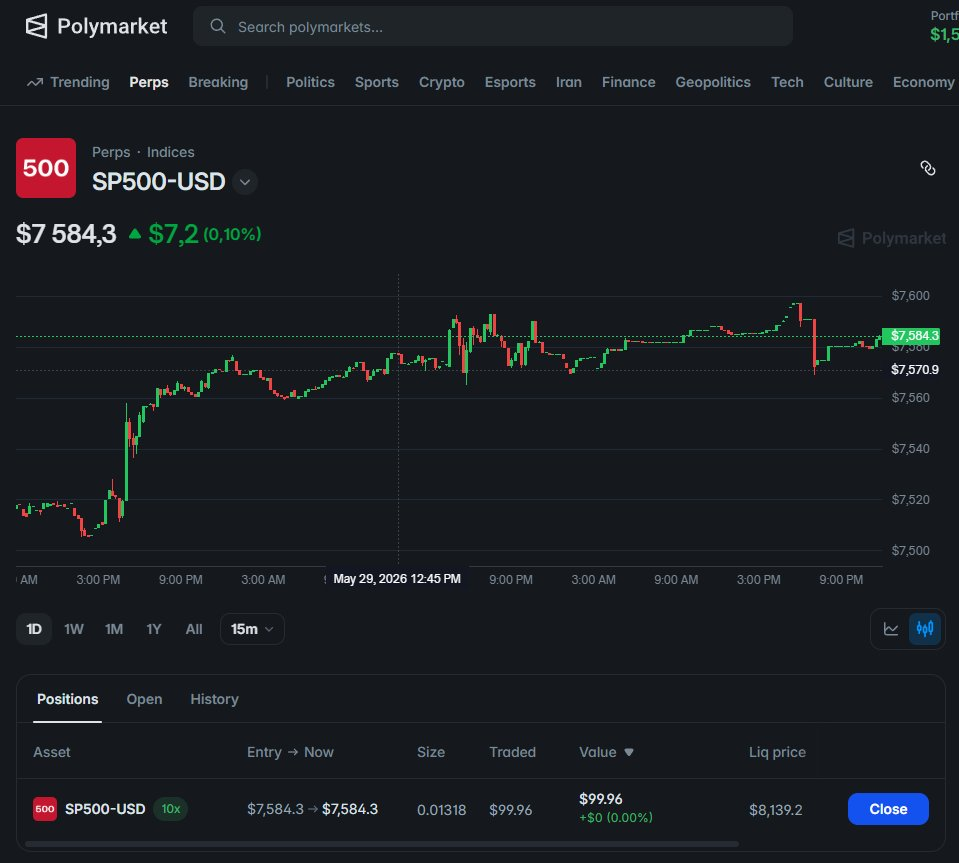
Polymarket Perps Beta Begins Small-Scale Testing
Polymarket’s DeFi Engineering VP Josh Stevens announced on X that the Perps Beta was live on polymarket.com for a subset of users, with access set to expand over the next four weeks. Some users had already been added via direct message invitations, and while a small number of additional spots might open later, the platform is not onboarding more testers for now. Full details on trading pairs, leverage, margin rules, and funding rate mechanisms have not been disclosed, indicating that this beta is primarily a stability check rather than a volume push.

Early tester feedback shows basic position opening is functional, with some users mentioning BTC leveraged longs and screenshots displaying crypto asset and index listings. However, final pairs and features await official confirmation. The first friction points were access and KYC: only those who applied via X messages and completed identity verification could participate. Complaints arose from users who missed qualification or worried about how the testing phase might affect future airdrops or points.

Liquidity concerns run deeper. The community stressed that true tests for perpetuals are order-book depth, slippage control, and execution stability during volatility—not merely the ability to open a position. Polymarket’s core audience is accustomed to binary event contracts, buying Yes or No and waiting for settlement. Perpetuals introduce leverage, liquidations, funding rates, and ongoing position management, raising both the learning curve and loss risk for newcomers. Moreover, past platform issues like latency, order lags, and ghost fills could prove far more consequential in a high-leverage environment.

Kalshi’s BTCPERP Approval Opens the Door to Regulated US Crypto Perpetuals
In contrast to Polymarket’s product testing, Kalshi’s advance was regulatory. On May 29, the CFTC approved Kalshi’s bitcoin perpetual contract BTCPERP, which references the spot bitcoin price and will trade as a futures product. The review under Section 5c(c)(4) of the Commodity Exchange Act and Regulation 40.3 determined the contract met core principles for a designated contract market (DCM).

This is not just an additional BTC product; it introduces a contract structure long confined to offshore and crypto-native exchanges into the framework of a regulated US exchange. Kalshi follows its familiar playbook: secure regulatory approval first, then expand product categories under that license. Having already wrapped political, economic, weather, and sports event contracts as regulated financial instruments via its DCM status, the company is now replicating that approach for crypto perpetuals. The CFTC noted, however, that perpetuals are not suitable for every asset class, and uncovered assets must still undergo the Regulation 40.3 review process. This regulatory certainty provides a moat but also slows the pace of launching numerous trading pairs compared to offshore competitors.

Dual Paths and the Core Challenge of Becoming an Exchange
The simultaneous push into perpetuals by both Polymarket and Kalshi underscores a broadening of business boundaries toward exchange models. Event trading—covering elections, sports, macro data, crypto prices, corporate events, and breaking news—is already a profitable niche. Perpetuals, however, are more standardized and align better with the capital and habits of experienced traders. For these platforms, the move is not because event markets are unprofitable, but because they see an additional, mature derivatives business ripe for capture.
But the competitive landscape shifts abruptly. In perpetuals, the rivals are no longer just other prediction markets, but established crypto exchanges like Hyperliquid, Binance, OKX, and Bybit. Users will directly compare liquidity, slippage, matching stability, leverage experience, and risk controls. Brand recognition and event-traffic do not automatically translate into contract-trading competitiveness. The real test is whether event interest can be converted into sustained trading flow—whether users open the platform not just for a major event, but to trade volatility and manage positions on an ongoing basis. Only then will prediction market platforms have truly begun to grasp the business of being an exchange.