
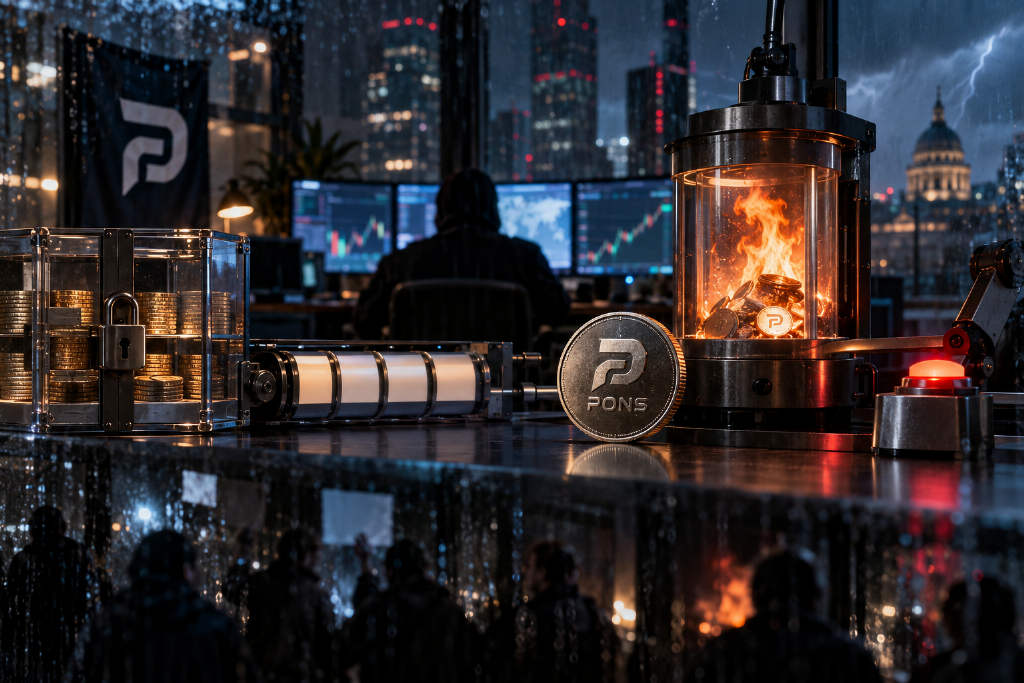
BlockBeats reported on Oct. 3 that PONS founder Ozzy (@MEADGod) responded to community questions about the project’s buyback-and-burn mechanism and apologized for misunderstandings in earlier communication.
User yyy had previously challenged several parts of the mechanism, including whether funds in the escrow account still needed to be transferred manually into the buyback distributor, why funds had not entered the buyback distributor for more than five days, whether the current buyback-and-burn pace was about $120,000 a day, and whether the previously promised automatic claim function for escrow funds had been implemented.
Ozzy acknowledges some of the concerns
Ozzy said some of the criticism was valid. He stated that the buyback-and-burn rate has not yet been adjusted, and that the claim step had not previously been fully decentralized.
He said the team is upgrading the contract. Under the new design, funds will be claimed once every seven days, and those claimed funds will then be used for buybacks and burns over the next seven days on a recurring basis.
What has already been automated
According to Ozzy, all buyback and burn operations have already been automated. Anyone can trigger the bot to carry out the related actions and receive a small reward. He said the main item that still needs adjustment is the buyback-and-burn rate.
Ozzy added that the previous buyback rate was set at 2e per hour. Combined with roughly 950,000 in the Splitter fund-routing contract and the seven-day cycle arrangement, he said that rate matches the current size of the funds.
How funds will be displayed
He also said fund claims will be executed automatically once every seven days. In the future, buyback funds will be displayed in two sections: the Active Buyback Vault, which is used for the current buyback execution, and the funds reserved for the next cycle.
Ozzy thanked community members for the feedback and again apologized for responding before fully understanding the issue. User yyy later accepted the apology and said that a more decentralized and automated claim and buyback-burn mechanism is an important foundation for building trust in the community.