

The insurance industry has long held a monopolistic position as an economic stabilizer, but prediction market platforms like Kalshi and Polymarket are now directly encroaching on its territory. From hedging sports marketing campaigns to insuring property prices and covering operational risks like weather and policy changes, these platforms have rapidly expanded far beyond simple betting tools.

Sports Insurance Hedging: From a Small Bar to Professional Teams
During the NBA Finals in early June, Andy Freedman, owner of The Jeffrey bar in New York’s Upper East Side, launched a promotion: if the Knicks won Game 1, all drinks that night would be free. He hedged this risk by placing $5,000 on Kalshi. The Knicks won, and Freedman used the prediction market payout to cover the drink costs, resulting in a win-win-win for the bar, customers, and the platform. This real-world case vividly demonstrates prediction markets as an effective risk management tool for marketing campaigns.
A more professional example came in February, when sports insurance broker Game Point Capital partnered with Kalshi to offer hedging services for NBA teams’ playoff advancement bonuses. Game Point Capital, which issues hundreds of millions of dollars in sports insurance annually, traditionally relied on legacy insurers like Lloyd‘s, Munich Re, and Swiss Re. However, Kalshi’s pricing is significantly lower – e.g., 6% for bonus hedging versus the traditional 12-13% – and offers greater transparency. Tarek Mansour, CEO of Kalshi, called it “a better way to hedge risks and get insured.”

Real Estate Prediction Markets: Hedging Without Ownership
In January, on-chain real estate platform Parcl partnered with Polymarket to introduce daily real estate price indices into a new prediction market. Initial markets focused on major U.S. cities including New York, Los Angeles, Miami, and Austin, allowing users to predict monthly, quarterly, or annual price movements. The announcement sent Parcl’s native token PRCL up over 100% on the day. Realtor senior economist Joel Berner noted that homeowners and potential buyers can use these markets to protect their interests: sellers worried about price declines can buy “Under” contracts, offsetting real losses if prices drop; buyers worried about price increases can buy “Over” contracts, using gains to cover higher purchase costs.

Bigger Ambitions: Becoming Small Business Insurers
Nicolas Hull, Kalshi’s head of business, revealed the platform’s ambition to become a “small business insurance provider.” Many small enterprises – hotels affected by sports events, clothing stores and restaurants impacted by weather, importers facing policy changes – lack affordable traditional insurance. Kalshi offers a liquid, transparent marketplace where any business can hedge risks that affect their bottom line, marking a fundamental shift in how small businesses manage risk.
Traditional Betting as Insurance: Vatti and “Mattress Mack”
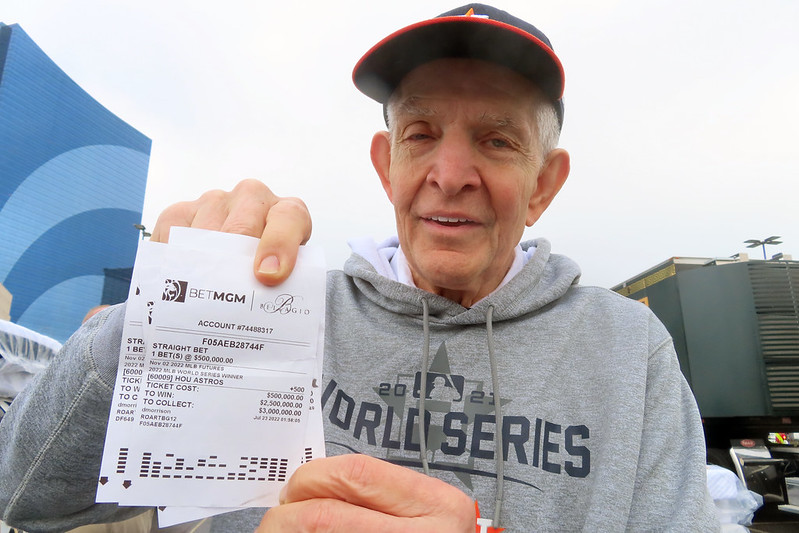
Long before prediction markets, traditional sports betting was used for insurance-like marketing. In 2018, Chinese appliance brand Vatti ran a campaign promising full refunds if France won the World Cup; despite implementation issues, it popularized the “free refund” concept. In 2017, Houston furniture magnate Jim “Mattress Mack” McIngvale bet $12 million on the Astros winning the World Series to cover a refund promotion. He repeated the strategy in 2022, betting $10 million and winning $72.6 million, returning every dollar to 3,000 customers.

Prediction markets improve upon traditional betting in four key ways: 1) Information monetization – broader scope and flexible exits allow real-time decisions; 2) Platform neutrality – markets act as infrastructure, not counterparties; 3) Transparency – odds and orders are public, reducing insider trading; 4) Fair access – traditional sportsbooks often ban or limit winning players (the “ban or bankrupt” model), while prediction markets enable more open participation. Organizations like American Bettors Voice are advocating for sensible regulation to ensure fairness.

Jeff Yass, CEO of market-making firm SIG, told Forbes that prediction markets allow parties to more efficiently share risk based on specific parameters. For example, Florida homeowners can buy “parametric” contracts – if wind speeds exceed a threshold, they automatically receive a payout – which is more targeted than annual insurance policies.

Despite challenges such as regulation and market education, the first steps have been taken. Whether traditional insurers acknowledge it or not, platforms like Kalshi and Polymarket are already eating into the turf of sportsbooks and conventional insurers, establishing themselves as true barbarians at the gate.