
Protos has published a review of 32 NFT predictions and says the sector’s biggest promises largely failed to play out after the market’s 2022 peak.

The article frames NFTs as a market that reached multi-billion-dollar scale at the height of the boom, then saw even blue-chip projects, with few exceptions, fall sharply in value, retreat from earlier promises, or get abandoned altogether. From that starting point, Protos revisits forecasts made by investors, executives, founders, celebrities, and corporations across a wide range of NFT use cases.
Insurance, real estate, and ticketing claims did not materialize
In one example, Kevin O’Leary said in January 2022 that the next few years would bring major movement in authentication, insurance policies, and real estate transfer taxes moving online, making NFTs a potentially bigger and more fluid market than bitcoin alone. Protos counters that this did not happen and notes that bitcoin remains a much larger and more liquid market than NFTs.
Mark Cuban also made expansive claims about the collectible nature of NFTs reshaping industries. Protos points to a 2021 remark in which Cuban said the Dallas Mavericks were trying to find a way to turn tickets into NFTs so fans could buy and resell them while the team continued to earn royalties. According to Protos, that effort never happened either.
Gaming predictions ran into weak user numbers and failed flagship projects
Michael Wagner, founder of Star Atlas, predicted that the game’s spaceship NFT model could bring in billions of users, according to Zeke Faux’s Number Go Up. Protos says the most recent economic report for Star Atlas stated that SAGE: Starbased had 2,000 monthly active users when the project stopped tracking that metric.
Sky Mavis co-founder Aleksander Larsen predicted that blockchain games would provide jobs for hundreds of millions of people around the world and create a form of GDP the world had never imagined before. Protos places that statement next to the collapse of Axie Infinity, calling it a spectacular failure and adding that the game partly funded North Korea’s nuclear program.
Healthcare records, fashion, and IP did not become broad NFT markets
Galaxy Digital’s Brian Novogratz predicted that healthcare records would become NFTs and that brands, fashion companies, IP owners, the music business, and the creative industries would all work out ways to use the technology. Protos says that did not happen at broad scale: healthcare records are not NFTs, not everyone found a use for the technology, and much intellectual property never became an NFT.
Stephanie Wissink of Jefferies forecast that NFT market capitalization would exceed $80 billion by 2025. Protos says the current figure is difficult to pin down precisely but cites CoinGecko as placing it somewhere around $1.7 billion.
Art valuation and digital identity rhetoric cooled off
Vignesh Sundaresan, better known as MetaKovan, bought Beeple’s Everydays: The First 5000 Days and said in Christie’s press release that the work was worth $1 billion. Protos notes that the piece has not been resold, so his private view of its value is unknown, but says it appears unlikely to fetch $1 billion today.
Actor Reese Witherspoon predicted that in the near future every person would have a parallel digital identity, with avatars, crypto wallets, and digital goods becoming the norm. Protos says parts of that may arguably be true for some people, but adds that her push to turn NFTs into TV shows and movies seems to have quietly failed.
Coinbase, Gemini, Nifty Gateway, and Justin Sun fell short of early expectations
In 2021, Coinbase founder and chief executive Brian Armstrong said the company’s NFT initiatives could become as big as, or bigger than, its crypto-focused business. Protos says Coinbase shut down its NFT trading platform about two years ago.
Gemini founder and chief executive Tyler Winklevoss said NFTs and the digital goods and collectibles tied to them would play a major role in the next era of the digital economy. Duncan Cock Foster, founder of Nifty Gateway, said he liked to think that in 10 years everyone would commission artists to create nifties to give away at dinner parties. Protos notes that Nifty Gateway has since shut down.
Justin Sun launched the JUST NFT Fund in 2021 and said NFT-backed artworks opened a spectacular new chapter in human art history, with his fund serving as the prologue. Protos says that when it checked Sun’s NFT platform in February, it found just $6 a day in trading volume.
Metaverse forecasts never reached the numbers attached to them
David Grinder and Matt Maximo of Grayscale Research said the opportunity tied to bringing the metaverse to life could be worth more than $1 trillion in annual revenue. Goldman Sachs analyst Eric Sheridan said the metaverse could represent as much as an $8 trillion opportunity on the revenue and monetization side. Protos says neither target has come close to being reached.
Meta founder Mark Zuckerberg announced in 2022 that Instagram would add NFT functionality. Protos says the feature was launched and then removed. Zuckerberg also said clothing worn by avatars in the metaverse could be minted as NFTs and carried across places, but Protos says that feature was never implemented in Meta’s effectively abandoned metaverse effort.
Disney chief executive Bob Chapek said in an internal email that the metaverse was the next great storytelling frontier and the perfect place to pursue the company’s strategic pillars. Since then, Protos notes, Bob Iger replaced him as chief executive and the metaverse work was scrapped.
Social networks, retail, and platform integrations remained limited
A16z partner Chris Dixon wrote in Read Write Own that NFT identifiers could serve a similar function in newer social networks by letting users move between applications while keeping names and connections intact. Visa’s head of crypto, Cuy Sheffield, said NFTs would play an important role in the future of retail, social media, entertainment, and commerce. Protos says those ideas may work in theory, but it does not see meaningful implementation in practice, and notes that X has removed NFT profile pictures.
TIME president Keith Grossman launched an NFT gallery intended to raise revenue through art sales, but Protos says the gallery has since been abandoned.
Corporate and brand NFT experiments were cut back, sold, or dropped
When Nike acquired RTFKT in 2021, its chief executive called the deal another step in accelerating Nike’s digital transformation and a way to serve athletes and creators at the intersection of sport, creativity, gaming, and culture. Protos says Nike has since sold RTFKT.
Tom Brady co-founded Autograph as a company that planned to offer NFTs to sports fans, but Protos says it later pivoted away from NFTs before being acquired.
Universal Music treated NFTs as the future of music and even created a band made up of several Bored Apes. Protos says the band never released any music.
Square Enix president Yosuke Matsuda said in 2022 that 2021 was not only “Metaverse: Year One” but also “NFTs: Year One.” Protos says he later stepped down and the company moved away from that strategy.
Electronic Arts chief executive Andrew Wilson said in 2021 that NFTs were the future of the industry. Protos says EA has since stopped pursuing that direction and no longer produces NFTs.
Celebrity projects and social use cases also fell flat
Snoop Dogg said his Death Row label would become an NFT label. Protos says that did not happen. It also revisits his move into The Sandbox, where he said he was “getting this money” and that he “doesn’t know shit,” using that quote to mock how the effort turned out.
Paris Hilton said the metaverse was the future of partying, going out, interacting with people, and being social. Protos rejects that outcome, at least from the perspective of the article’s author.
Logan Paul described his CryptoZoo NFT game as something that would be fun and make users money. Protos says it never launched and later became the subject of a string of investigations by YouTuber Coffeezilla.
Protos says one of the few relative wins was Pudgy Penguins
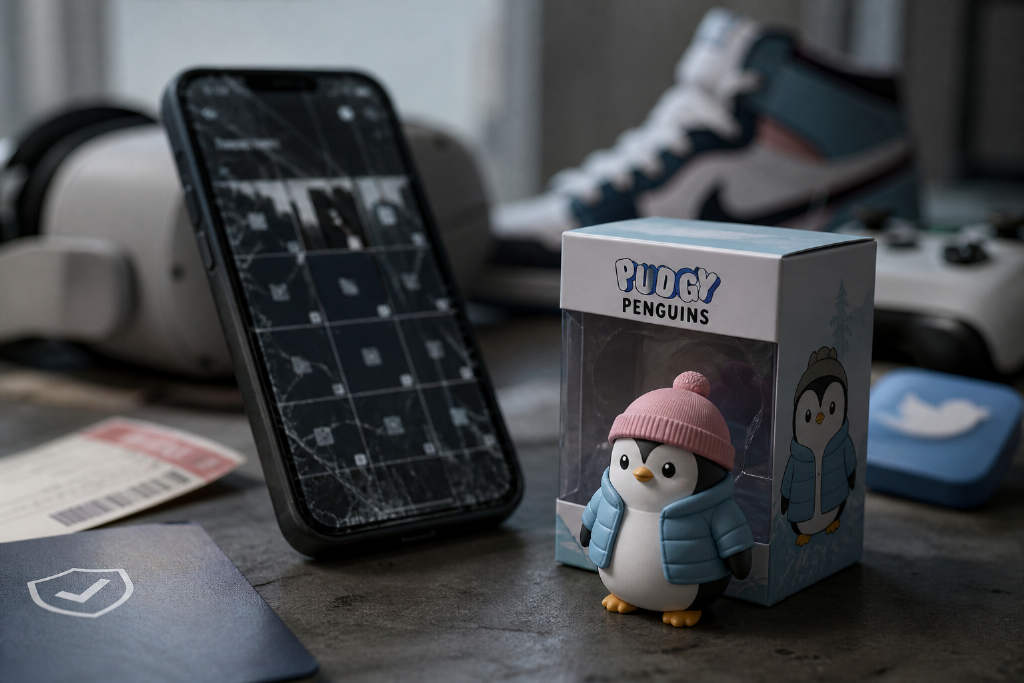
The article does not say every NFT prediction was entirely wrong. One of its rare examples of relative success is Pudgy Penguins chief executive Luca Netz, who predicted he would turn the then-failed project into a brand recognized both inside and outside the NFT world.
Protos says the extent of that success can still be debated. Still, it adds that Pudgy Penguins has managed to place derivative toys in major stores and improve its relative position in NFT rankings.
Across all 32 examples, Protos presents the same broad takeaway: many of the most confident NFT forecasts from 2021 and 2022, spanning insurance, property transfers, ticketing, gaming, music, social media, digital identity, and the metaverse, either failed outright or only materialized in a much smaller form than promised.