
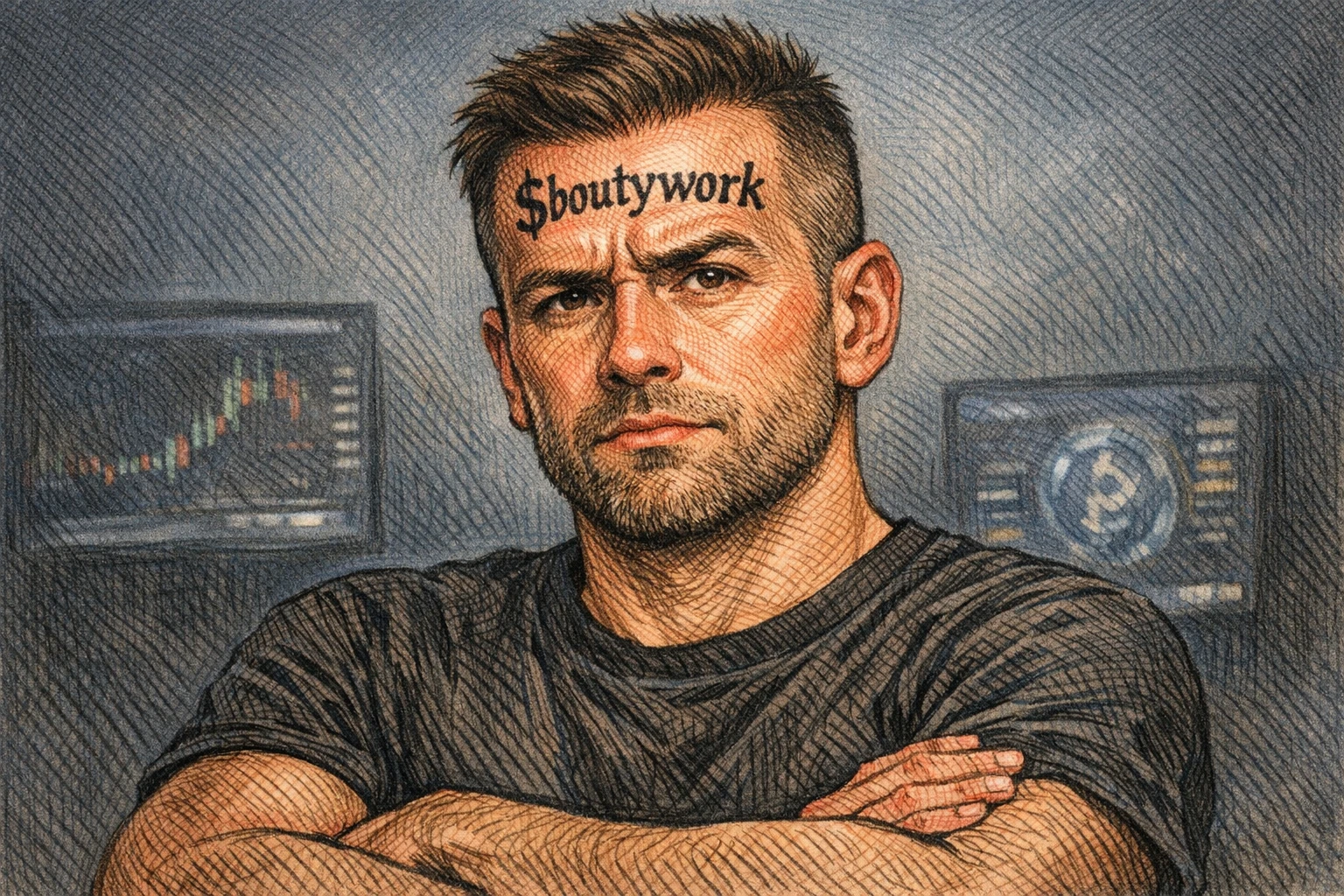
A Pump.fun GO bounty has triggered fresh criticism after a pseudonymous user, Arivu, tattooed the misspelled token ticker “$boutywork” on his forehead to complete a task. The typo was then turned into a Solana meme coin called BOUTYWORK, which at one point reached a $600,000 market cap, recorded more than $3.5 million in 24-hour volume, and drew 2,630 holder addresses.
A typo became a tradeable token
Arivu said on X that he followed the task exactly as written. The bounty asked him to tattoo “$boutywork” on his forehead and upload video proof, and the spelling mistake came from the bounty creator. In his post, he said the tattoo matched the exact name mentioned by @ayushquantt. In a follow-up, he added, “Please understand, I put my life on the line.”
According to the report, Arivu did not receive payment directly from Pump.fun or the bounty poster. Instead, he later said someone who launched a token around the incident sent him about $20,000 from trading fees, which he described as life-changing. At the same time, the people who issued and traded BOUTYWORK early were positioned to make returns measured in tens or even hundreds of times their initial exposure.
The GO model ties stunts to token speculation
Pump.fun launched its GO bounty feature last week, letting users post nearly any task for others to complete in exchange for payment. The pitch is simple: pay anyone to do anything. In practice, that setup can turn attention into bounty submissions, bounty submissions into viral content, and viral content into token trading activity.
That structure becomes much harder to defend when the requested act involves permanent body modification or obvious physical risk. What begins as internet spectacle can quickly become a system where the person taking the risk is paid far less than the traders and creators profiting from the token attached to the event.
Other posted tasks raised ethical concerns
CoinDesk reviewed other active Pump.fun GO bounties and found that the tattoo case was not isolated. One task, worth about $663, asked participants to go to Los Angeles’ Skid Row and interview two homeless people on camera about who they planned to vote for. Another task required users to promote a token while drinking an entire bottle of hard liquor, and the platform had already seen videos of people finishing a bottle in roughly one minute.
Not every listing was so extreme. One lower-stakes challenge offered about $93 for eating a watermelon in 60 seconds. Still, the broader criticism is that harmless stunts and ethically questionable tasks now sit inside the same incentive system.
Critics focused on who bears the cost
The backlash spread quickly on X. Product executive Nikita Bier wrote in a widely shared post: “The sad thing is all the rich people left crypto, and now the entire industry is just American teenagers coercing poor people into doing shameful things.” The comment captured a core complaint around meme-coin economics in this case: the people exposed to humiliation or danger are not necessarily the ones taking home the biggest gains.
Some X users also claimed they had spoken with the tattoo shop involved and suggested Arivu may have been used by others hoping to profit from the token’s price surge. CoinDesk said it tried calling the shop twice for confirmation but received no answer.
Pump.fun’s moderation is under scrutiny again
Pump.fun had not issued a direct response to the incident at the time of the report, though it said the platform has an active moderation team that removes dark or malicious content. The criticism is familiar. Before GO launched, Pump.fun’s livestreaming feature had already drawn attention for content including suicide broadcasts, death threats, and videos of people being locked in bathrooms.
The controversy has shifted form rather than disappeared. Where livestream chaos once drove attention, the GO feature now packages extreme behavior into a task market with built-in token incentives.