
Pumpfun Go: Pay Anyone to Do Anything
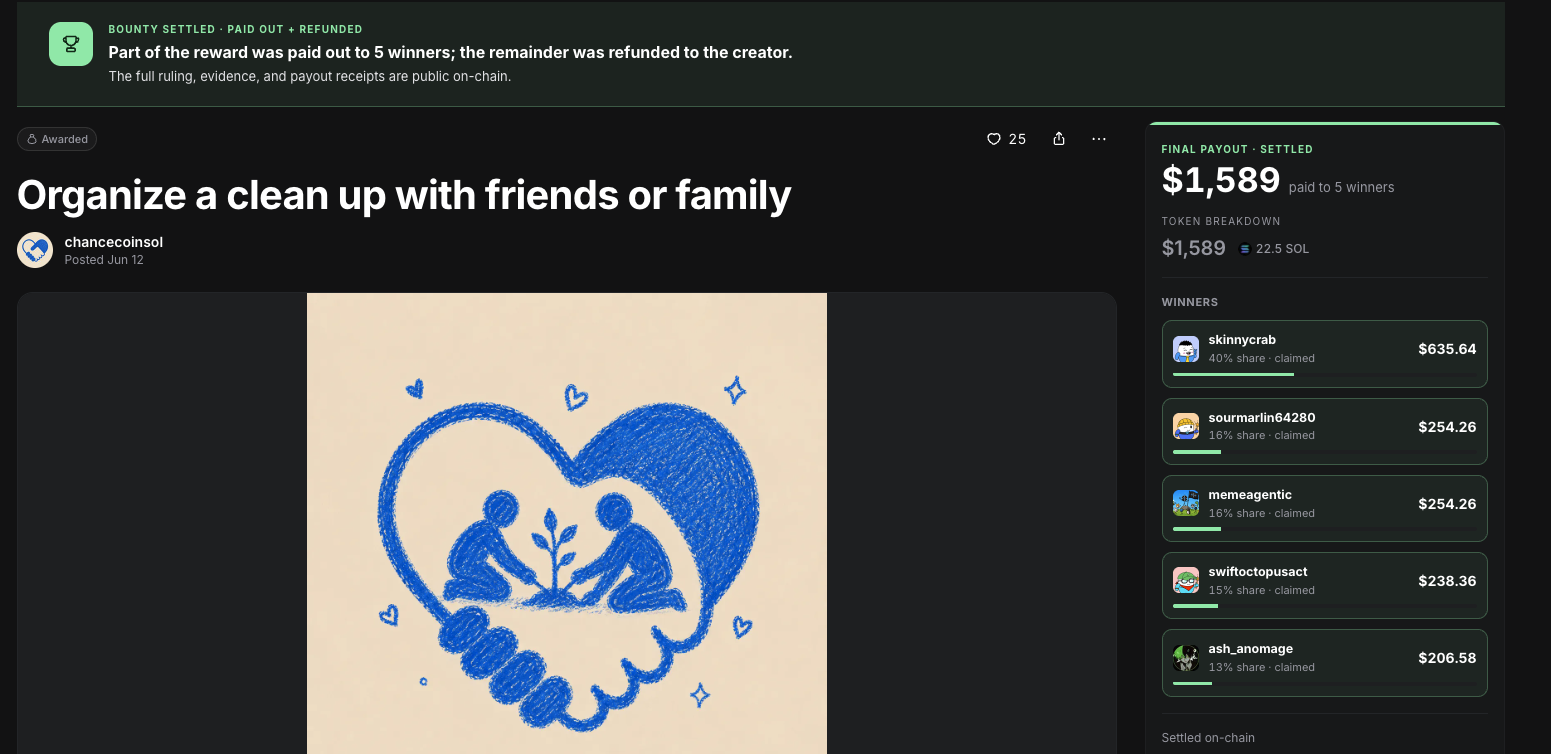
Pumpfun Go is a bounty marketplace launched in early June 2026 by Pump.fun, the leading meme coin launchpad on Solana. Its tagline is brutally simple: 'Pay Anyone to Do Anything.' Anyone can create a bounty anonymously, and anyone can submit video evidence to claim the reward, which is paid in cryptocurrency (SOL, USDC, etc.). To prevent scammers, the creator must fully escrow the bounty at creation. The platform's official judges then review submissions based on the creator's criteria. In its first month, 238 bounties were posted, with $605,000 already claimed and another $225,000 still up for grabs. The average bounty is $3,487.
From Toilet Licking to Suicide: The Bounty Landscape
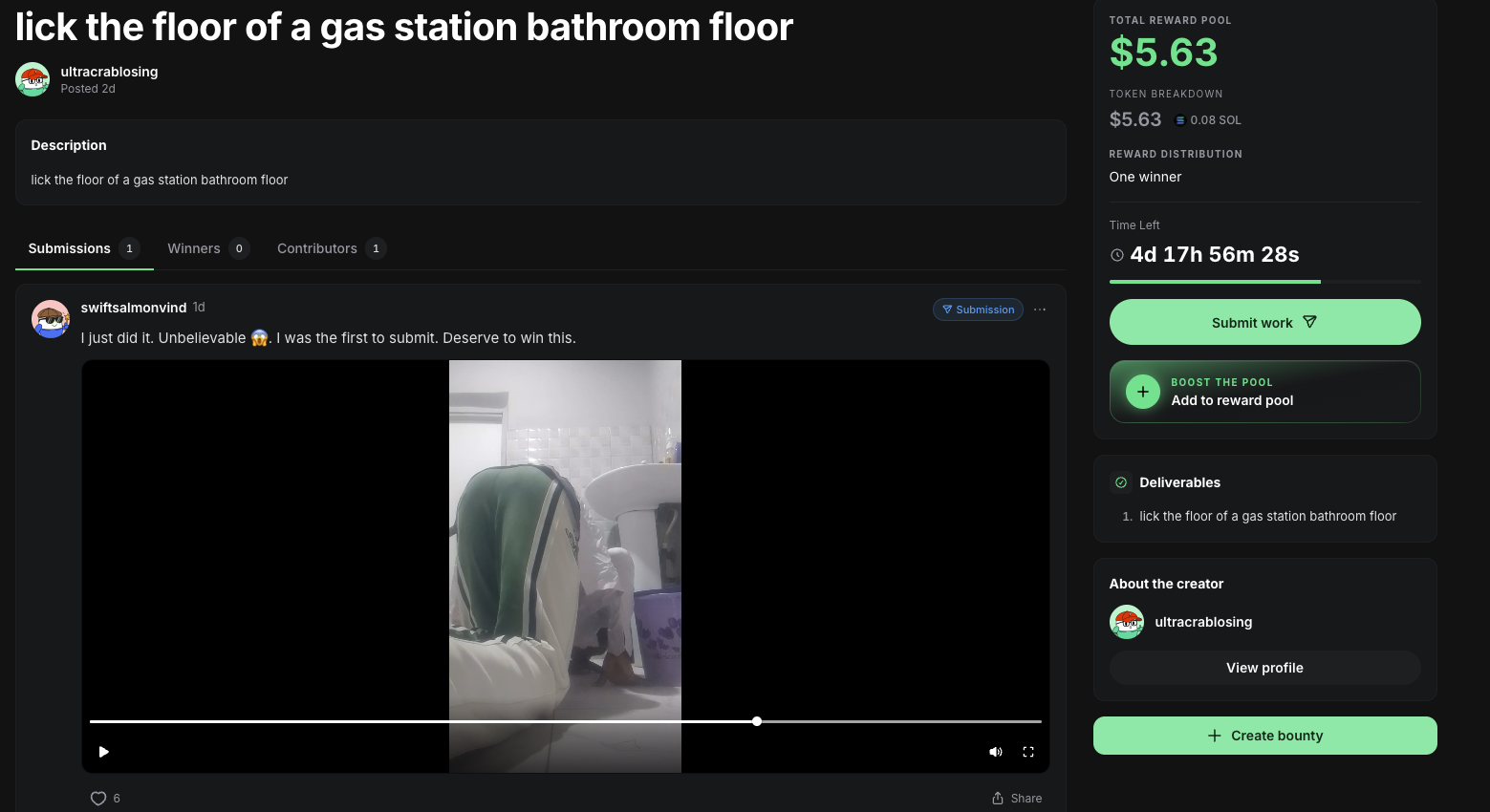
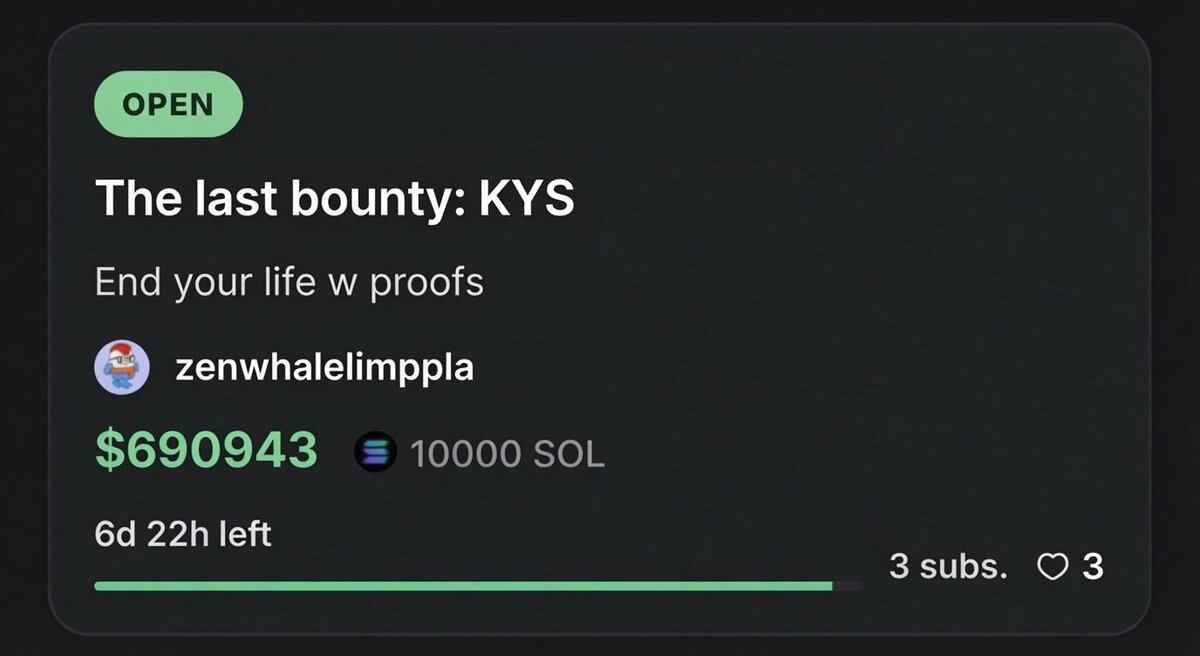
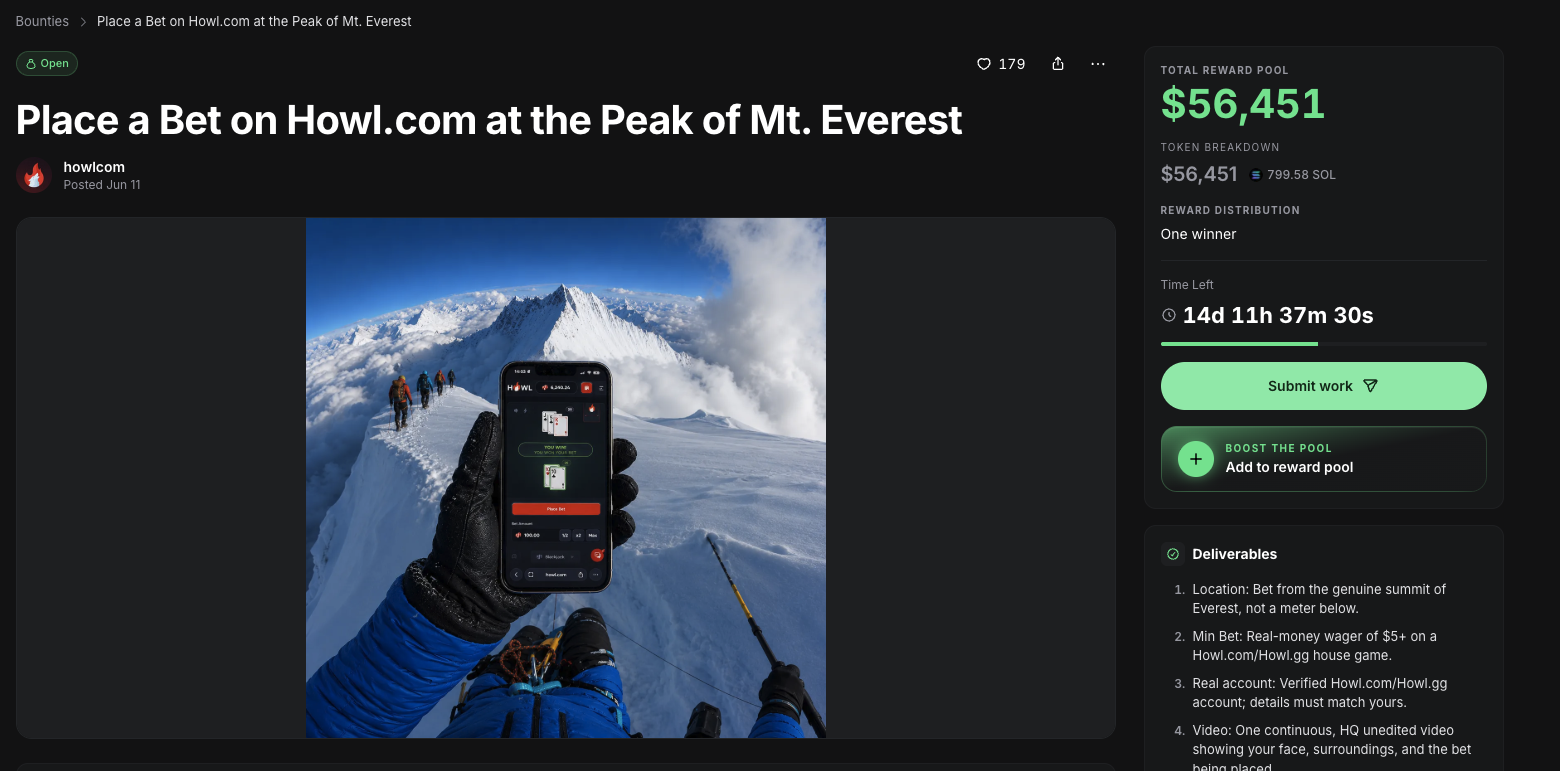
The most mundane bounty involved licking a gas station toilet floor — the winner received just $5.63 (about 40 RMB). More extreme tasks include eating live worms ($174), quitting a job in front of the boss ($3,000), tattooing a project name on the forehead (up to $14,000), organizing a NEET march ($14,000), and the ultimate challenge: suicide (1,000 SOL, ~$700,000). The three highest-paying active bounties are: climb Mount Everest and place a bet on a specific online casino ($56,000), run a full marathon in a memecoin mascot costume and break the world record of 3:14:46 ($28,000), and attend every match of the 2026 FIFA World Cup, shouting a slogan ($26,000). The vast majority of bounties are tied to marketing meme coins, as Pump.fun designed the platform precisely to incentivize viral stunts that attract attention.
Real-Life Black Mirror: Social Reaction and Ethical Schism
Many observers compare Pumpfun Go to the Black Mirror episode 'Common People' or the 2016 film Nerve. The platform's terms ban violence, discrimination, and pornography, but tasks involving humiliation or self-degradation are nearly impossible to police. A prime example: challenger 'arivu' received a forehead tattoo with a misspelled token name ('$boutywork' instead of '$bountywork') for about $3,000. When the creator reposted the correct spelling, arivu went under the needle again, adding a small 'n' above the error. The judges awarded him both bounties, totaling ~$6,000 (40,000 RMB). In his submission, arivu wrote: 'Thank you @ayushquant for the opportunity again, and thank you pump.fun for creating opportunities that can truly change people’s lives.' In contrast, an X product manager commented: 'Sad that when all the rich left crypto, all that’s left is American teens forcing poor people to do embarrassing things.' New York Governor Kathy Hochul directly called for legislation to 'ban this dystopian nightmare.' Supporters pushed back, with one account noting that New York’s homelessness crisis is far worse. Challenger 'xavz' earned $3,000 by quitting his job on camera, stating he makes more in one day than his monthly salary of $200. He called it a wealth redistribution tool.
Unresolvable Debate: Dignity, Power, and the Future of Crypto
Pumpfun Go exposes a raw truth about societal power structures: the greatest asset of the rich is not money, but the poor. When a person is desperate enough, dignity, body, and reputation become commodities. The platform profits from economic inequality, incentivizing permanent or high-risk actions for a payout. Supporters argue this is a free and fair exchange — willing giver, willing taker. Critics counter that it is a digital-age colosseum, where the weak perform their suffering for the entertainment of the strong. Pump.fun itself has remained silent on the controversy, only announcing on June 25 that it is hiring a Chief Legal Officer (CLO) with a salary of $1 million to $5 million per year. As AI and automation continue to reshape productivity, the hope is that eventually, technology will generate enough wealth to provide for everyone’s basic needs, so no one has to lick a floor for $5 — or tattoo a stranger’s forehead for $14,000. Until then, Pumpfun Go stands as a stark mirror reflecting humanity’s oldest inequalities, now powered by smart contracts and crypto wallets.