
Pumpfun Go: A Bizarre Bounty Platform Where You Pay Anyone to Do Anything
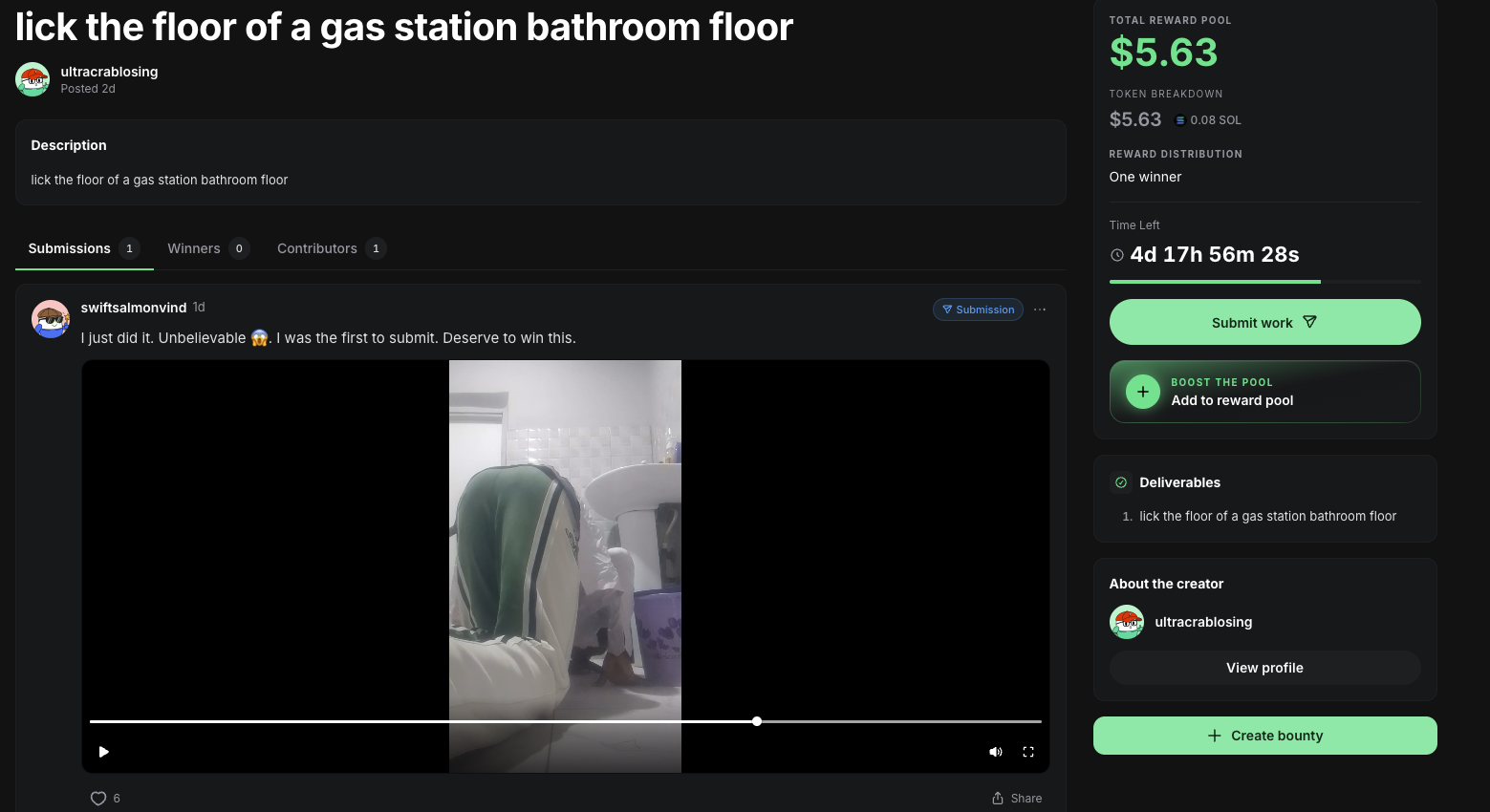
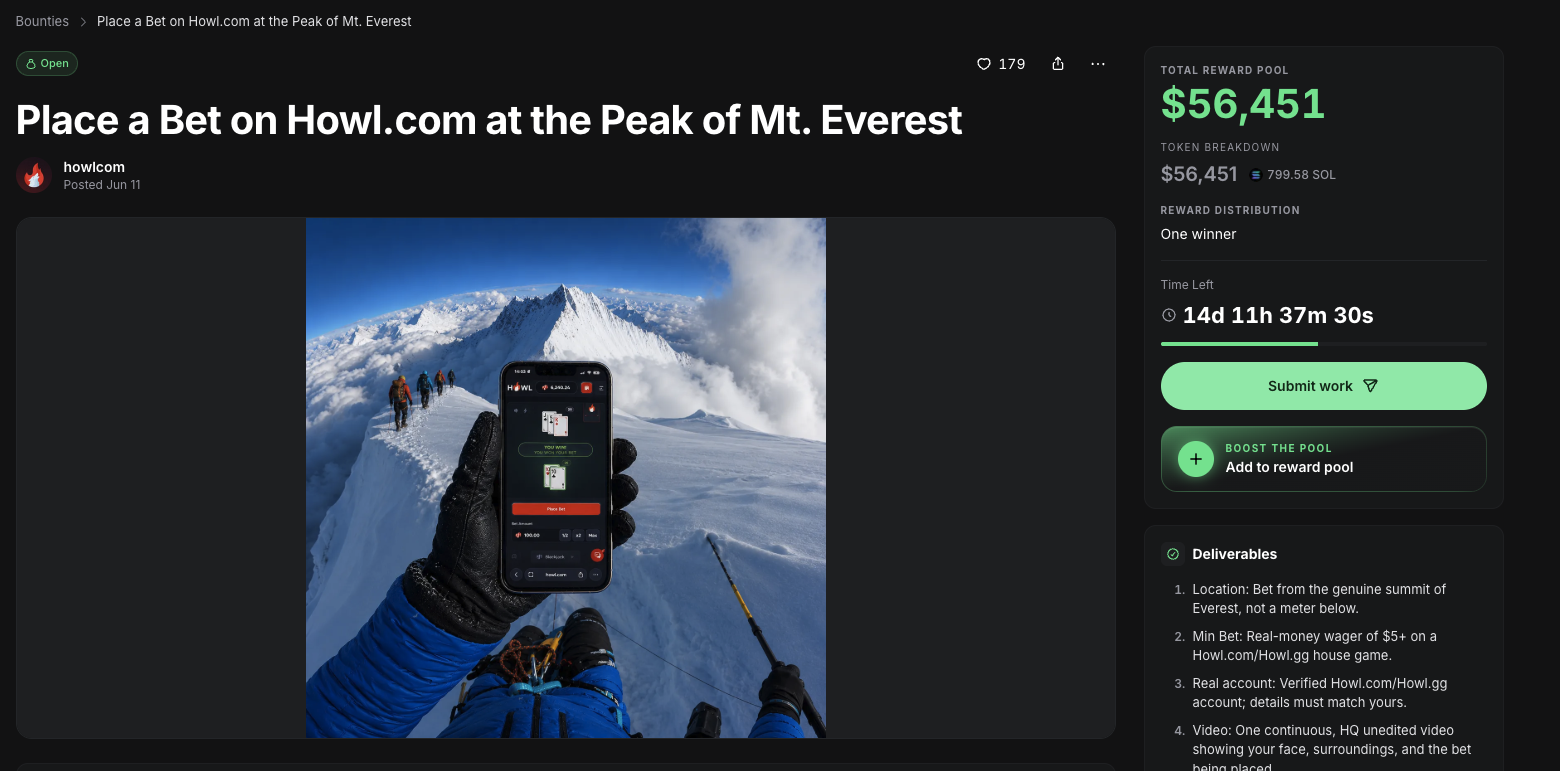
Pump.fun, the memecoin launchpad, introduced Pumpfun Go in early June 2026 with a blunt slogan: pay anyone to do anything. The platform allows anonymous creation of bounty tasks; creators must fully escrow the reward into a third-party account, and the official team reviews submissions to determine winners. Within a month, 238 tasks were posted, with $605,000 already claimed and $225,000 still available, averaging $3,487 per task. Bounties are paid in cryptocurrencies like SOL and various memecoins. Tasks range from harmless to extreme: licking a gas station toilet floor for a mere $5.63 (about ¥40), eating three live worms for $174, quitting a job in front of a boss for $3,000, organizing a NEET parade for $14,000, and even climbing Mount Everest and placing a bet for $56,000—the highest bounty at the time. Most tasks are tied to promoting specific memecoins; Pump.fun launched the platform to incentivize users to create stories and engagement around tokens.
Task Categories and Bounty Scale: From Toilet Licking to Everest
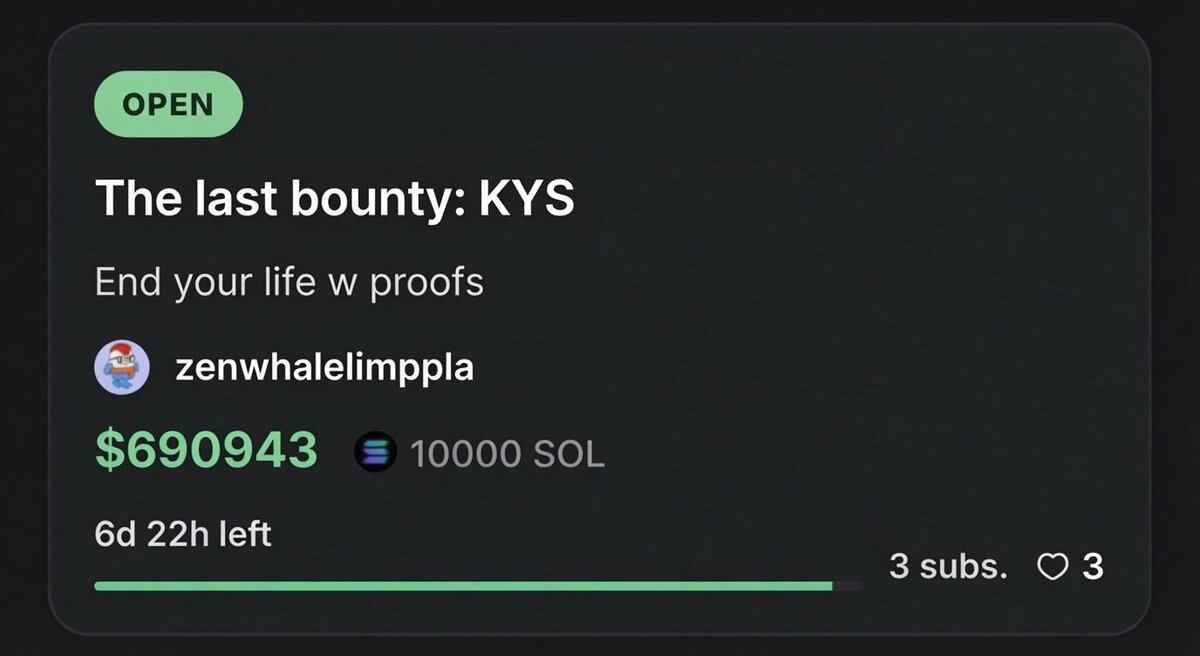
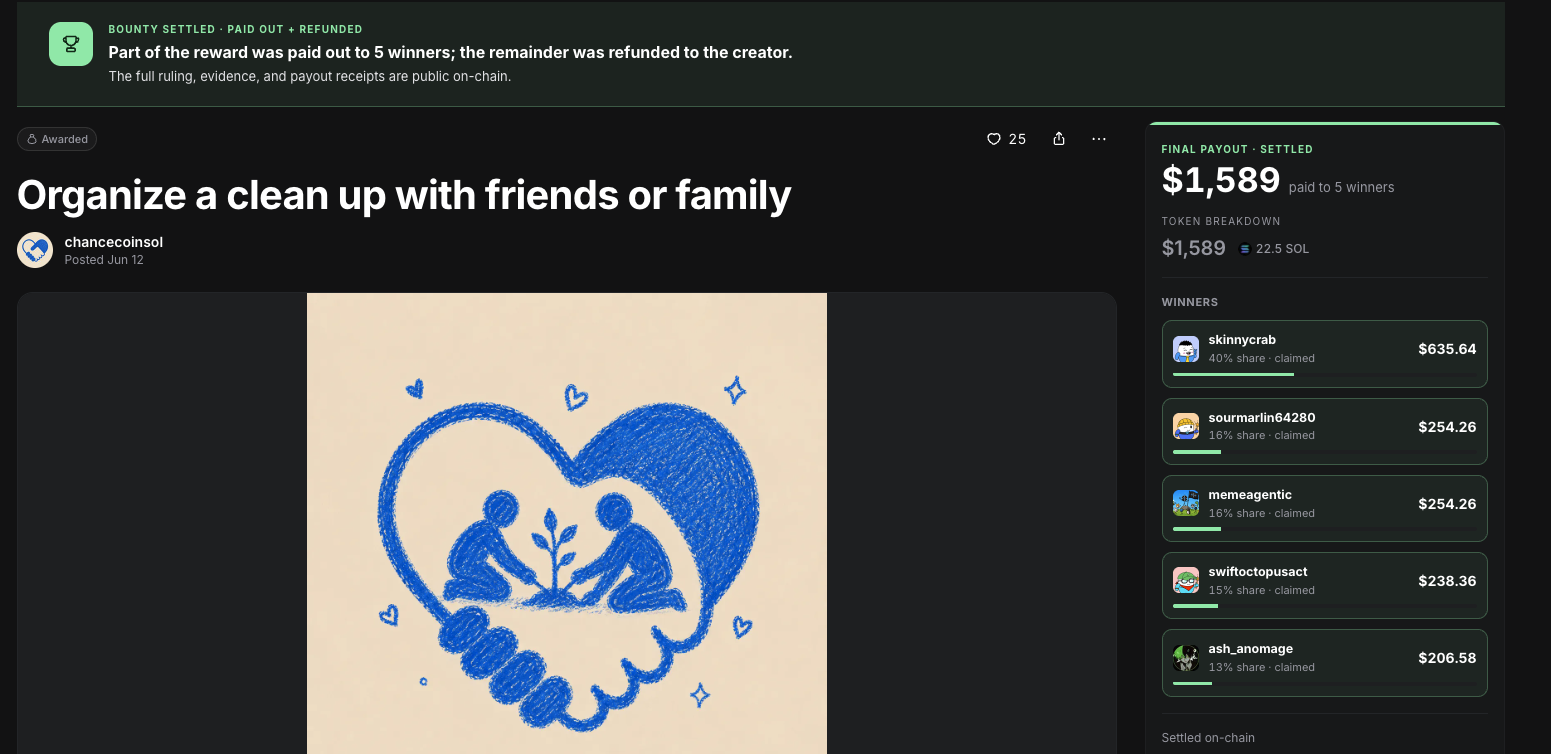
The top three bounties illustrate the extremes: an online betting platform offered $56,000 for someone to summit Everest and make a bet; a meme project offered $28,000 for running a marathon in a mascot costume and breaking a world record; and another task paid $26,000 to visit each team's match at the 2026 World Cup and shout a memecoin slogan. On the tamer side, NEET community tasks reward $14,000 for organizing a parade and $3,000 for quitting a job in front of the boss; FITNESS community offers $150 for 100 pushups in 60 seconds; CHANCE community gave $1,500 for a trash cleanup event. These represent the platform's rare 'warm' tasks. The majority are humiliating, grotesque, or physically harmful. The platform explicitly bans violence, discrimination, and pornography, but cannot easily define 'grotesque' or 'humiliating.' Economic inequality drives a 'willing buyer, willing seller' dynamic: the rich purchase entertainment through humiliation, the poor trade their bodies and dignity for money.
Forehead Tattoo Stories: When Money Overrides Dignity
The highest single-earning participant, 'riri_z1', made $14,000 by having 'bounty.fun' tattooed on his forehead. However, the actual tattoo was likely done on an unknowing elderly man hired for the task—how much he received is unknown. An earlier case, 'arivu', got a 'boutywork' tattoo (a misspelling by the task creator) on June 6 and was initially rejected. Six days later, he had the correct 'bountywork' tattooed and eventually received both bounties totaling ~$6,000. In his submission, arivu expressed gratitude to the creator and Pump.fun for 'creating opportunities that can truly change lives.' Another participant, 'xavz', quit his job via video for $3,000, stating he could earn $3,000 in one day compared to $200 a month at his previous job. These cases starkly illustrate how extreme financial incentives override personal dignity, revealing the dark side of the platform: the wealthy buy spectacles, the poor are forced to commodify their bodies, names, and safety.
Societal Backlash and Regulatory Response
Pumpfun Go has drawn widespread criticism as a real-life Black Mirror scenario. New York Governor Kathy Hochul directly quoted a platform post and called for a bill to ban 'this dystopian nightmare.' Pump.fun's parent company Baton Corporation is based in New York. Supporters mocked the governor, pointing to the worsening homelessness crisis in the state. An X product manager commented: 'Sad that after all the rich left crypto, the industry is left with American teenagers forcing poor people to do humiliating things.' Pump.fun has not issued an official statement; its only move was posting a job for a Chief Legal Officer with a salary of $1–5 million per year, signaling it is preparing for legal challenges.

The Moral Dilemma: Who Is Exploiting Whom?
Supporters argue Pumpfun Go does not exacerbate inequality but offers a new wealth distribution mechanism for the desperate. Critics contend that leveraging economic disparity to make poor or desperate individuals perform permanent or high-risk acts for bounties is an indelible stain on the platform. From Roman gladiators to circus freak shows to viral challenge videos, humanity's obsession with watching others suffer or be humiliated has never changed. When AI-driven productivity finally generates enough wealth to cover everyone's basic needs, people may not have to lick toilets for a few dollars or tattoo logos for a few thousand. Until then, Pumpfun Go remains the latest chapter in thousands of years of barbarism, where the strong exploit the weak under the guise of free market exchange.
