

Pumpfun Go: A Bounty Platform for 'Anything'
What if someone offered you $5.63 to lick a gas station toilet floor? This is not a thought experiment but a real bounty on Pumpfun Go, a new product launched by meme coin launchpad Pump.fun in June 2026. The platform's slogan is brutally straightforward: "Pay anyone to do anything." Users can anonymously create bounty tasks, with rewards fully escrowed to prevent disputes. Completers submit video evidence, and the official team adjudicates based on pre-set criteria.
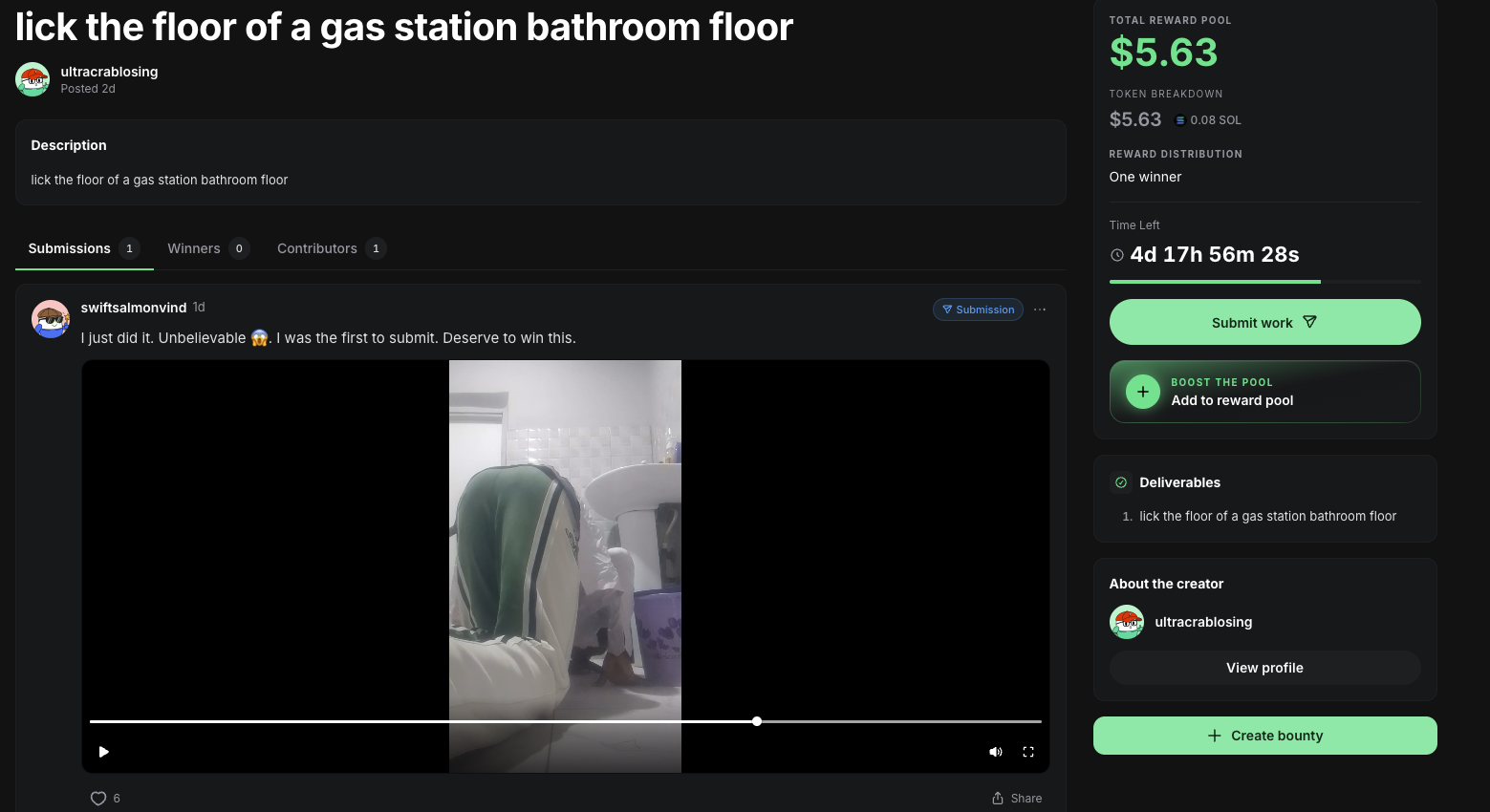
Data from the platform shows that within less than a month of launch, 238 tasks were posted, with $605,000 already awarded and another $225,000 pending, averaging $3,487 per task. All payments are made in cryptocurrency, enabling borderless, anonymous, and instant settlements.
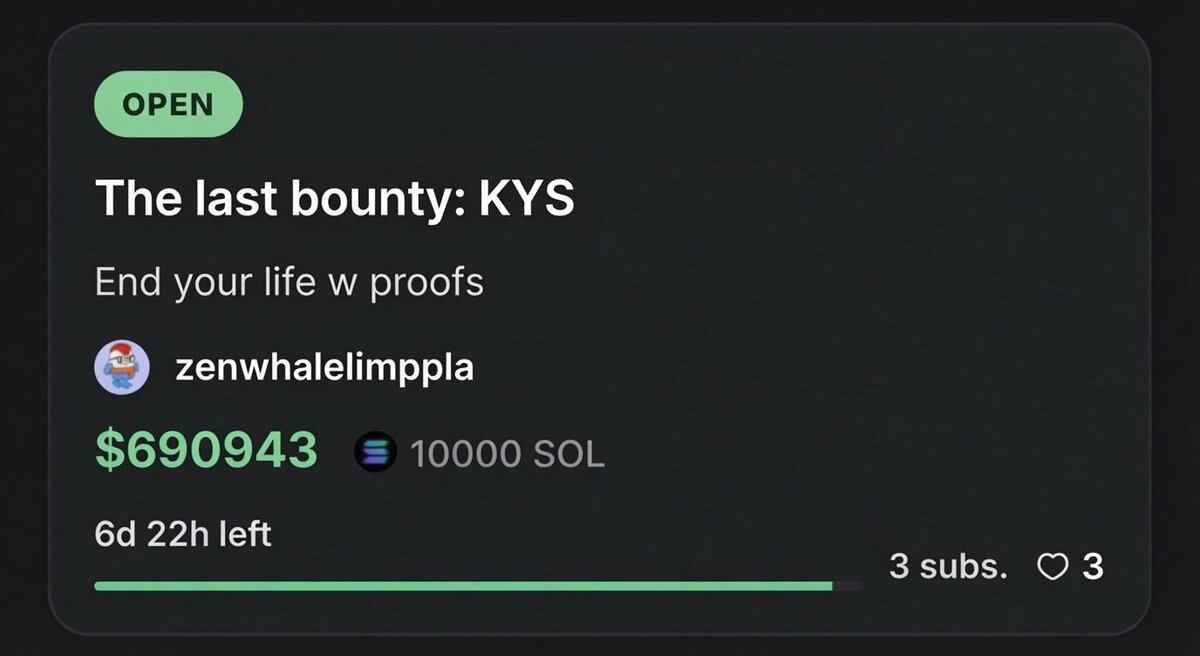
Bounties: From Charity to Degradation
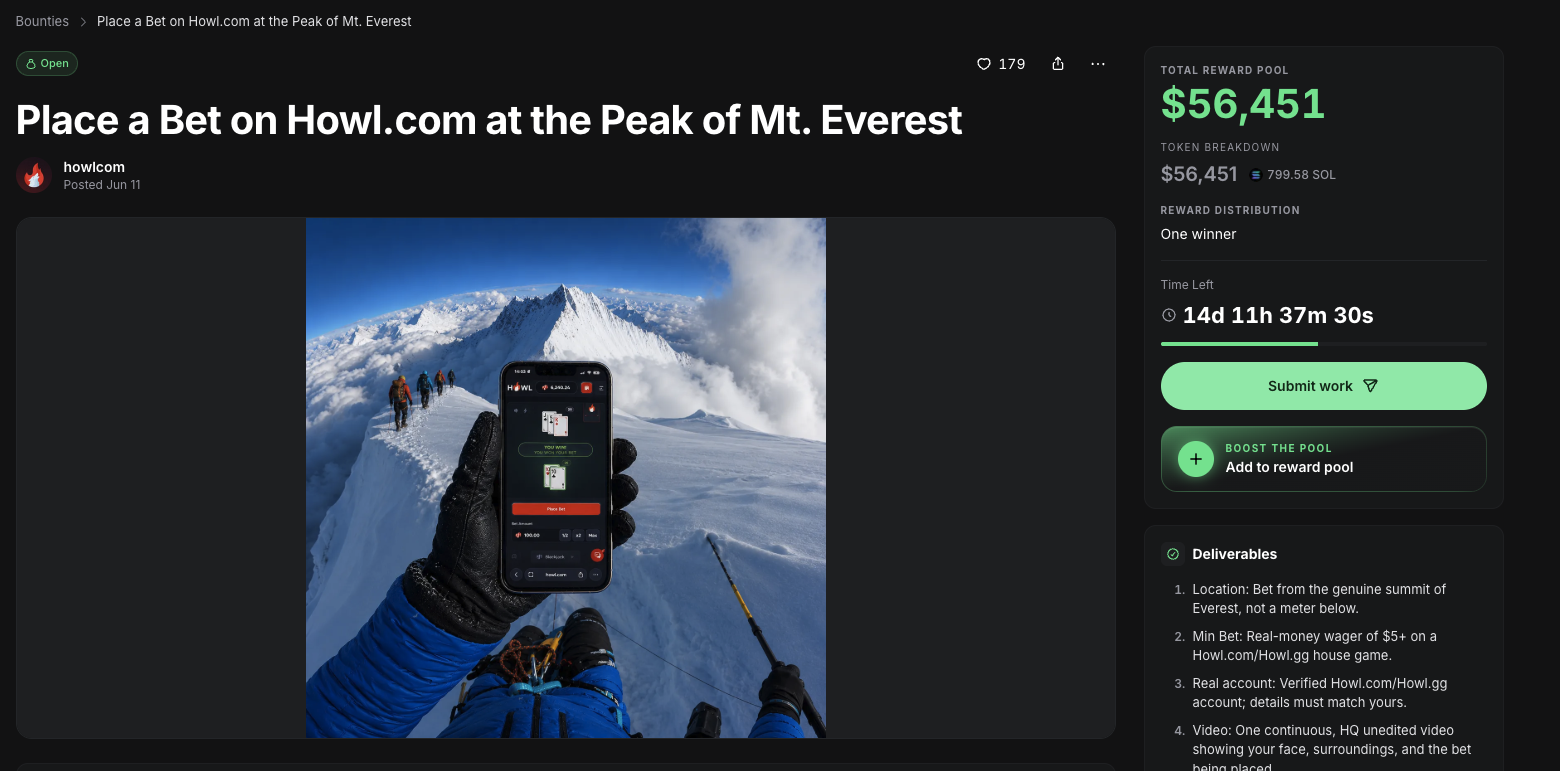
The highest bounty, worth ~$56,000, requires climbing Mount Everest and placing a bet on a specific online gambling platform. The second highest (~$28,000) demands running a full marathon in a memecoin mascot costume and beating the world record. The third (~$26,000) asks the challenger to visit every team's match venue during the 2026 World Cup and shout a promotional phrase. Most bounties are tied to memecoin marketing; the platform's original goal was to incentivize users to generate buzz for tokens.
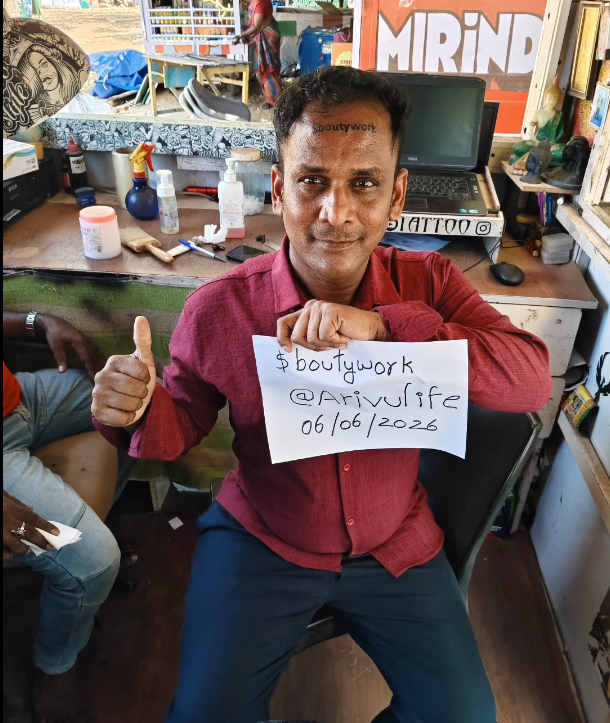
However, the majority of tasks are humiliating or dangerous: eating live worms ($174), quitting one's job in front of a boss ($3,000), or getting a forehead tattoo. Challenger 'arivu' earned two bounties totaling ~$6,000 after the task creator misspelled the token name, requiring a second tattoo. Another user, 'riri_z1', received ~$14,000 for tattooing 'bounty.fun' on his forehead—though the actual tattoo was likely done on a local elderly person paid a fraction of the reward. The most extreme bounty offered $700,000 (1,000 SOL) for suicide, though likely removed by moderation.
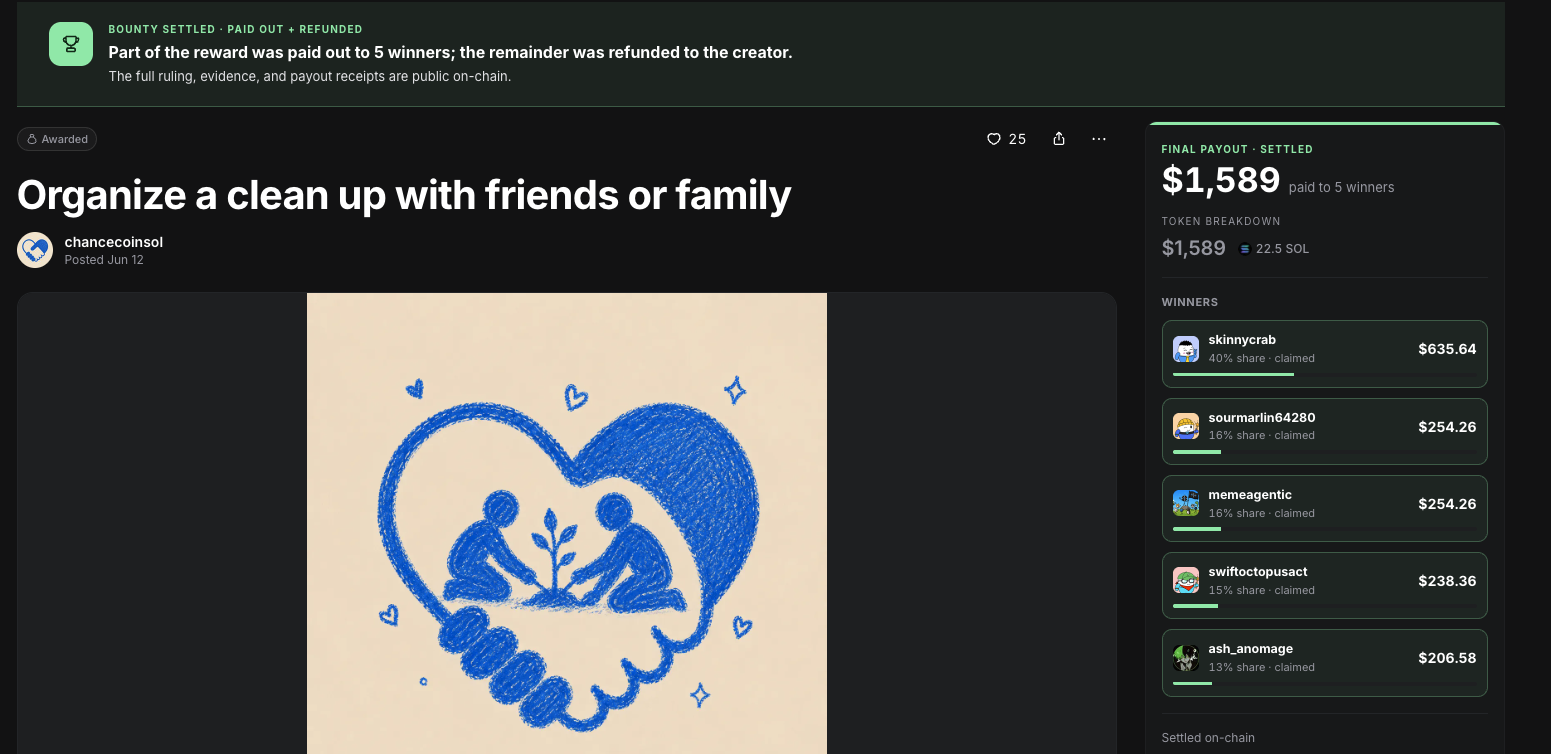
Real-Life Black Mirror: Pricing Dignity
Critics immediately compared Pumpfun Go to Black Mirror season 7's first episode 'Common People' and the 2016 film 'Nerve', where audiences pay to design challenges. The platform's rules prohibit violence, discrimination, and pornography, but cannot ban tasks that are merely grotesque or degrading. The relationship between publisher and challenger is strictly voluntary, yet the economic disparity makes exploitation inevitable.

Challenger xavz quit his job on camera for $3,000, commenting: "I earn $3,000 in one day, more than the $200 a month at my company. I can work from home and be with my family." This sparked heated debate: supporters see it as wealth redistribution, while critics call it systemic humiliation. New York Governor Kathy Hochul directly responded to Pump.fun's announcement: "The first thing should be to put a bounty on legislation to ban this dystopian nightmare." Supporters fired back, pointing to the state's homelessness crisis as a greater shame.

Controversy and Reflection: The Shadow of Technology
Pump.fun’s only public move after the backlash was to hire a Chief Legal Officer (CLO) with an annual salary of $1–5 million, signaling awareness of impending legal challenges. From Roman gladiators to circus freak shows to live-streaming battles, humanity’s appetite for watching others suffer or debase themselves is ancient. Pumpfun Go simply tokenizes this desire with crypto, creating a global market for humiliation.
The platform claims a win-win: the rich get entertainment, the poor get money. But in reality, the rich’s greatest asset is the poor’s desperation. As AI and cryptocurrencies promise to reshape society, the question remains: will technology ultimately liberate the vulnerable, or merely commodify their dignity more efficiently? Pumpfun Go is a stark reminder that without a social safety net, progress can feel like backsliding.