Q2 Crypto Market Weakens Further: Three Key Demand Channels Deteriorate

Q2 Crypto Market Weakens Further: Three Key Demand Channels Deteriorate

N
News Editor
2026-07-01 12:04:58
According to CoinMetrics, the crypto market's sluggishness in Q2 2026 worsened due to the simultaneous decline of three major demand channels: spot ETF inflows, Strategy's Bitcoin holdings growth, and stablecoin supply expansion. This report breaks down how each factor contributed to the market's lack of upward momentum.

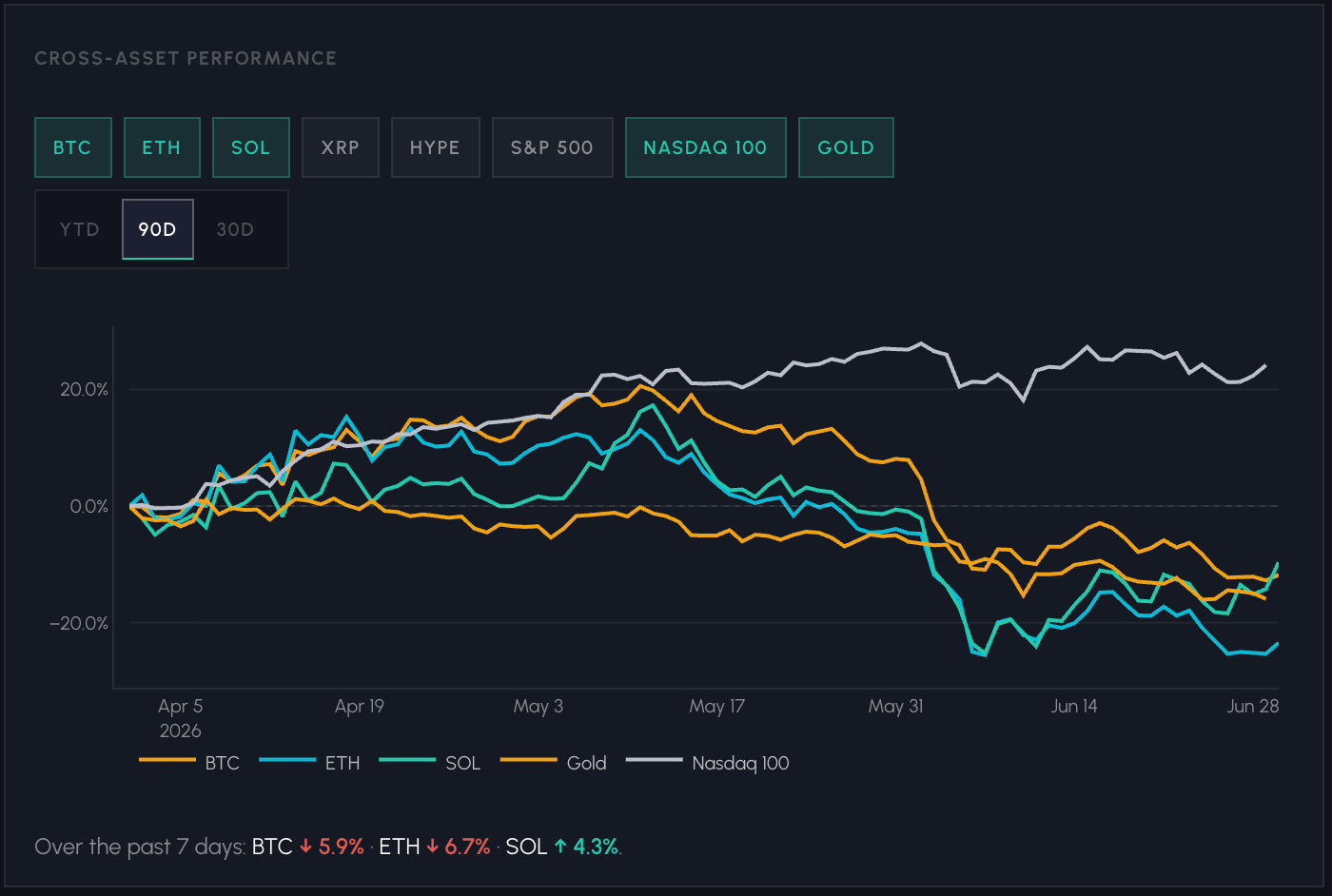
CoinMetrics' latest report reveals that the crypto market's weakness in the second quarter of 2026 deepened significantly, driven by a triple blow to the primary demand channels: spot Bitcoin ETFs saw net outflows for the first time in months, MicroStrategy (now rebranded as Strategy) slowed its Bitcoin accumulation to the lowest level since 2024, and the combined supply of major stablecoins like USDT and USDC contracted. These three pillars had been the strongest drivers of the 2024–2025 rally, and their simultaneous deterioration left the market without a clear catalyst for growth.
Q2 Crypto Market Weakens Further: Three Key Demand Channels Deteriorate 2

On the ETF front, U.S. spot Bitcoin ETFs recorded a net outflow of approximately $XX billion in Q2, reversing the robust inflows of Q1. Strategy, the largest corporate Bitcoin holder, added only XX BTC in the quarter, a sharp drop from previous periods. Meanwhile, stablecoin supply growth decelerated, with monthly net issuance turning negative in some months, indicating a pullback in liquidity and risk appetite across exchanges and DeFi protocols.
Q2 Crypto Market Weakens Further: Three Key Demand Channels Deteriorate 3

This article was originally published by Bit.Fan. For more cryptocurrency news and market insights, visit www.bit.fan.
400

Disclaimer:

The market information, project data, and third-party content displayed on this platform are for industry information sharing only and do not constitute any form of investment advice or return commitment.

Cryptocurrency trading carries high risks. Users should fully assess their risk tolerance and make independent decisions. All profits, losses, and legal responsibilities are borne by the users themselves.