
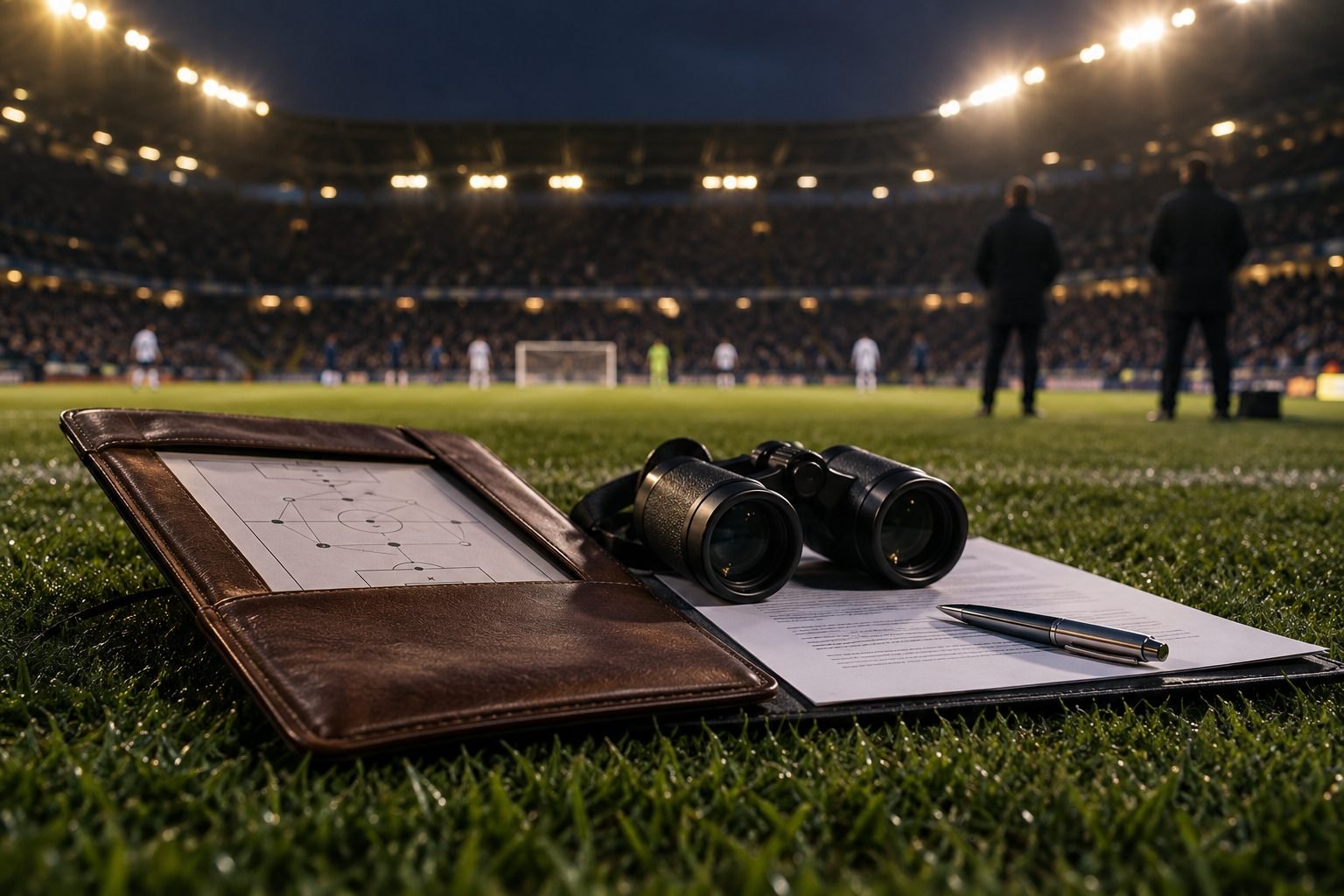
At a Premier League club, a sporting director usually has overall responsibility for the football side, reports to the owner, chair or chief executive, and in most cases sits above the head coach.
Start with the job titles
Here are the three titles most often used for this role.
| Title | What it tends to mean |
|---|---|
| Director of football | The older title, from when transfer activity was first moved out of the manager's remit; reporting lines were often unclear |
| Sporting director | The modern version, with a stronger mandate, reporting to the owner, chair or chief executive, with the head coach below |
| Technical director | Another name for broadly the same job; which title a club uses depends on what that club chose to call it |
These labels broadly describe the same position. The wording changed because the role arrived at different times and in different structures, so clubs kept the name they preferred.
How the role changed
The older title was director of football. It came from a period when managers handled almost every part of the football operation, with finance and commercial work kept elsewhere. Where the title was used, transfer work such as scouting and negotiations was taken out of the manager's remit and given to the director of football.
In that earlier setup, reporting lines could be messy. A director of football might report to the owner, the chairperson or the board, while some managers still had a direct line upwards and others did not. The modern sporting director role arrived with management structures closer to those in continental Europe, and came with a clearer chain of command and a wider scope.
Where the head coach fits
The common idea is that one executive owns the football side of the club. That executive is usually not the head coach because head coaches tend to come and go, while the club still needs continuity in its football plan.
That is why the head coach is generally placed below the sporting director on the organisation chart. Even so, responsibilities still vary from club to club, and no two structures are identical: this is common practice rather than a structure clubs are required to adopt.
What the job actually covers
A sporting director is expected to set the strategy for the whole club and keep it aligned from academy level through to the first team. In this context, aligned means using the same development principles and working methods throughout the football department, so an academy graduate can adapt quickly to the way the first team plays.
The role also includes appointing the coaches and backroom staff seen as best suited to carry out the club's defined playing style and way of working. That makes the job bigger than first-team squad building alone.
Recruitment is still a major part of the role, but it is rarely a one-person call. In practice, the sporting director works with a scouting department that includes traditional scouts and an analytics team, and the head coach also has input into who comes in and who leaves. Signings are generally a team effort led by the sporting director, with the aim of making sure new arrivals fit the club's playing style.
FAQ
What is the difference between a sporting director and a director of football?
In broad terms, they describe the same kind of job. Director of football is the older title, while sporting director is the more modern label and usually carries a clearer mandate in the club structure.
Does a sporting director choose the players?
The sporting director usually leads recruitment, but signings are rarely down to one person. Scouts, analysts and the head coach all feed into the process, with the sporting director coordinating it.
Who does a sporting director report to?
The usual line is upwards to the owner, chair or chief executive. In older structures, the role could report to the owner, chairperson or board, with less clarity around the rest of the chain.
Is the head coach above or below the sporting director?
In most modern setups, the head coach sits below the sporting director. The point is to separate the club's longer-term football direction from the day-to-day coaching role.