
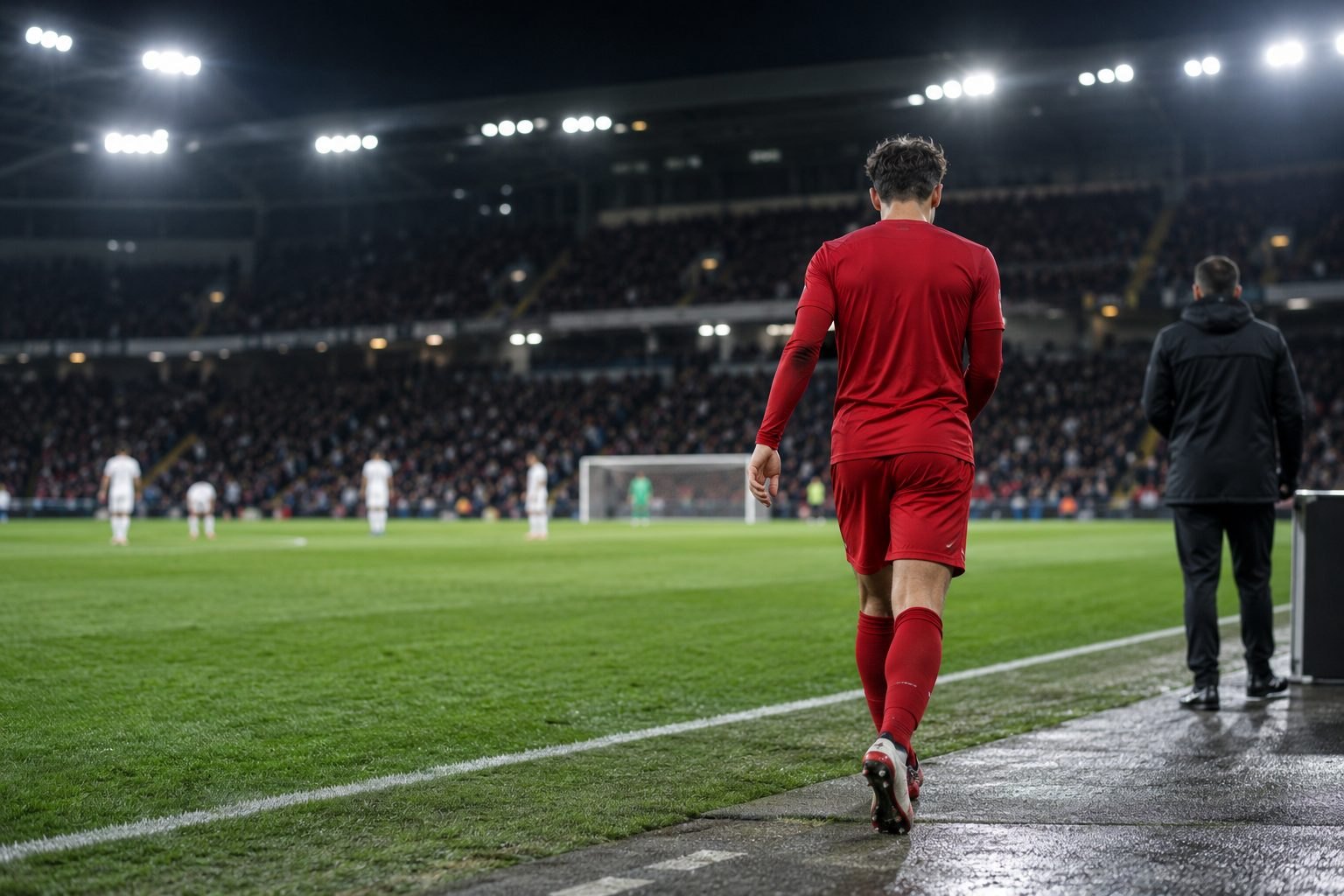
Because of a 2026/27 trial. If play is stopped for a goalkeeper injury, the manager must nominate an outfield player to leave immediately, and that player stays off for at least one minute after the restart.
What the trial is trying to stop
The target is not proper medical treatment. It is the use of a goalkeeper injury stoppage as a competitive tool: wasting time, breaking an opponent's momentum, or bringing outfield players over for instructions before the goalkeeper gets up and carries on.
The idea is to keep genuine injuries treated properly while removing any sporting advantage from the stoppage. It is still a trial being assessed through the season, not a settled permanent law.
Who is behind it and where it applies
The trial has IFAB approval for the 2026/27 season in English football. It is backed collectively by Pro Ref, The Football Association, the Premier League, the EFL, WSL Football and the National League.
It is being used across the men's and women's professional game in England as part of an effort to keep matches moving. It also follows earlier work to reduce delays and increase ball-in-play time, including the goalkeeper eight-second rule introduced in the previous season.
When it applies and when it does not
Here are the situations covered by the trial and the exceptions.
| Situation | What happens |
|---|---|
| Play stops for a goalkeeper injury | The manager nominates an outfield player to leave immediately, who stays off for at least one minute after the restart |
| A free-kick is given for a foul on the goalkeeper and he needs treatment at once | The trial does not apply |
| The goalkeeper and an outfield player have collided and both need attention | The trial does not apply |
| The goalkeeper is bleeding | The trial does not apply |
Two parts matter in practice. The player who leaves must be an outfield player chosen by the manager or head coach, and that player has to go off straight away.
The exceptions are tied to immediate treatment needs and foul situations. That keeps the line clear between stopping tactical use of the break and protecting player welfare.
How it changes the restart
Once the referee has stopped play for the goalkeeper injury, the goalkeeper's team must continue without one outfield player. After play restarts, the nominated player still has to remain off the pitch for at least one minute before returning.
The aim is that a team can still get treatment for a real injury while any potential sporting advantage in the stoppage is removed.
English football will monitor the trial through the season with IFAB and other stakeholders, checking whether it supports the flow of the game while maintaining player welfare.
FAQ
What is the new goalkeeper injury rule in the Premier League?
Under the 2026/27 trial, a goalkeeper injury stoppage triggers a temporary loss of one outfield player from that team. The manager must nominate that player immediately, and the player stays off for at least one minute after the restart.
Can a team still waste time with a goalkeeper injury?
The trial is aimed directly at that tactic. It covers cases where the stoppage is used to slow the game, break momentum, or allow instructions from the technical area before the goalkeeper continues.
Does a player always have to come off if the keeper is hurt?
No. The trial does not apply if a free-kick is awarded for a foul on the goalkeeper and he needs treatment at once, if the goalkeeper and an outfield player collide and both need attention, or if the goalkeeper is bleeding.
Is this the same as the goalkeeper eight-second rule?
No. This trial builds on that earlier measure, but it deals with a different kind of delay. The eight-second rule and the goalkeeper injury trial are separate changes.