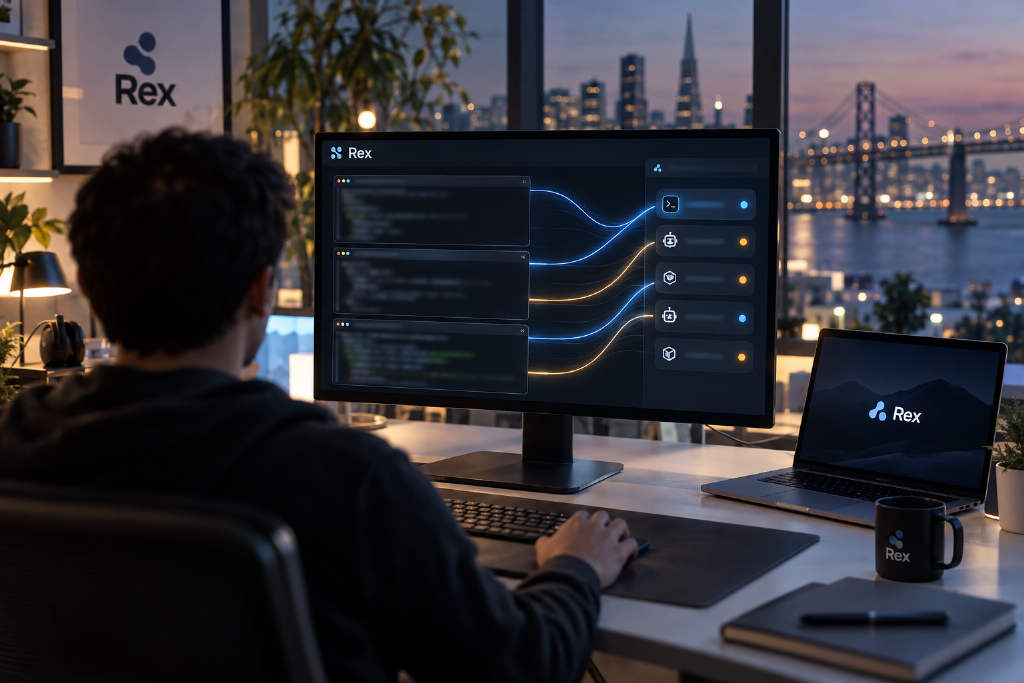
Rex, the new terminal project from Ghostty creator Mitchell Hashimoto, has rolled out a new Activity Mode to public beta users. The feature groups running and idle programs alongside Coding Agents in a sidebar and shows task status information, making it easier to spot work that needs attention and jump straight into the related terminal session. Rex uses the previously proposed OSC 7501 protocol so programs can report whether they are actively working, waiting on user input, or already finished. At the same time, the terminal does not rely on protocol signals alone. It also applies other signals and rules to decide which statuses should be shown and when, with the goal of cutting down on noisy notifications. Hashimoto said the team had long disliked task-style notification panels because they often generated too many alerts, with some becoming harder to use than email. He added that developer almonk spent several weeks refining the details in an attempt to build something the team itself would want to use over the long term. According to Hashimoto, early feedback from test users has been positive, though the feature is still being adjusted.
Rex, the new terminal from Ghostty creator Mitchell Hashimoto, has introduced Activity Mode and made it available to public beta users.
The feature brings running or temporarily idle programs and Coding Agents into a single sidebar view, where Rex also shows task status information. Users can quickly find work that needs attention and switch directly to the relevant terminal.
Built with OSC 7501 status reporting
Activity Mode uses the previously proposed OSC 7501 protocol, which lets programs report whether they are actively working, waiting for user input, or already finished. Rex does not depend on that signal alone, though. It also combines other information and decision rules to determine which statuses to show and when, in an effort to reduce unnecessary alerts.
Team says the feature is still being refined
Hashimoto said the team had never liked similar task notification panels in the past because they produced too many alerts, and some were even harder to use than email. He said almonk, who worked on the feature, spent several weeks polishing those details so the team could build something it would actually want to keep using over time.
Hashimoto added that feedback from test users has been good so far, but the feature is still being adjusted.
This article was originally published by Bit.Fan. For more cryptocurrency news and market insights, visit www.bit.fan. Disclaimer:
The market information, project data, and third-party content displayed on this platform are for industry information sharing only and do not constitute any form of investment advice or return commitment.
Cryptocurrency trading carries high risks. Users should fully assess their risk tolerance and make independent decisions. All profits, losses, and legal responsibilities are borne by the users themselves.