
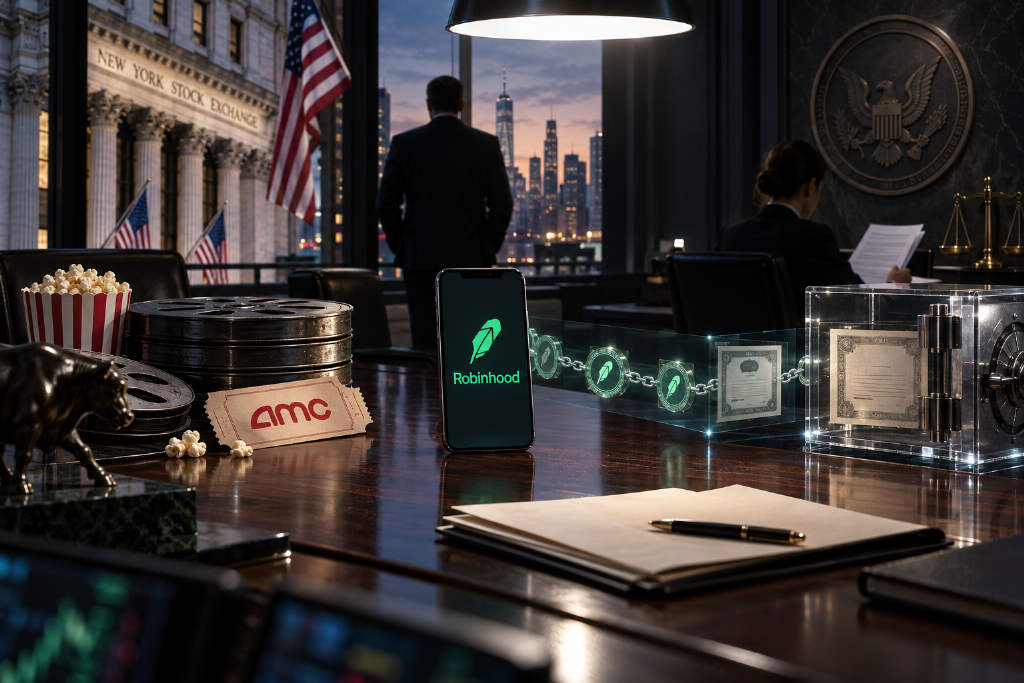
A Fortune article published on Sept. 14 said the dispute between Robinhood and AMC over tokenized stocks may be only the opening phase of a wider transformation in the U.S. brokerage business.
Robinhood recently put U.S. stocks including AMC on blockchain-based token rails, giving users financial exposure to those shares. AMC’s CEO strongly objected to the move.
Lower barriers for overseas investors are central to the pitch
The report said one of the biggest advantages of tokenized stocks is that they can reduce the barriers global investors face when buying U.S. equities. In markets such as Brazil and South Africa, where trading costs are higher and some U.S. stocks are not easily available through direct channels, blockchain infrastructure could offer a cheaper and more convenient route into the market.
Fortune compared that shift to the way Napster broke open traditional music distribution, framing tokenized stocks as a similar turning point for an older financial system. BlockBeats added that a “Napster moment” can be understood as the point when a new technology starts to disrupt an established industry and forces long-standing interests to adjust.
Voting rights and custody remain unresolved issues
The model also carries clear points of tension. According to the report, holders of stock tokens usually do not have the voting rights attached to traditional shares. There are also open questions about whether the underlying shares behind those tokens are actually being held in custody.
At present, platforms including Robinhood and Coinbase use FINRA-registered intermediary Alpaca for recordkeeping and custody arrangements tied to these products. Even so, the market could still see “phantom stock tokens” that are not backed by real assets, a risk the article said could trigger investor panic.
The article says regulation, not prohibition, is the real answer
Fortune argued that the practical response is not to block stock tokenization, but to put in place a clear regulatory framework and allow compliant institutions to take part.
With Nasdaq investing $100 million in blockchain finance company Payward, and the U.S. Securities and Exchange Commission studying innovation exemptions for some on-chain stocks, tokenized U.S. equities may be moving into the mainstream faster.