
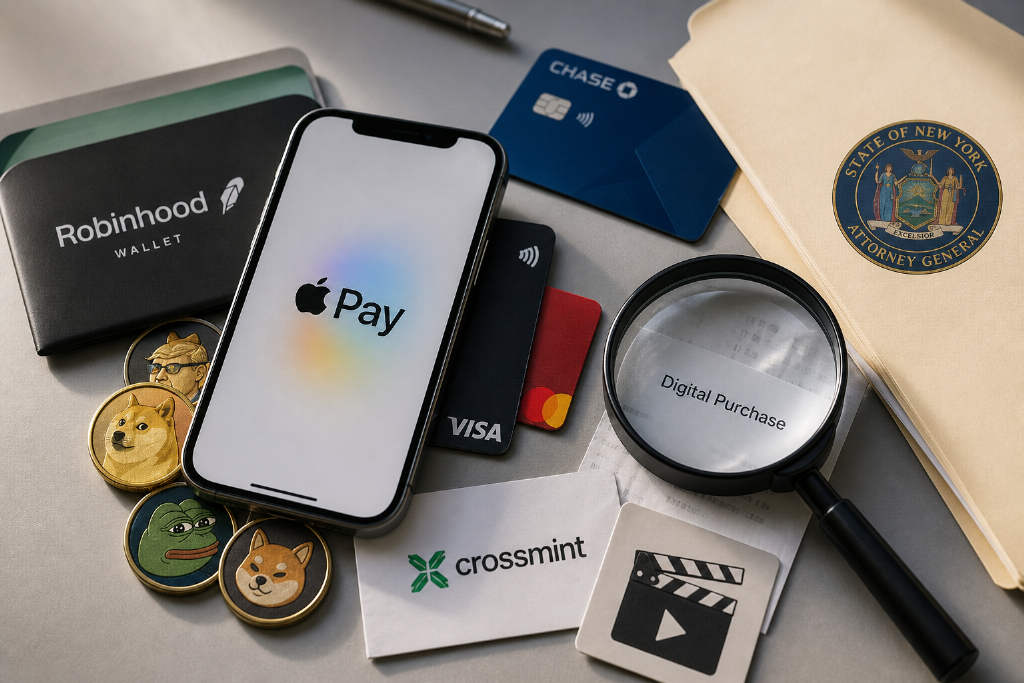
Users on Robinhood Wallet and the social trading platform Fomo have been able to buy meme coins straight through Apple Pay using a Visa or Mastercard, based on tests reported by several overseas media outlets. Per a report from The Block, the source article says a user inside Robinhood’s self-custody wallet or on Fomo can open Apple Pay, finish Face ID, and get the token sent directly to a self-custody address.

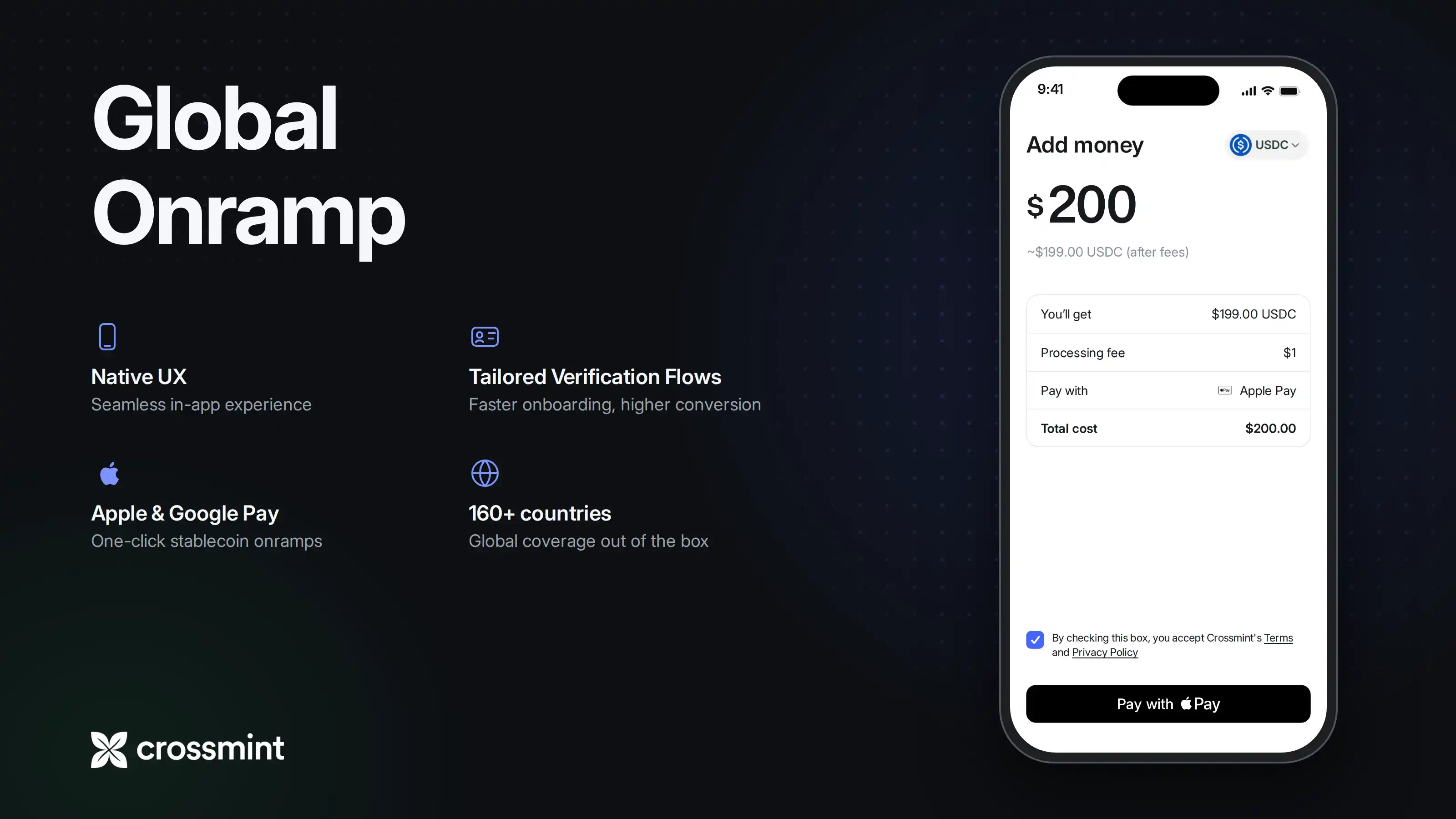
That cuts out a lot of the usual pain in crypto onboarding. Normally, a new user has to sign up with a centralized exchange, finish KYC, connect a bank transfer or debit card, buy stablecoins, then send the funds out and bridge across networks. Here, the wallet is leaning on infrastructure from crypto payments company Crossmint, so users can pay with a credit card already saved on their phone through Apple Pay or Google Pay without doing the same forms and identity uploads again.
A checkout flow that turns a crypto buy into a regular purchase step
The article says the bigger story is not the exact token being bought. WIF or some other trend-chasing meme asset. Doesn’t really matter. The real change is that fiat payment, token settlement, and self-custody delivery now happen inside one checkout action. Prices appear in fiat, the token lands in the wallet automatically, and the user can finish the purchase without knowing gas fees or private keys first.

It points to early official data saying that, in the first week after onchain applications added the rail, Apple Pay converted more than 68,000 buyers who had never used cryptocurrency before. And for Robinhood and wallets around it, that means access to a big reserve of existing consumer spending power from overseas users who already have credit cards but had no earlier link to Web3.
Statement coding reportedly treated some token buys as digital goods
The touchier issue is how the payment showed up on bank statements. In the tests cited by the article, cardholders checking their banking apps saw the purchase labeled as a normal digital entertainment expense—an e-book or digital movie, for example—instead of a crypto-related transaction.
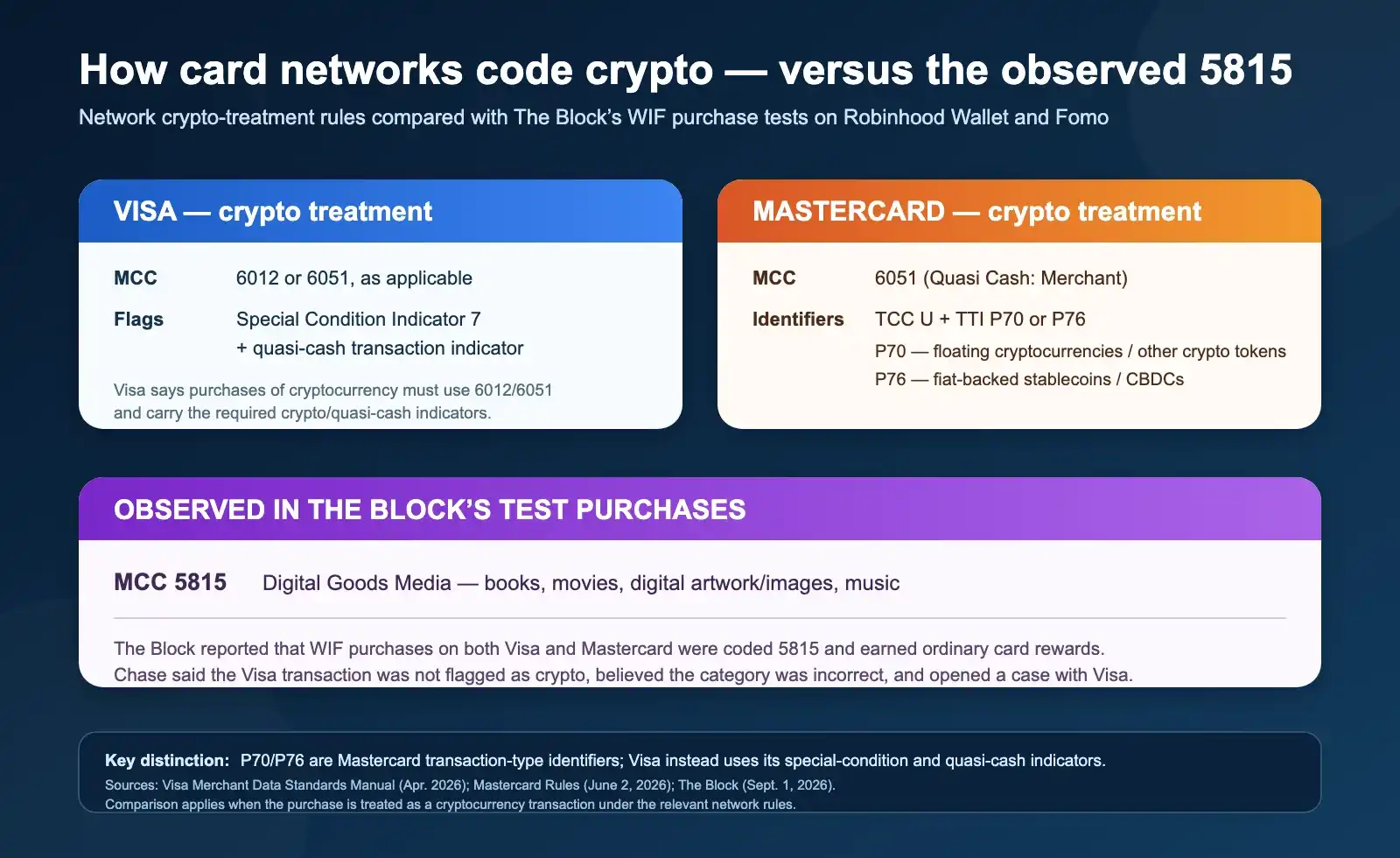
Under standard card network rules, crypto purchases are generally supposed to use dedicated merchant category coding, such as MCC 6012 or 6051, tied to quasi-cash or financial services. Those classifications often bring higher fees. And many issuers do not include them in card rewards. Some conservative issuers may block them outright.

The system described in the report, though, coded the purchase as a standard digital goods transaction under MCC 5815, a category that can cover e-books, digital images, and streaming media. The compliance rationale cited by the payment provider, according to the article, leaned on earlier regulatory interpretations that treat certain digital assets as digital collectibles, presenting the transaction as a routine cultural or media purchase.
That led to a strange result. Pretty strange, honestly. The bank’s system read the payment as ordinary consumer spending and paid out 1% to 3% cashback, while the wallet onchain received a volatile meme token position. The article’s argument is that this shifts the user’s mental framing: buying a meme coin begins to feel less like stepping into a high-risk financial market and more like making a small entertainment purchase in an app store.

The article ties Robinhood’s latest inflows to overseas retail users, not just crypto natives
The source says this payment route helps explain the money behind the recent burst of activity in the Robinhood ecosystem. In its reading, the latest wave of onchain trading is not coming only from experienced DeFi users who watch markets and compare prices every day. It is also being driven by traditional overseas retail participants pulled in through Robinhood, social media, and a stripped-back payment flow.
The profile it describes is pretty specific: these users care less about protocol design, decentralization, or consensus mechanics, and are more likely to chase whatever is trending on X and TikTok. They already live with one-tap payments and credit card spending. So they may see meme coin buying as something closer to lottery spending or entertainment. The article says that is why onchain liquidity can climb so fast once this group can get around the older barriers between conventional payments and crypto markets.
In that setup, the first assets to catch the flow are usually the simplest to grasp and the simplest to spread online: meme tokens. The article presents this as a kind of mass-market entry, achieved not by a cryptographic breakthrough, but by a Web2 payment shortcut.
Chase has filed a dispute with Visa, and regulators are reviewing the matter
The practice is already getting attention from traditional financial institutions. According to the article, JPMorgan-owned issuer Chase reviewed the transactions, decided the coding was wrong and rewards should not have been paid, and formally filed a dispute case with Visa. It also says the New York Attorney General’s office and other regulators have begun asking for materials to review.
If Visa or Mastercard decide to tighten compliance flags and push merchant coding back into quasi-cash categories, cashback could be clawed back and future card purchases could run into broader fraud and risk controls. But the article’s view is that the onboarding effect has already happened: more overseas cardholders have already made their first onchain purchase, and new addresses plus fresh funds have already entered the ecosystem.
Jurisdiction limits and risk warning
The source presents the piece as an industry observation about overseas crypto market trends and Web3 payment mechanics for research and discussion. It says the Robinhood Wallet service and the Apple Pay crypto funding channel mentioned in the article are available only in certain overseas jurisdictions, and are not available to users in mainland China.
It also warns that crypto assets are high-risk investments and says readers should follow local laws and regulations and avoid any illegal financial activity. The article is not investment, trading, or operational advice.