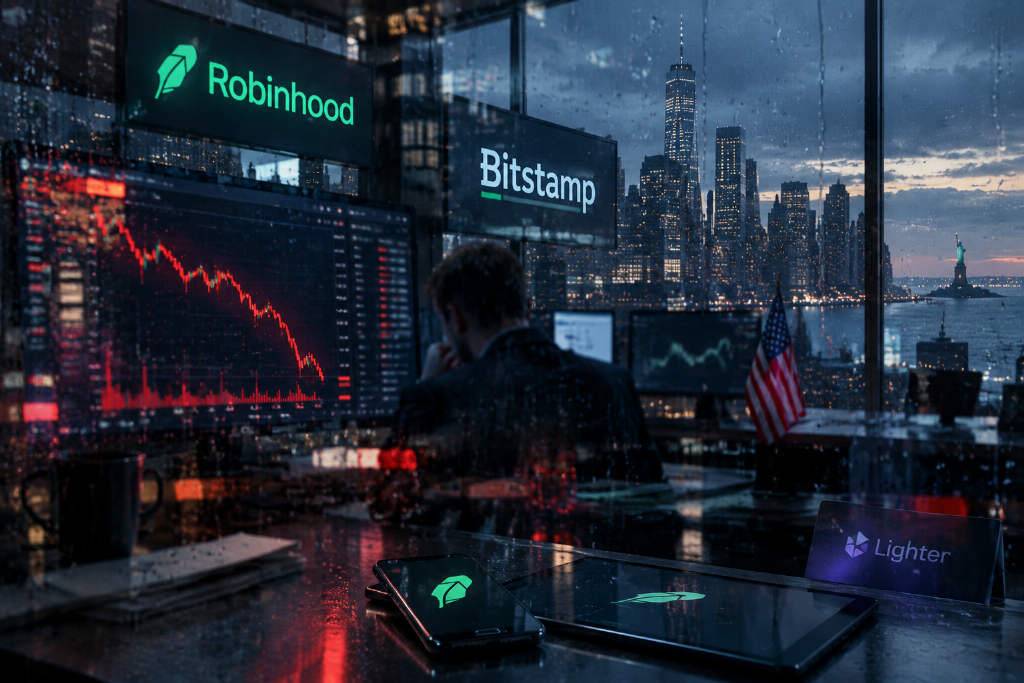
Lighter’s token, LIT, fell more than 14% on Sept. 30, according to HTX market data, with the token last quoted at $3.89. The move came as the market reacted to news that Robinhood is integrating Bitstamp and plans to offer crypto perpetual contracts to eligible users in the United States. Robinhood had previously connected to Lighter for its on-chain perpetuals business, but for this U.S. perpetuals rollout it chose to integrate Bitstamp instead of continuing with Lighter. The market appears to have read that decision as a sign that Lighter may not capture the main order flow from Robinhood’s new perpetuals business. That, in turn, led traders to cut expectations for Lighter’s trading volume, fee revenue, and the scale of LIT buybacks and burns, triggering selling pressure in the token.
Lighter’s token LIT fell more than 14% on Sept. 30 and was last trading at $3.89, according to HTX market data cited by BlockBeats.
Robinhood shifts focus to Bitstamp for U.S. perpetuals
The move followed news that Robinhood is integrating Bitstamp and plans to offer crypto perpetual contracts to eligible users in the United States.
Robinhood had previously connected to Lighter in its on-chain perpetuals business. For this U.S. perpetuals launch, however, it chose to integrate Bitstamp rather than continue using Lighter.
How the market read the development
The market appears to have interpreted that decision as a sign that Lighter did not secure the main order flow from Robinhood’s new perpetuals business. Traders then lowered expectations for Lighter’s trading volume, fee income, and the scale of LIT buybacks and burns, which triggered selling in the token.
This article was originally published by Bit.Fan. For more cryptocurrency news and market insights, visit www.bit.fan. Disclaimer:
The market information, project data, and third-party content displayed on this platform are for industry information sharing only and do not constitute any form of investment advice or return commitment.
Cryptocurrency trading carries high risks. Users should fully assess their risk tolerance and make independent decisions. All profits, losses, and legal responsibilities are borne by the users themselves.