
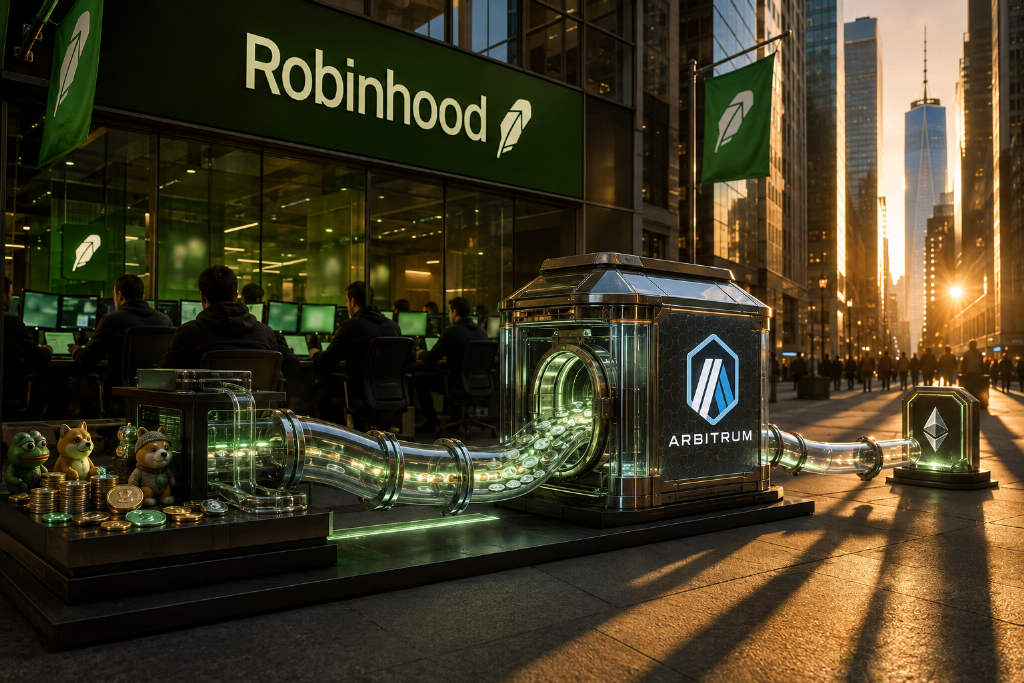
BlockBeats reported on Sept. 6 that Robinhood Chain generated $2.61 million in protocol revenue yesterday and $22.45 million over the last seven days, according to DefiLlama data, as meme-token speculation accelerated.
Arbitrum’s share was about $2.48 million over seven days
Robinhood Chain is an Ethereum Layer 2 built on Arbitrum Orbit. Under that setup, 10% of net protocol revenue is paid to the Arbitrum ecosystem. Based on the latest seven-day figure, Arbitrum, which provides the technical stack, received about $2.48 million over that period, with the proceeds going to the DAO and the developer fund.
On the DEX side, Uniswap on Robinhood recorded $609,234 in protocol revenue yesterday and $3.36 million over the last seven days.
Ethereum’s settlement-layer revenue remained minimal
Data from growthepie shows that Ethereum, serving as the settlement layer, captured very little revenue from Robinhood Chain. The chain paid $1,270 in settlement fees to Ethereum yesterday and a total of $3,550 over the last seven days.
The revenue split has triggered debate
The structure has drawn discussion across the community. DeFi researcher Ignas said the model raises a question for Ethereum: is it a problem when the platform earns substantial revenue while the settlement layer gets almost none?
Ignas also floated one possible interpretation. Ethereum may be using low "rent" to bring TradFi participants into the ecosystem first, then raising its cut once user switching costs become high enough. He said that if the official roadmap really includes a strategy of attracting large numbers of L2s first and monetizing at the L1 level once switching costs rise, that could be positive for ETH. But he added that he does not currently see that playbook in Ethereum’s roadmap.
Arbitrum co-founder Steven Goldfeder offered a different framing. Robinhood chose Arbitrum, he said, to be a landlord rather than a tenant. By controlling its own sequencer, it can keep most of the fees for itself.