
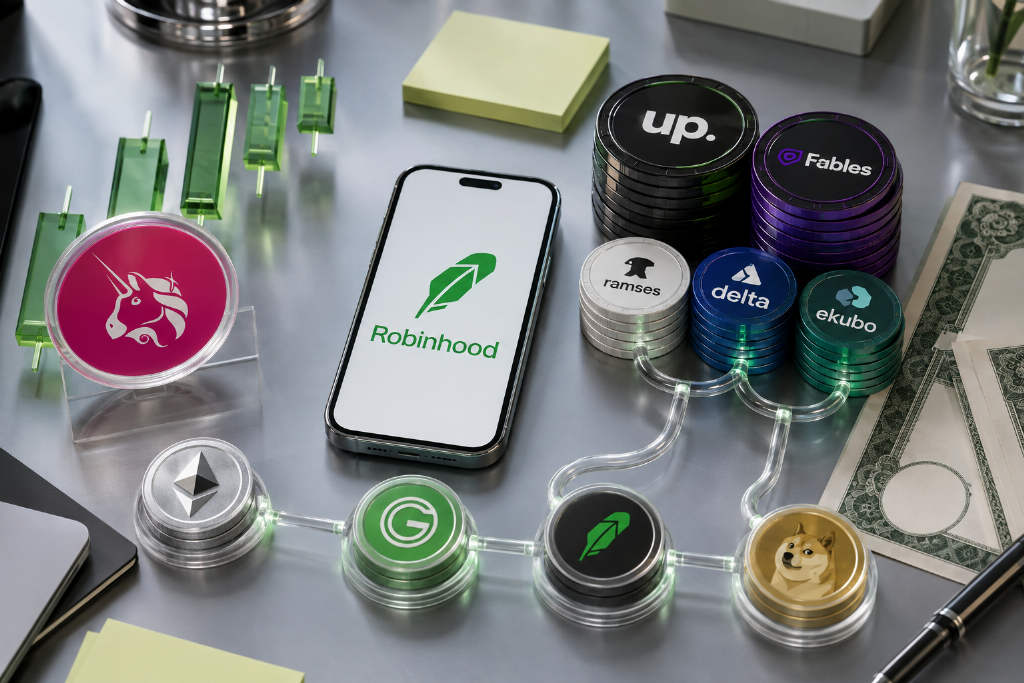
Liquidity tied to stock tokens and memecoins is turning into a packed trade on Robinhood Chain. In its review, Odaily said a lot of the memecoins either ripping higher or moving fast across the chain are paired with stock tokens. On most front-end aggregators, the usual path is WETH→USDG→stock token→memecoin. And if someone trades through the fomo platform, that route can add one more hop.
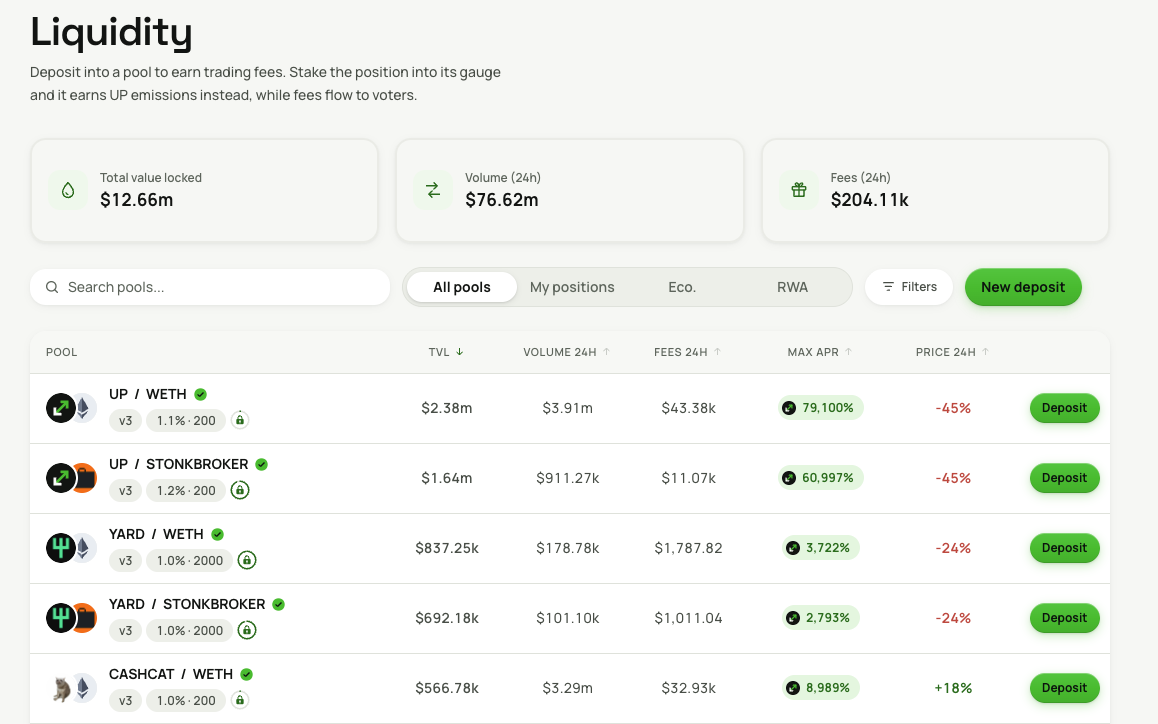
That setup makes pool-level fee income very exposed to mood swings. A memecoin catches fire, and the fees flowing to the underlying LP can spike in a hurry. Crypto KOL @0xanonnnn wrote: "On Robinhood Chain, if you are a Uni V4 LP running a high-fee setup for memecoins built on dedicated Stock or LT base pools, daily APY can exceed 100,000%."
Odaily’s take: providing liquidity to stock-token and hot memecoin pairs can pay just as well as, and not necessarily worse than, chasing memecoins outright. LP building is still one of the standard moves in DeFi AMMs. Since Robinhood Chain went live, Uniswap has quickly taken over as the network’s main AMM and liquidity rail. Per the article, Uniswap V2, V3, and V4 make up more than 90% of trading volume on the chain.
But a few newer AMM projects on Robinhood Chain are starting to get noticed. The pitch is simple. Get in earlier, maybe grab first-mover yield, maybe catch token issuance, maybe end up with an airdrop. Odaily looked at five of them and warned users not to ignore impermanent loss, token volatility, and the risks that come with newer protocols.
up.: 100% of protocol revenue returned to token holders
up. is a native ve(3,3) trading and liquidity layer on Robinhood Chain. It launched on July 11, and the UP token came out at the same time. The article puts UP’s current market capitalization at $390 million, with total supply at 500 million tokens.
Odaily said that figure includes tokens that are not circulating. More than half the supply has already been burned, while circulating supply at launch was just 20 million tokens. About 1 million tokens are entering circulation each week, which puts the project’s real circulating market capitalization at roughly $15 million, the report said.
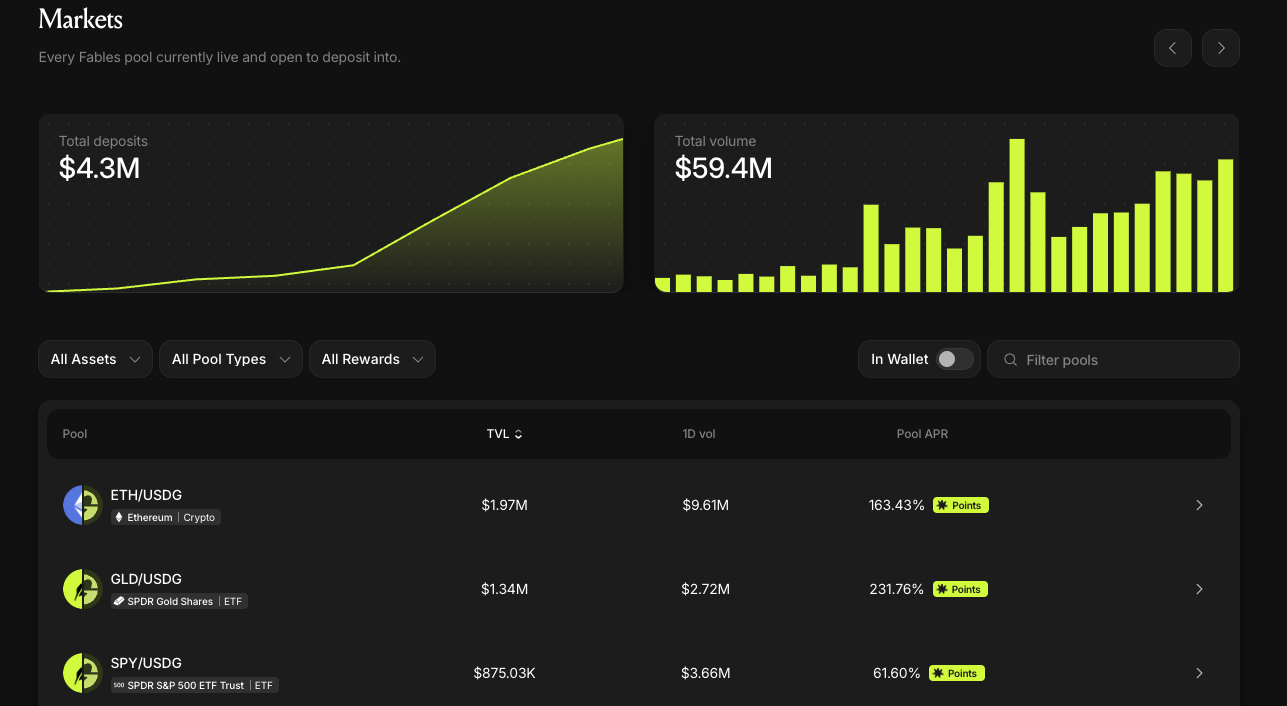
At publication time, up. had total value locked of $12.74 million, good for seventh place on Robinhood Chain. Two pools on the platform were above $1 million in TVL:
- UP/WETH: $2.39 million
- UP/STONKBROKER: $1.64 million
The protocol sends 100% of revenue back to UP holders. Using DeFiLlama data cited by Odaily, up. was also the third-largest protocol on Robinhood Chain over the past 30 days by revenue paid out to token holders.
Fables: points campaign underway, TGE scheduled for October
Fables is another native ve(3,3) DEX on Robinhood Chain, and it launched on Aug. 18. Odaily said the project takes a different path from up. by bringing in Hooks. With Hooks, Fables can assign separate fee logic to each liquidity pool and set fees at the exact moment a trade goes through, so rates can shift in real time based on time and market volatility.
Fables has already issued a token called PROLOGUE, with total supply of 1 billion and a current market capitalization of $5.7 million. At the same time, the project has announced a token generation event for its governance token, FABLES, which will also have a total supply of 1 billion. At TGE, PROLOGUE will convert into FABLES at a 40:1 ratio.
The article says all creator fees now generated by PROLOGUE trading are distributed to Fables LPs in USDG.
Odaily also cited the project saying that up to 115 million FABLES tokens will be directly airdropped to the community at TGE. Fables has rolled out a six-week TGE plan running from Aug. 24 to Oct. 5. The campaign hands out 1 billion points in total each day, and LPs in every liquidity pool on Fables can earn them. One open question remains: the article said Fables has not stated whether the token will list on exchanges after TGE or be issued only on-chain.
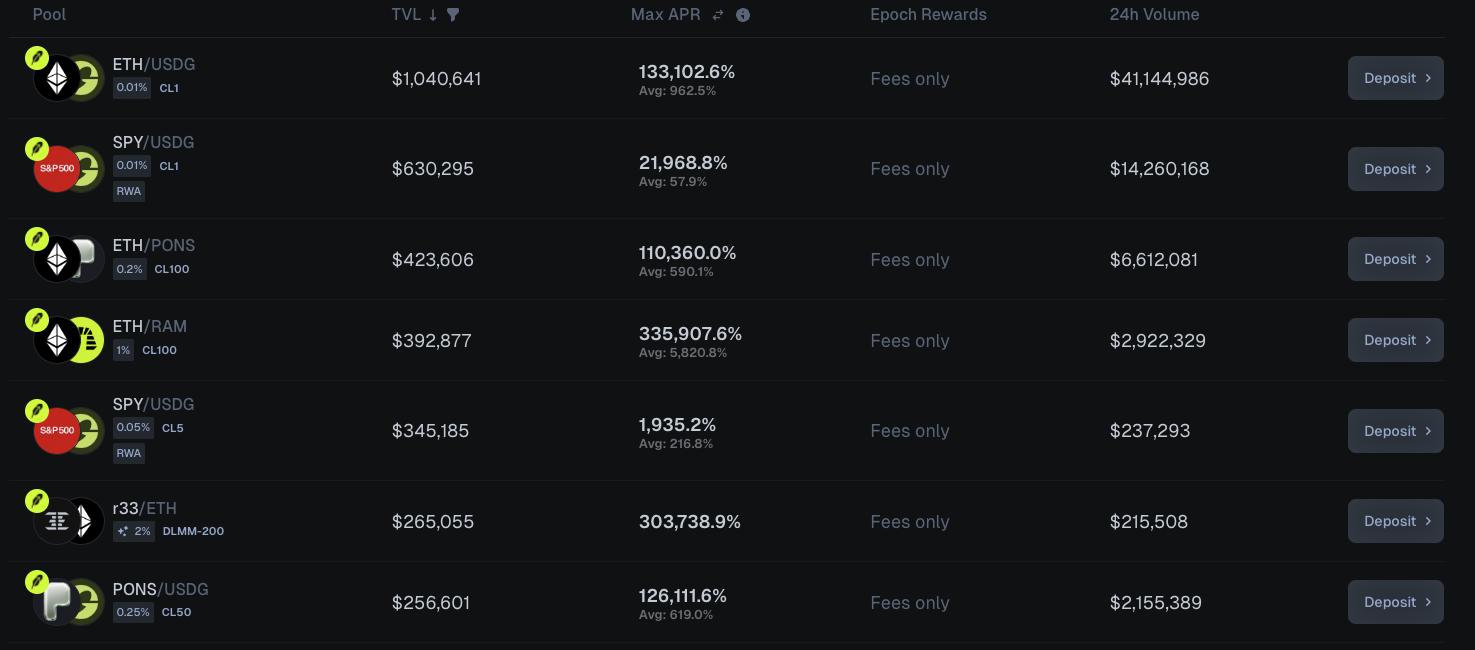
As of publication, Fables had total TVL of $4.3 million. Two pools had crossed the $1 million line:
- ETH/USDG: $1.97 million
- GLD/USDG: $1.34 million
Ramses: established Arbitrum AMM expands to Robinhood Chain
Ramses is a multi-chain AMM that has been live since 2023 and is fairly well known on Arbitrum. Now it has been deployed on Robinhood Chain.
Odaily said Ramses is different from up. and Fables because on Robinhood Chain it uses a pure V3 DLMM fee model and does not have ve governance.
Ramses has also issued a new token, RAM, on Robinhood Chain, with a current market capitalization of about $8 million. At publication time, its biggest pool on the chain was ETH/USDG, with TVL of about $1 million.
Delta: protocol fees are automatically turned into liquidity
Delta is a liquidity layer on Robinhood and launched on Aug. 10. It uses a traditional AMM design and supports both dual-sided and single-sided liquidity provision for token pairs. Users can also deposit tokens straight into staking pools.
Odaily said project revenue is automatically turned into liquidity and then put back into pools. As of publication, Delta had total TVL of $1.37 million and cumulative fees of $895,000.
Delta has issued the DELTA token, which now carries a market capitalization of about $16.8 million. The report said its market cap had previously climbed as high as $38 million.
Ekubo: limited traction after entering Robinhood Chain
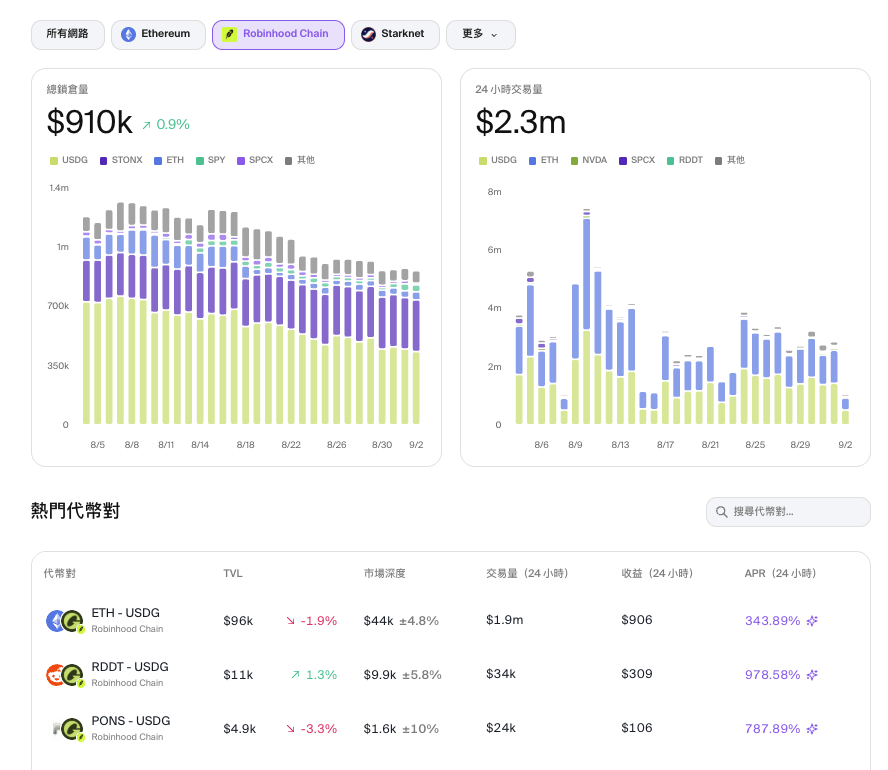
Ekubo is an AMM project founded in 2023, and it has previously been active on Starknet and Ethereum. Odaily said its total TVL on Starknet is $19 million.
On July 31, Ekubo announced support for Robinhood Chain, letting users provide liquidity for token pairs on the network. Even so, its TVL on Robinhood Chain is still small at $910,000.
As of publication, its busiest pool on the chain was ETH/USDG with total TVL of $96,000. Odaily’s judgment was blunt: the project has not gained meaningful traction on Robinhood Chain.