
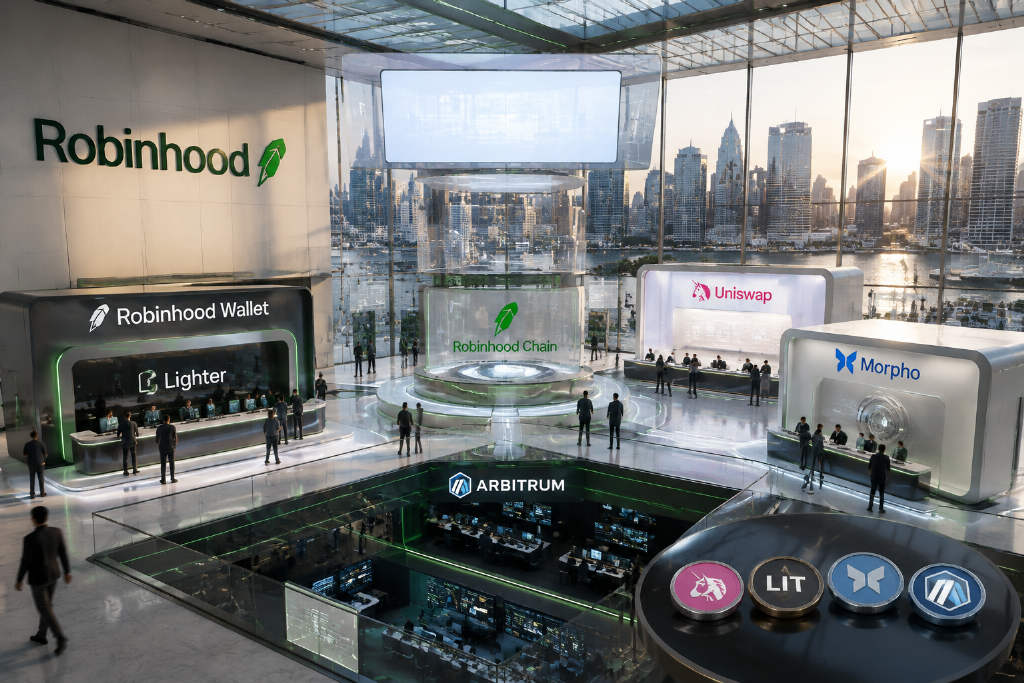
Robinhood Chain has become one of the fastest-growing and most talked-about public blockchains just two months after launch.
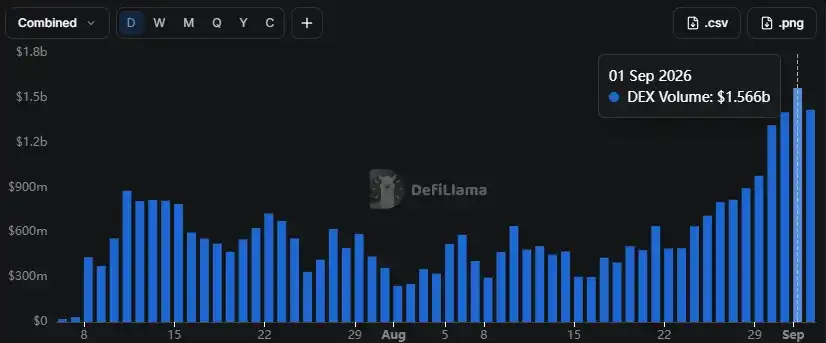
DefiLlama data cited in the source article shows that DEX volume on Robinhood Chain surpassed $1.5 billion on Sept. 1, at one point moving ahead of Ethereum, BNB Chain and Base. Its total value locked also climbed from under $100 million in the early days of launch to nearly $800 million.
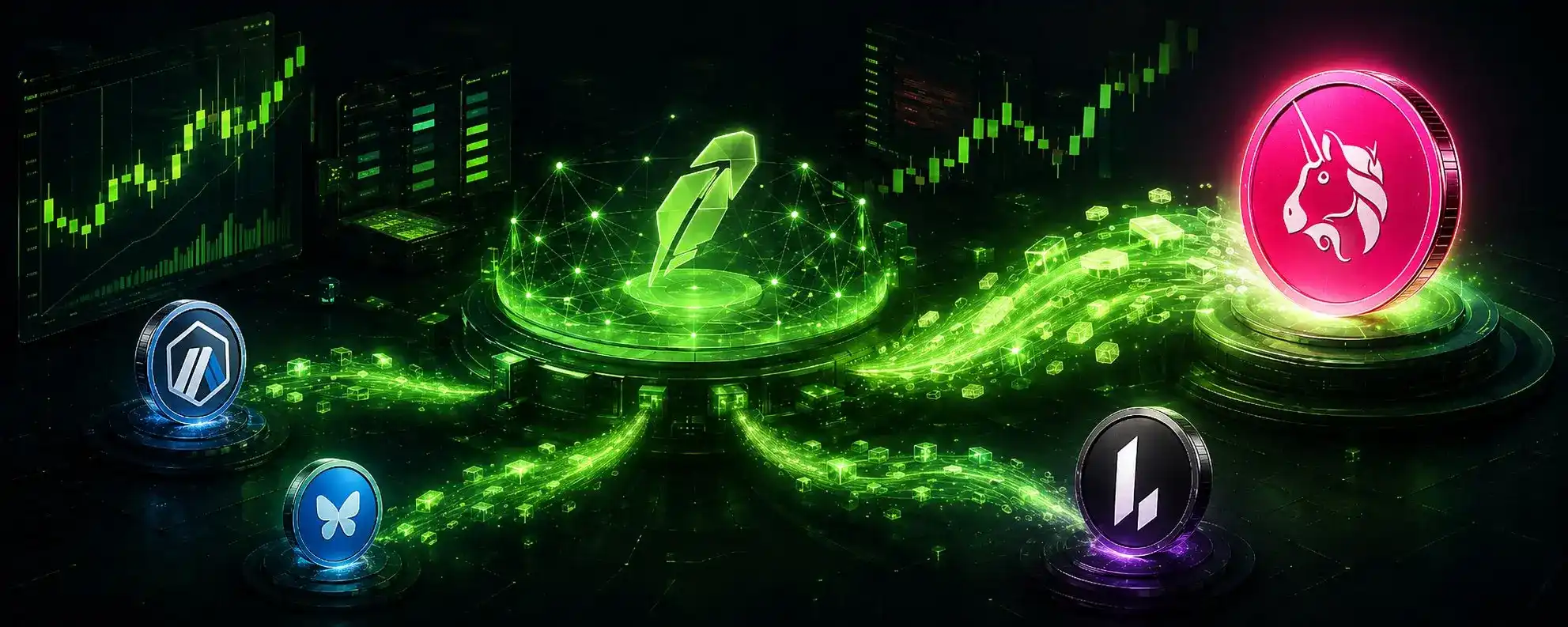
The network still does not have a native token. For crypto investors who want exposure to continued growth in users, assets and trading activity on Robinhood Chain, the focus has shifted beyond the chain’s own popular projects to the protocols providing trading, lending and base-layer infrastructure. As capital moves in, those projects may see gains in users, revenue or token demand.
This article examines how UNI, MORPHO, LIT and ARB connect to Robinhood Chain’s growth. ETH was excluded from the discussion in the source material because, while it serves as the chain’s gas and settlement asset and collects fees, the incremental effect is limited relative to ETH’s overall size.
Uniswap captures most of Robinhood Chain’s trading flow
Robinhood Chain did not build its liquidity system from scratch. Instead, it brought in Uniswap V2, V3 and V4 directly. Robinhood has positioned Uniswap as the chain’s main public liquidity protocol, and most DEX activity on Robinhood Chain currently runs through it.
That means rising activity in meme coins, protocol tokens and tokenized stocks on Robinhood Chain is largely translating into more volume and fee income for Uniswap.
Since July, Robinhood Chain has become one of Uniswap’s most important revenue sources. In July, Uniswap’s daily fees reached about $5.16 million at one point, with about $4.38 million coming from Robinhood Chain, or nearly 85% of the total. As of today, Uniswap posted $9.19 million in protocol revenue over the past 30 days, and Robinhood Chain accounted for $4.36 million of that, or 47.4%.
Robinhood Chain is also bringing a new stream of RWA trading to Uniswap on top of native on-chain assets such as meme coins. About six weeks after Robinhood Chain went live, cumulative trading volume in tokenized stocks handled by Uniswap reached $1.5 billion. As of today, daily tokenized stock volume had risen to $355 million, up 30 times from a month earlier. As that segment expands, so do the trading volume and fees available to Uniswap.
Revenue growth has coincided with a structural change in UNI. After the UNIfication proposal took effect at the end of 2025, Uniswap formally turned on protocol fees and directed that revenue toward ongoing UNI burns. In the source article’s framing, that shifted UNI from a pure governance asset to one more clearly tied to protocol usage and revenue.
As of Aug. 31, about 110 million UNI had been burned in total. Of that amount, 100 million UNI came from a one-time treasury burn when UNIfication was implemented, while roughly 10 million UNI had been burned on an ongoing basis after the protocol fee mechanism went live. With protocol revenue rising, the pace of burns has also picked up. During August, multiple trading days saw more than 100,000 UNI burned in a single day. On Aug. 21 alone, roughly 150,000 UNI, worth about $590,000, was burned, marking a record daily burn value since the mechanism was introduced.
Lighter is the perpetual futures gateway inside Robinhood Wallet
When Robinhood Chain mainnet launched, Lighter was embedded directly into Robinhood Wallet as the in-wallet entry point for perpetual futures. Eligible users do not need to jump to another DeFi frontend to trade Lighter perps; they can do it within the wallet.
Lighter has said it is providing 11 million LIT in incentives for the Robinhood community, and trades placed through Robinhood Wallet qualify for double points.
This is not a standard app deployment. Perpetual futures on Robinhood are powered by Lighter’s trading infrastructure underneath, with USDG used as collateral and the unit of account. Lighter founder Vladimir Novakovski previously said the two sides split revenue from this business 50:50, and Lighter’s share will be used for LIT buybacks.
DefiLlama data cited in the article shows cumulative perpetual futures volume on Robinhood Chain through Lighter at about $5.07 billion. Of that, around $4.97 billion came in the past 30 days and about $1.75 billion in the past seven days. Over the same period, Robinhood Chain contributed about $741,000 in fees and $537,000 in protocol revenue to Lighter.
Lighter is doing more than deploying contracts on Robinhood Chain. It has direct access to the wallet’s user entry point and order flow. If Robinhood users keep increasing their perp trading activity, Lighter’s revenue and the scale of LIT buybacks would rise with it.
Morpho sits underneath Robinhood Earn
On July 1, the same day Robinhood Chain mainnet went live, Robinhood also launched its on-chain yield product Robinhood Earn and chose Morpho as the lending protocol underneath it. Users can buy USDG directly in the Robinhood app, then move that USDG through a self-custody wallet into a Morpho Vault managed by Steakhouse Financial to earn yield. The frontend remains Robinhood, but the capital ends up in Morpho.
Robinhood Earn crossed $100 million in deposits in less than two weeks after launch and moved past $250 million in early August. As assets continued to flow in, Robinhood Chain quickly became Morpho’s third-largest market, behind only Ethereum and Base.
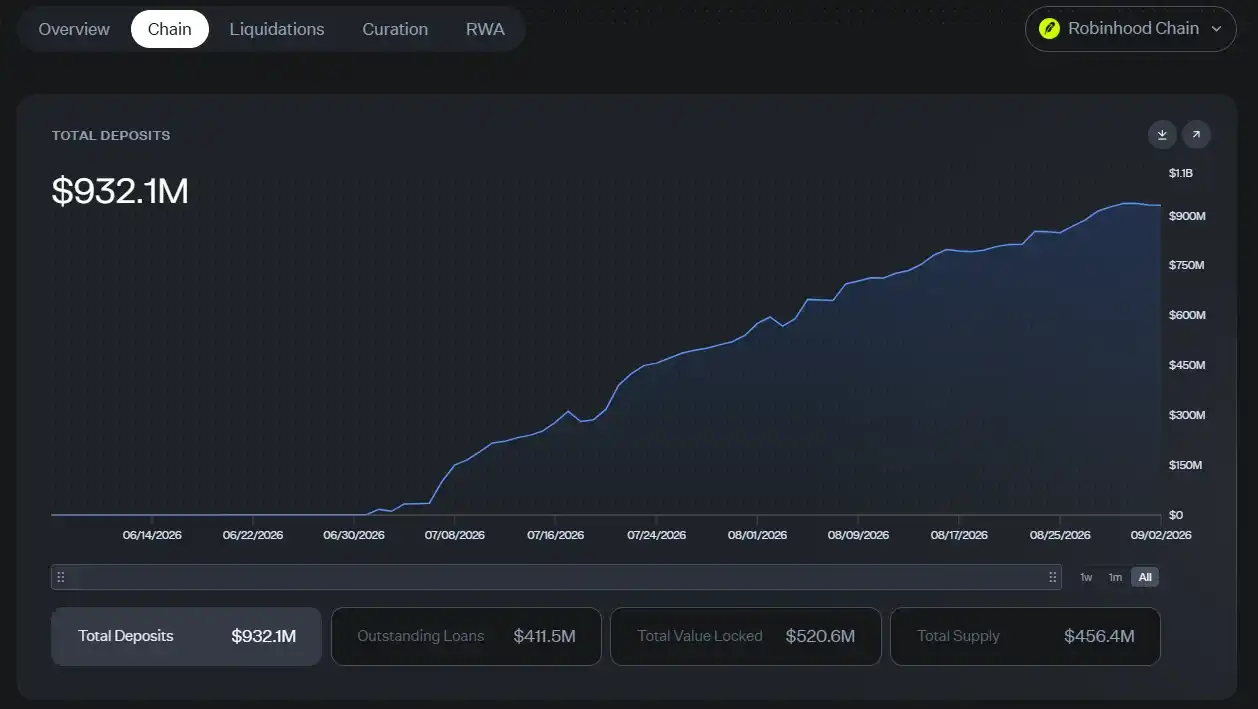
Morpho’s official dashboard shows about $932 million in total deposits on Robinhood Chain, roughly $412 million in outstanding loans and about $521 million in TVL.
Still, Morpho has not captured Robinhood Chain growth as directly as UNI has through protocol fees and token burns. For now, that fee stream mainly goes to lenders. Although the protocol has a built-in protocol fee switch, it has not been turned on, so the effect from Robinhood Chain is showing up more in balance-sheet growth and borrowing demand than in direct value capture for MORPHO.
Robinhood controls the user entry point in the Earn product, while Morpho provides the lending rails underneath. If Robinhood Earn continues to grow, Morpho’s deposit and loan book should expand with it. Only if protocol fees are enabled later could that growth start to convert into protocol revenue.
Arbitrum receives 10% of Robinhood Chain’s net protocol revenue
Unlike Uniswap, Morpho and Lighter, which operate as applications on Robinhood Chain, Arbitrum provides the blockchain infrastructure underneath.
Robinhood Chain itself is an Ethereum Layer 2 built on Arbitrum Dedicated Blockchains. It runs Arbitrum Nitro and uses Ethereum for data availability and settlement. Under the revenue-sharing terms of the Arbitrum Expansion Program, Robinhood Chain returns 10% of net protocol revenue to the Arbitrum ecosystem. Of that, 8% goes to the ArbitrumDAO Treasury and 2% goes to the Arbitrum Developer Guild.
So far, Robinhood Chain has contributed about $1.3 million to the Arbitrum ecosystem, including $1.04 million to the ArbitrumDAO Treasury. In the past 30 days alone, it contributed about $665,000, of which $532,000 went to the DAO.
That money does not currently flow directly to ARB holders, and there is no corresponding ARB buyback or burn mechanism. In that sense, Robinhood Chain’s value capture for ARB is markedly weaker than what UNI has through fees and burns.
For Arbitrum, the bigger point may be elsewhere. Robinhood Chain shows that the stack can support on-chain business for a large financial institution. If more institutions choose Arbitrum to build standalone chains later, Arbitrum DAO would continue to receive revenue shares from those deployments.