
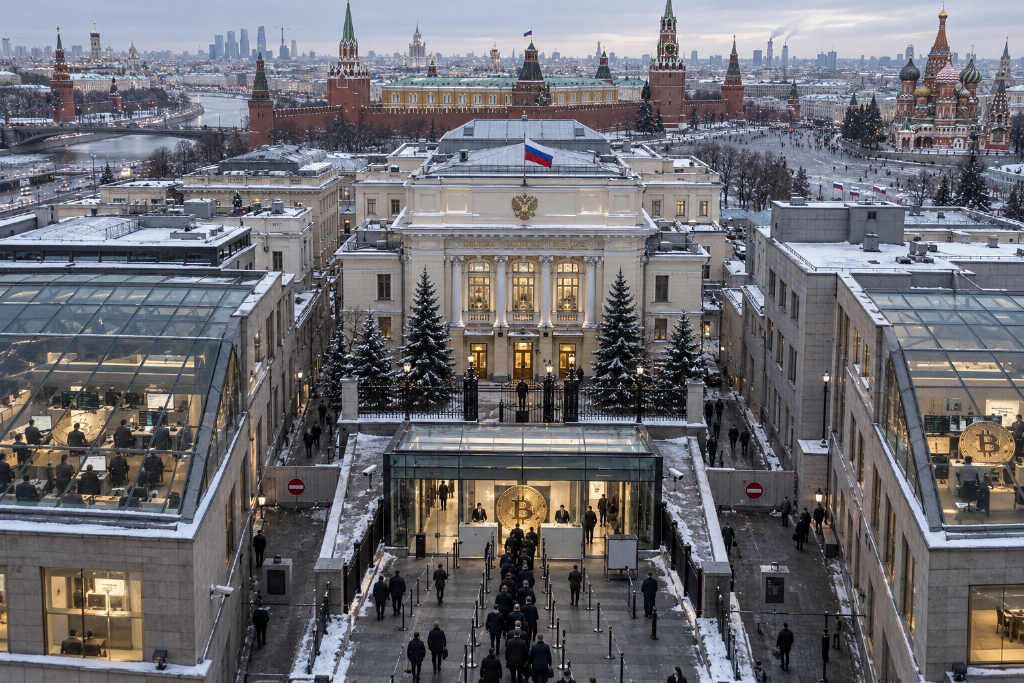
Russia’s central bank has confirmed that, from July 1, 2027, Russian residents will need to use approved intermediaries to buy and sell cryptocurrencies. Direct peer-to-peer, or P2P, transactions between individuals will no longer qualify under the new rules once they take effect. The change does not mean Russia is banning Bitcoin right now, and it should not be read as making crypto ownership illegal. What changes is the channel residents may use to trade.
Transition period runs until July 2027
Under the Bank of Russia’s updated cryptocurrency market Q&A dated Oct. 12, residents may still trade digital currencies with each other during the transition period. From July 1, 2027, they will have to transact through, or directly with, institutions that legally organize digital currency circulation. The channels listed by the central bank include brokers and crypto trading organizations entered in the central bank’s register.
Decrypt reported that the requirement is based on Federal Law No. 282-FZ on digital currency and digital rights. The central bank said the law specifies which crypto operations residents may conduct without a licensed intermediary, and person-to-person transactions are only permitted until July 1, 2027. In other words, the market still has nearly nine months to adjust, and the rule should not be described as if it were already fully in force.
Trading is set to move onto supervised rails
The core of the new framework is to concentrate crypto trading within regulated institutions. Trading organizations on the central bank’s register must meet local corporate and capital requirements in Russia. During the transition period, firms may continue operating under current arrangements while gradually completing registration.
Sberbank, Russia’s largest bank, joined the central bank’s register of crypto trading organizations on Oct. 12 and plans to roll out its first related products in December. That points to traditional financial institutions potentially becoming a key access point under the new system.
P2P stablecoin users may feel the change more directly
For users who currently rely on P2P channels to obtain stablecoins, the effect may be more immediate. Decrypt used a common USDT trade as an example: a buyer pays rubles by bank card, then an individual seller transfers the tokens. After July 2027, that model, which lacks a supervised intermediary, will no longer comply with the new rules.
As for cross-border platforms, custodial and non-custodial wallets, the report said any specific restrictions need to be read separately against the central bank’s full Q&A and the relevant legal text. It should not be treated as a blanket ban on all cryptocurrency transfers.
Not a ban on holding Bitcoin
The rule can easily be reduced to a headline saying Russia is banning Bitcoin, but the public details available so far point to trading methods and intermediary qualifications. Russia still allows residents to buy and sell cryptocurrencies through qualified operators under specific rules. The central bank also applies tests and annual purchase limits to non-qualified investors, while qualified investors are subject to a different set of limits.
Cryptocurrency still cannot be used in Russia as a means of payment for goods and services. That restriction is separate from the new rules covering P2P crypto trading.
What the market will watch next
The next focus will be how the Bank of Russia implements the trading register, investor classification rules and bank-side requirements, and whether current P2P users can shift smoothly to compliant platforms. The report says the new system will strengthen transaction traceability and intermediary oversight, while also potentially raising the threshold for entering the crypto market. Its real impact will depend on implementation details and the services available during the transition period.
The article concerns a framework scheduled to take effect in 2027. It does not mean Russia’s current system has already moved to a comprehensive ban on personal crypto trading or crypto asset ownership.