
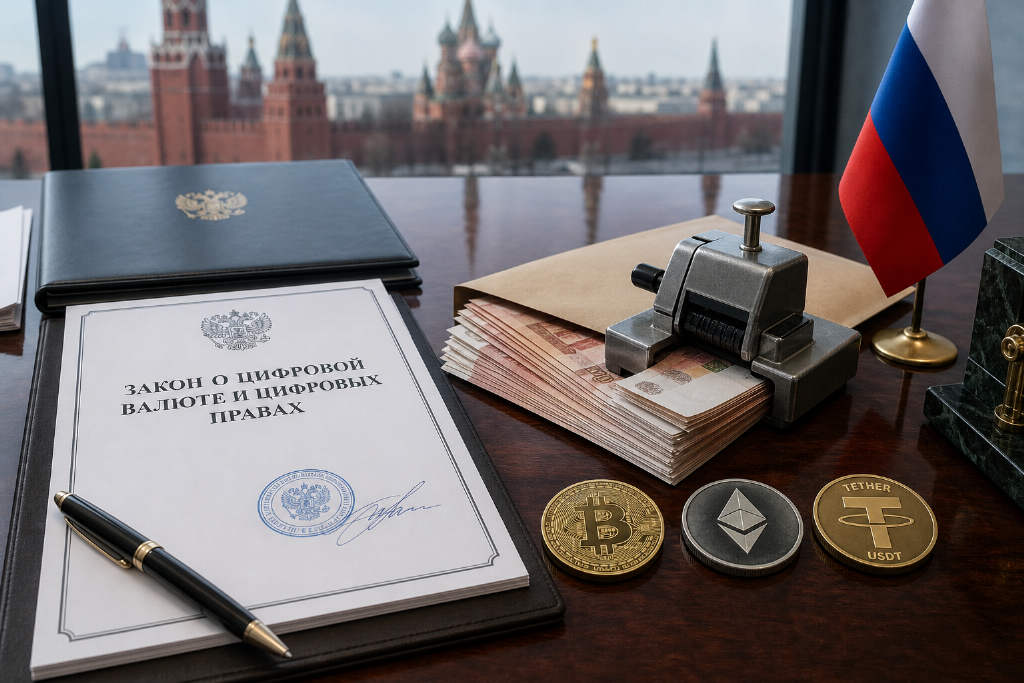
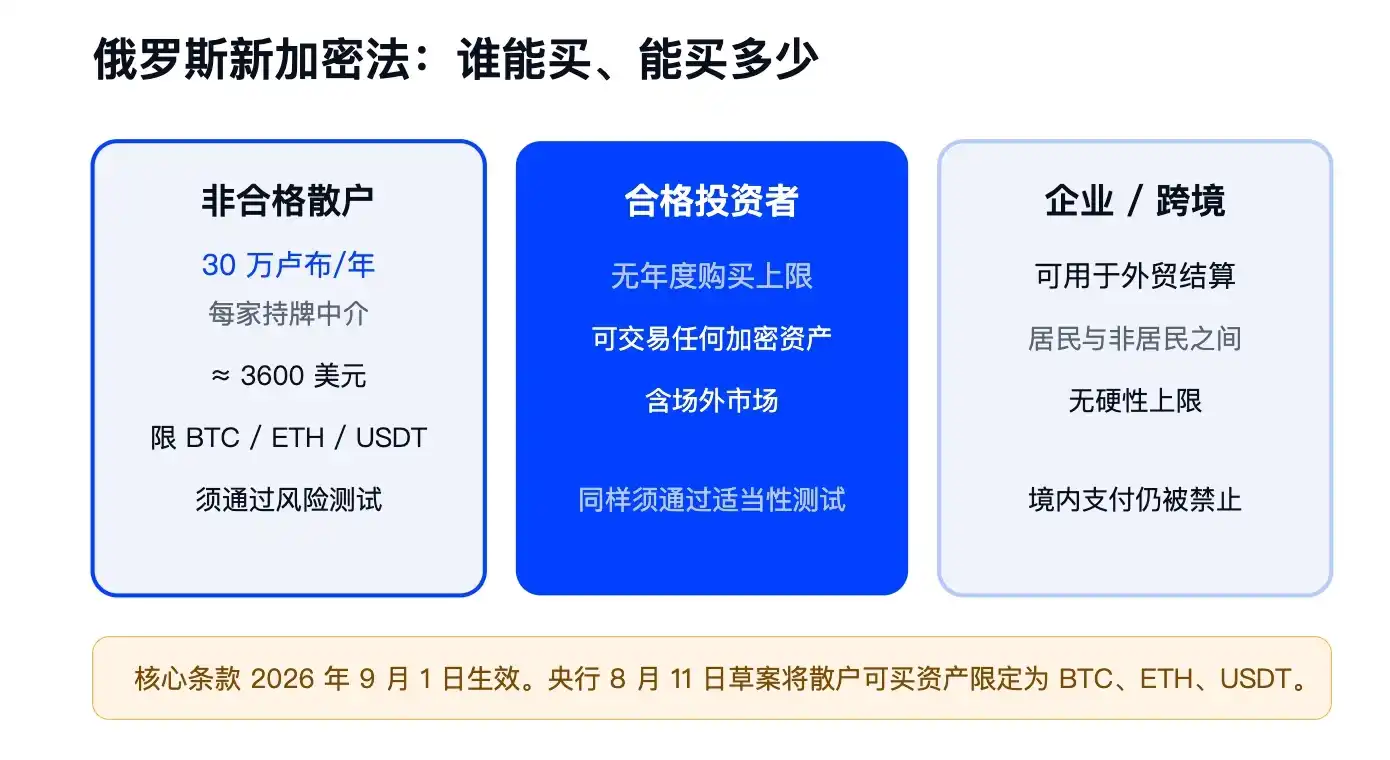
Russia will begin enforcing the core provisions of its new crypto law on Sept. 1 after President Vladimir Putin signed the Law on Digital Currency and Digital Rights on Aug. 4. The measure limits non-qualified retail investors to 300,000 rubles in annual crypto purchases through any single licensed intermediary, roughly $3,600 by the figures cited in the report. A Bank of Russia draft order published on Aug. 11 would initially allow retail access only to Bitcoin, Ether and USDT.
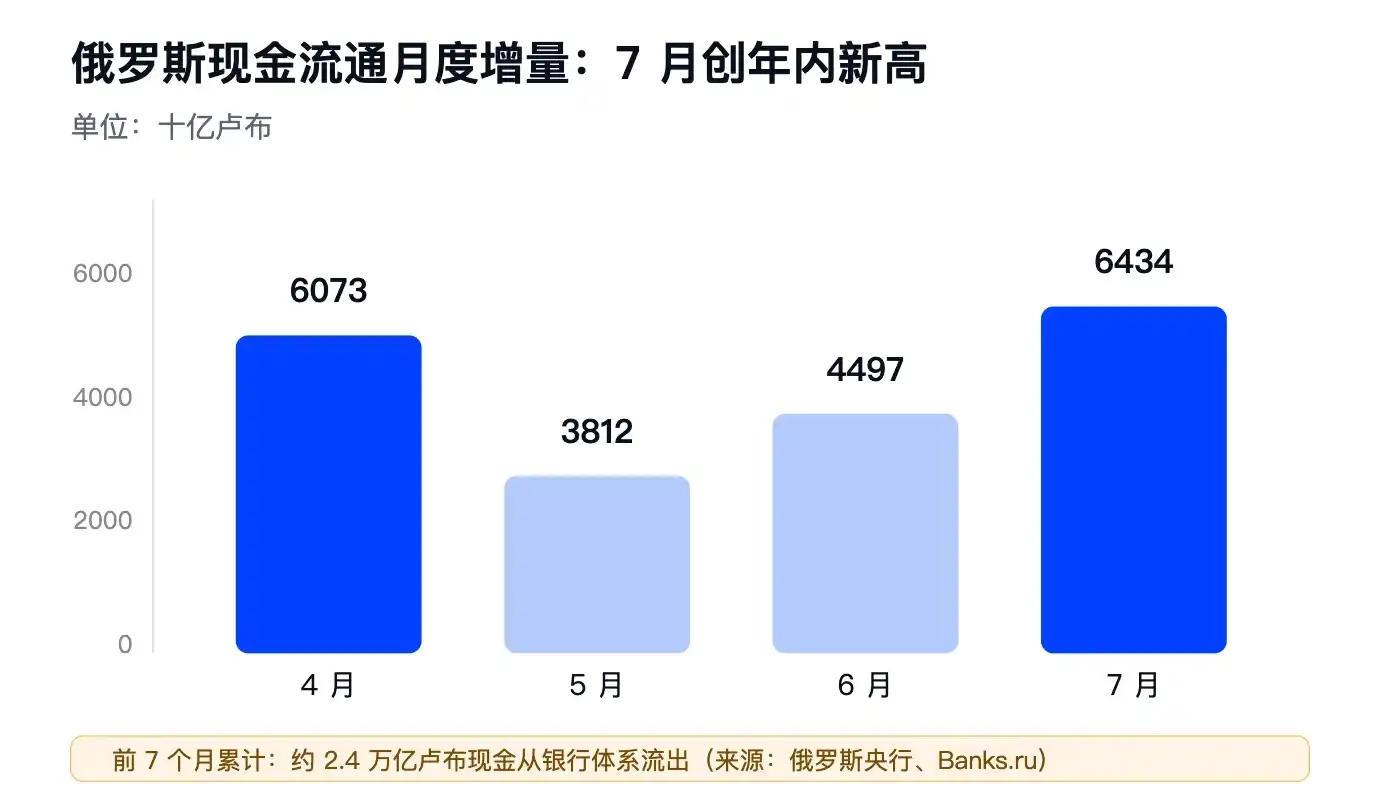
The timing overlaps with a large outflow of cash from the country’s banking system. According to figures cited by the Financial Times and The Washington Post, Russians withdrew about €24.4 billion from banks in the first seven months of 2026, equivalent to around 2.4 trillion rubles.
Cash withdrawals accelerated through July
Data from Russian financial platform Banks.ru showed the withdrawal wave began in early March, with about 300 billion rubles leaving personal accounts each month.
Bank of Russia figures point to a faster rise in cash circulation over recent months. Cash in circulation increased by 607.3 billion rubles in April, 381.2 billion rubles in May, the highest May figure since 1995, 449.7 billion rubles in June, and 643.4 billion rubles in July, the largest monthly increase of 2026. By July, the amount of cash held by Russian households and companies had exceeded 21.9 trillion rubles.
Deposit declines at individual banks show the same pattern. Gazprombank lost 299.5 billion rubles in retail deposits over four months, equal to 10.8% of its deposit base. Rosselkhozbank lost 270.5 billion rubles, down more than 15%. Alfa-Bank, the country’s largest private bank, lost 179.4 billion rubles, a 5.6% decline. Even Sberbank saw outflows, with 211.6 billion rubles leaving in June and another 31.8 billion rubles in July.
Officials say crypto trading already runs at large scale
As cash leaves banks, crypto volumes have been growing. In February 2025, Deputy Finance Minister Ivan Chebeskov said at the Alfa Talk conference that daily crypto trading by Russian citizens reached about 50 billion rubles, or $648 million at the exchange rate used at the time, with millions of citizens participating each year.
Chebeskov said, 「The annual turnover of cryptocurrency in our country exceeds 10 trillion rubles, and all of it takes place outside the regulatory perimeter.」
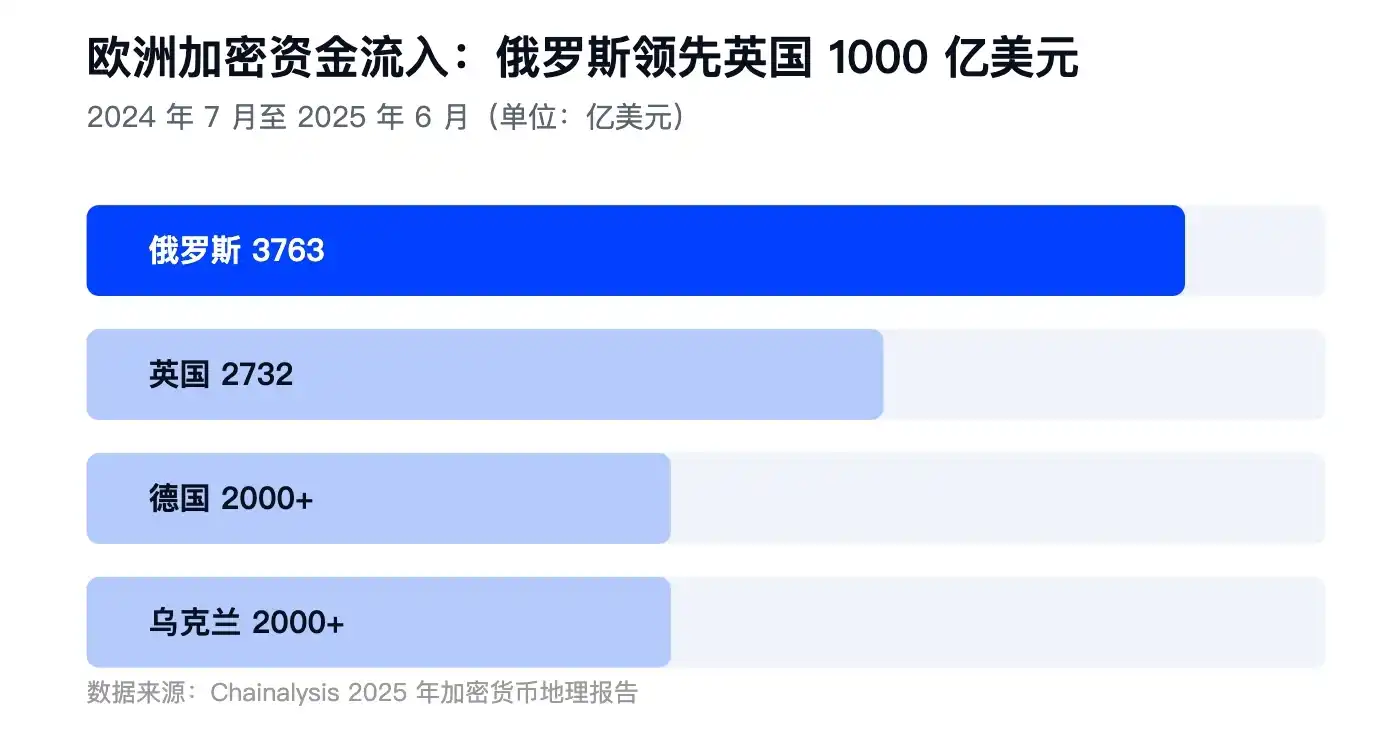
Chainalysis data also indicate the scale of the market. From July 2024 to June 2025, crypto inflows received by Russia totaled $376.3 billion, above the UK’s $273.2 billion and nearly 1.4 times as large, making Russia the biggest market in Europe by that measure. Sergei Shvetsov, chairman of the supervisory board of the Moscow Exchange, estimated that Russian users pay about $15 billion in fees to overseas crypto platforms each year.
Retail buyers face a 300,000-ruble annual cap
The legislation moved quickly. On July 21, 2026, the State Duma completed the second and third readings of the Law on Digital Currency and Digital Rights in a single day. Putin signed it into law on Aug. 4, and its main provisions will take effect on Sept. 1, 2026.
For retail investors, the requirements are strict. Non-qualified investors must pass a suitability test administered by the central bank, and their crypto purchases through any single licensed intermediary cannot exceed 300,000 rubles a year, described in the report as roughly $3,600 to $3,800. On Aug. 11, the central bank released a draft instruction that would initially limit retail purchases to Bitcoin, Ether and USDT.
Qualified investors are exempt from the cap and may trade freely on exchanges and over the counter. Companies and import-export firms may also use crypto for cross-border settlements, with no hard ceiling stated in the law. The ban on using crypto to pay for goods and services inside Russia remains in place.
Officials and market participants offer different explanations
Russian officials have repeatedly said there is no plan to freeze household deposits. Finance Minister Anton Siluanov called such claims 「fake news」. In August 2025, Bank of Russia Deputy Governor Alexei Zabotkin said withdrawal restrictions would have 「destructive consequences」 for the financial system.
The central bank attributes the jump in cash holdings to several factors. VAT rose from 20% to 22% starting in January 2026, and bank acquiring services were included in VAT, which the report says pushed some small and midsize businesses toward cash. Repeated disruptions to mobile communications and internet access since spring also weakened digital payments, leading households and businesses to hold more cash. Falling deposit rates reduced the appeal of bank savings as well.
The market narrative is different. The Financial Times and The Washington Post, citing analysts and anonymous former financial officials, said the withdrawals reflect worries over rising war costs, asset nationalization and the stability of the banking system. The report said Russian prosecutors transferred about $51.5 billion in private assets into state control last year, and in June seized about $7.6 billion in assets linked to agricultural tycoon Vadim Moshkovich.
Digital ruble retail rollout starts on the same day
Sept. 1 is not only the start date for the new crypto rules. It is also the date when the Bank of Russia’s central bank digital currency, the digital ruble, opens to ordinary users. According to the report, 12 systemically important banks, including Sberbank, VTB, Alfa-Bank, Gazprombank and T-Bank, must enable digital ruble transactions for clients. Retailers with annual revenue above 120 million rubles must also accept digital ruble payments.
That puts two policy moves on the same calendar date: private crypto trading is brought into a licensed framework, while retail payments are pulled toward a state-run digital currency system. For ordinary Russians, bank deposits are becoming less attractive, crypto access is being capped, and the digital ruble is arriving under direct official control.