
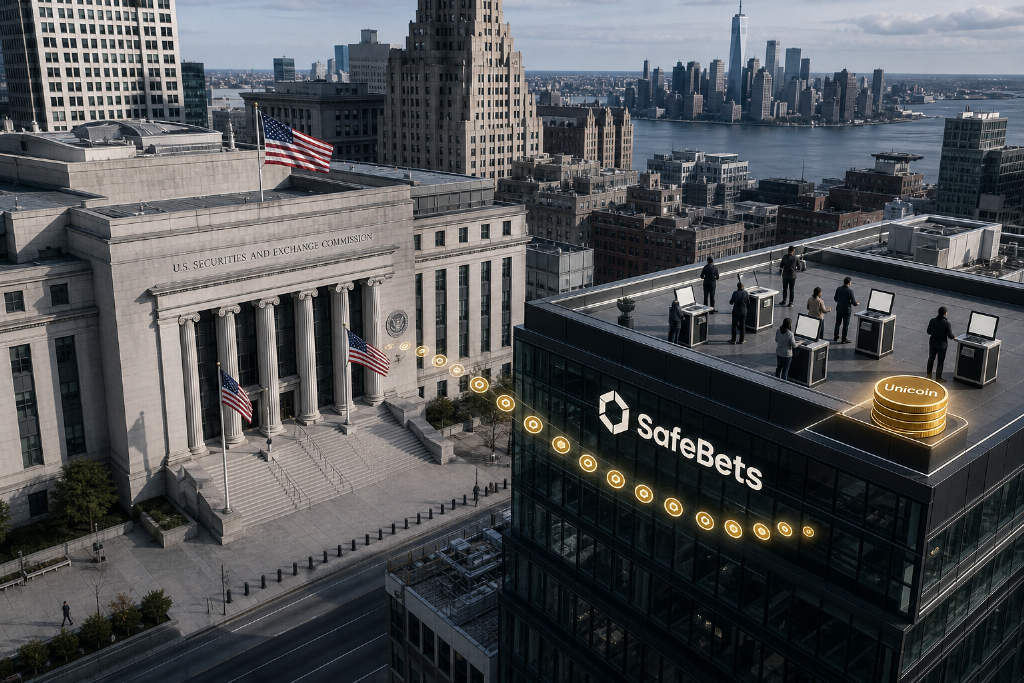
SafeBets, a new prediction market platform, is introducing a model that does not require users to risk real money, in an apparent attempt to avoid the global regulatory disputes surrounding platforms such as Polymarket and Kalshi.
According to SafeBets executive director J. Tennyson Singer, users do not use credit cards or deposit real funds. Instead, they receive 100 virtual tokens from the platform to take part in predictions. Each prediction costs 1 token. If a user is correct, they receive Unicoin token rewards; if they are wrong, they lose only the virtual token used for that prediction.
SafeBets says the model is market research
SafeBets argues that its core commercial value is not user wagering. The company says it is collecting data from forecasters with high accuracy rates to build a “wisdom of the crowd” signal, with plans to provide that signal as a trading reference to affiliated brokerages in the future.
The platform lists blockchain pioneers Scott Stornetta and Stuart Haber as advisers. SafeBets says that, unlike traditional prediction markets that require users to stake money, its structure should be treated as “market research” and therefore would not face the same regulatory risks.
Pressure on Polymarket and Kalshi continues
Polymarket and Kalshi are currently facing regulatory pressure across multiple jurisdictions in the United States and overseas. That includes enforcement actions in several U.S. states focused on whether prediction markets fall within regulated activity, as well as restrictions on related services in some European countries.
Ties to Unicoin add another layer of controversy
SafeBets itself is not free from scrutiny. According to filings that Unicoin submitted to the U.S. Securities and Exchange Commission, SafeBets is wholly owned by Unicoin CEO Alex Konanykhin, and the Unicoin tokens used as rewards are directly connected to the company.
The SEC previously sued Unicoin and related executives, alleging misleading statements to investors and registration-statement problems tied to token sales. Unicoin denied those allegations and said it would contest the case.
SafeBets said it hopes to open a new path for growth under tighter prediction market oversight through a model built on no-capital-risk forecasting and data monetization.