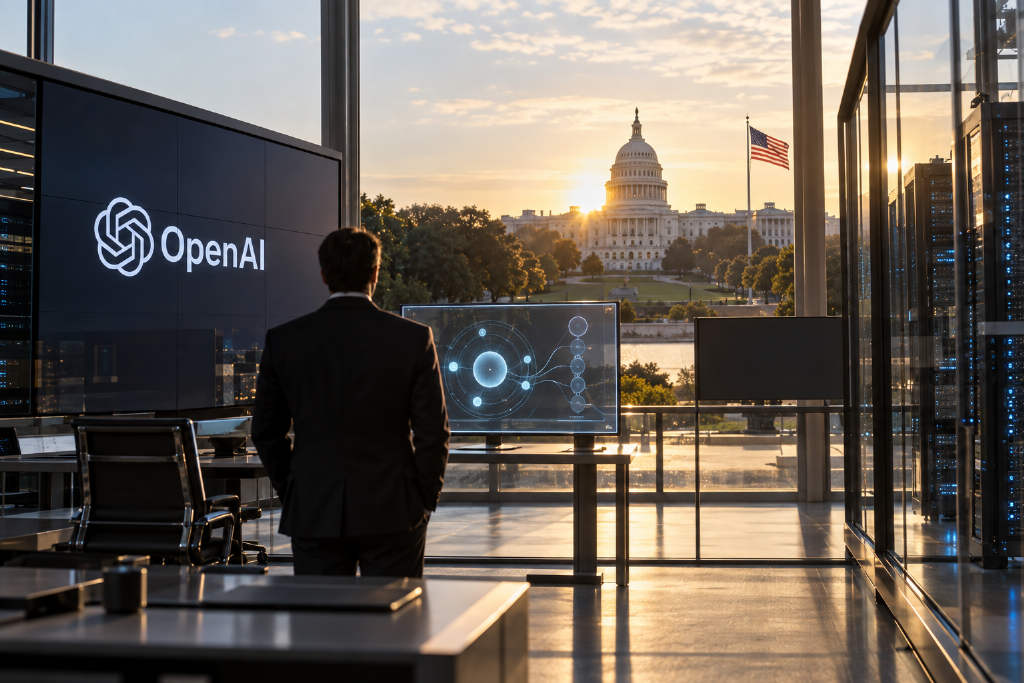
OpenAI Chief Executive Sam Altman said on X that he supports a federal U.S. framework for frontier AI safety, arguing that the industry needs consistent safety requirements. He also said AI companies do not need to wait for antitrust exemptions or new legislation before taking voluntary safety steps.
Altman said OpenAI already prepares explicit safety cases ahead of frontier reinforcement learning training runs that are expected to materially increase model capabilities. He added that he wants the industry to develop shared standards around model control-loss risk, monitoring, and safety. In his post, Altman drew a distinction between slowing the pace of development and halting progress altogether, saying that "pacing" means accepting the speed and cost trade-offs that come with safety measures.
He said that, regardless of how much competitive pressure the United States faces, AI capability development should not move faster than alignment and monitoring. The comments come after earlier reports that Anthropic, OpenAI, and Google have been in working-group talks since July on setting up their own AI safety standards bodies. Separately, Democratic lawmakers in the U.S. are scheduled to hold a caucus meeting on Tuesday morning focused on AI legislation, calling the policy response to AI-related challenges a high priority.
OpenAI CEO Sam Altman said on X that he welcomes a federal U.S. regulatory framework for frontier AI safety, saying the industry needs a consistent set of safety requirements.
He also said AI companies do not need to wait for antitrust exemptions or related legislation before taking safety measures on their own. Altman said OpenAI currently prepares explicit safety cases before starting frontier reinforcement learning training runs that are expected to significantly improve model capabilities. He added that he wants the industry to establish shared standards on model control-loss risk, monitoring, and safety.
Addressing the idea of "pacing" AI development, Altman said the term does not mean stopping progress. Instead, he said, it means accepting the speed and cost trade-offs that come with safety measures. "No matter how much competitive pressure the U.S. faces, it should not let the pace of AI capability development exceed its ability to align and monitor those systems," he wrote.
Earlier reports said Anthropic, OpenAI, and Google have been holding working-group discussions since July on creating their own AI safety standards bodies.
Separately, Democratic lawmakers in the U.S. are set to hold a caucus meeting on Tuesday morning focused on AI-related legislative action. They described the challenge posed by AI as a "high priority" and said action is needed as soon as possible.
This article was originally published by Bit.Fan. For more cryptocurrency news and market insights, visit www.bit.fan. Disclaimer:
The market information, project data, and third-party content displayed on this platform are for industry information sharing only and do not constitute any form of investment advice or return commitment.
Cryptocurrency trading carries high risks. Users should fully assess their risk tolerance and make independent decisions. All profits, losses, and legal responsibilities are borne by the users themselves.