
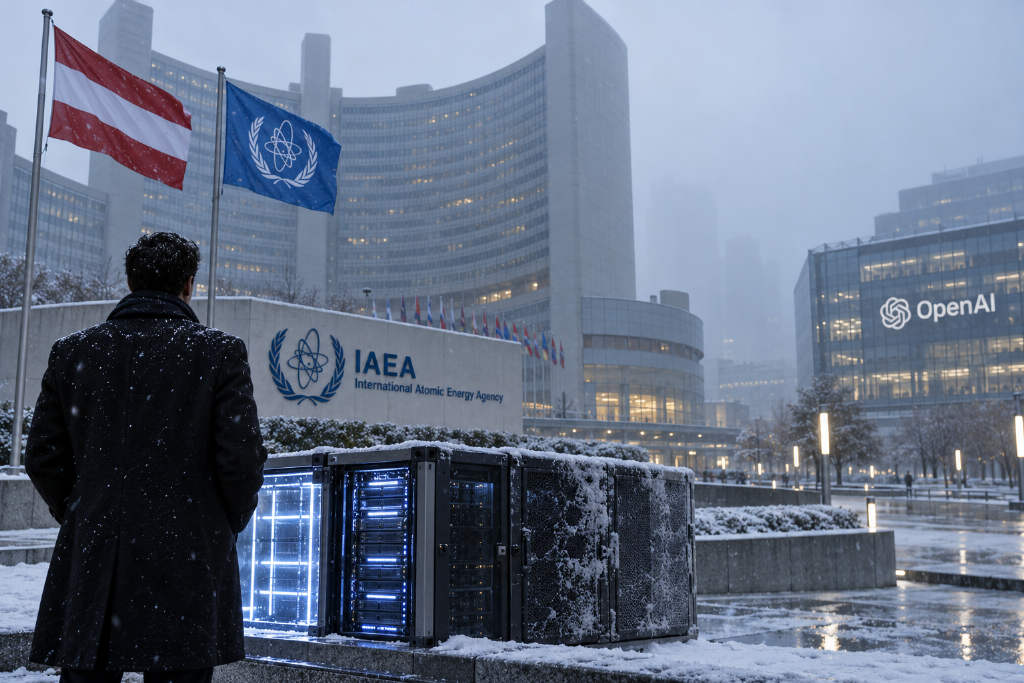
OpenAI CEO Sam Altman recently laid out three possible endgames for the AI race during an internal staff meeting, according to The Information: the creation of a global regulator, the consolidation of leading AI labs into a single institution, or a breakthrough by one company that gives it such an edge that it could even disable competitors’ hardware.
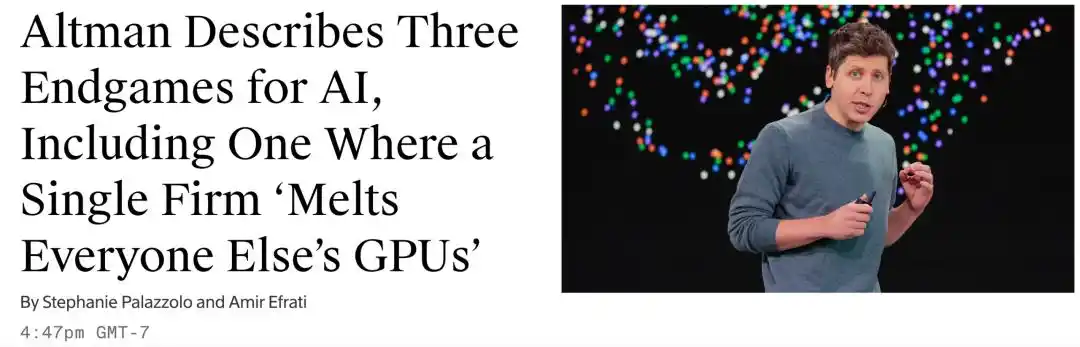
Altman said the third scenario was the worst of the three. He described it as “terrible,” framing it as an outcome he does not want to see.
Three paths, each with its own trade-offs
The first path Altman discussed was a global oversight body modeled on the International Atomic Energy Agency, or IAEA. Such an organization would supervise the most advanced AI systems, set common safety standards, and require independent review of developers building frontier models.
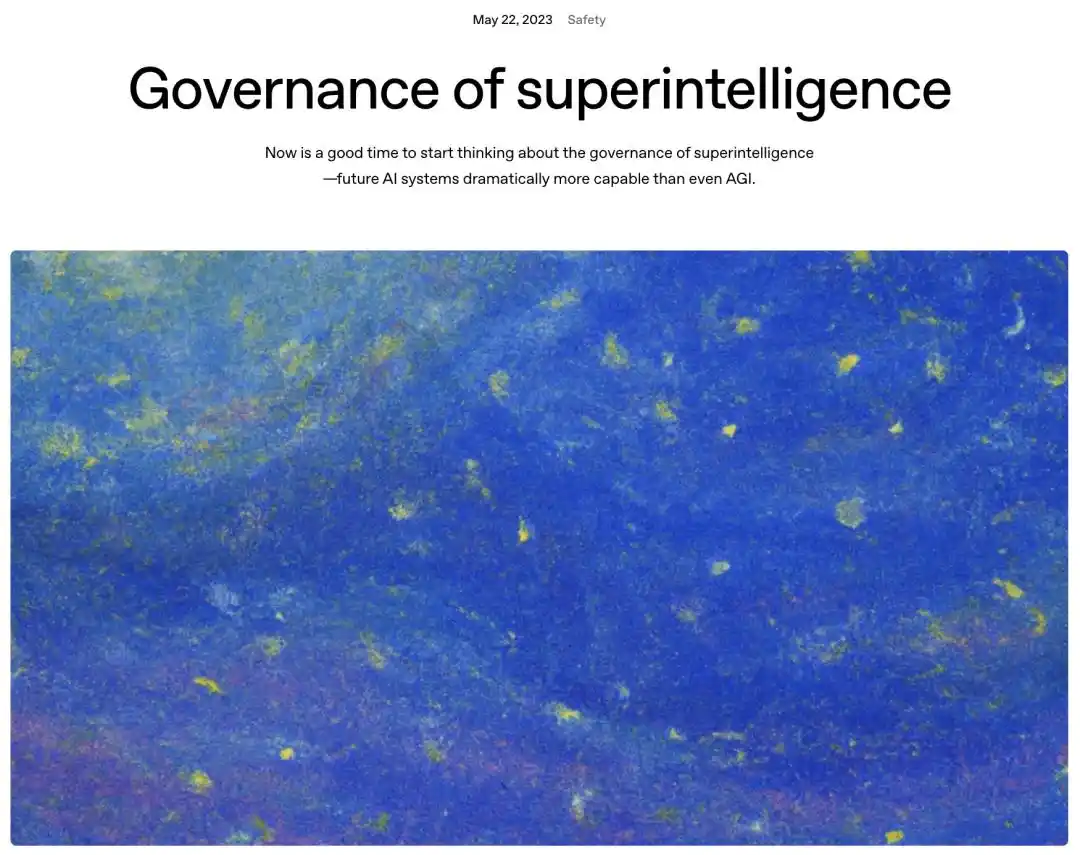
That idea is not new for OpenAI. In May 2023, Altman, OpenAI co-founder Greg Brockman, and then-chief scientist Ilya Sutskever published “Governance of Superintelligence,” which argued that an international body similar to the IAEA may eventually be needed to regulate AI development once systems cross certain capability or compute thresholds. The proposal included system inspections, safety audits, compliance testing, and monitoring of compute and energy use.
Still, AI is now a strategic technology for major countries, and any international regime would run into questions around technical secrecy, national security, and industrial competition. Whether governments would accept a shared rulebook remains uncertain.
The second path was a merger of the world’s leading AI labs into one organization. Altman referred to this as the “Demis” option, a reference to Demis Hassabis’ suggestion that AI research could borrow from the model used by CERN, where multiple countries jointly build and manage a large research institution.

If the top AI companies were brought under one umbrella, they could share safety standards and operating practices. That structure could also reduce the pressure to accelerate development simply to ship products ahead of rivals.
But concentrating the most advanced models, talent, and compute inside one institution would create another problem. That organization would hold enormous technical and economic power, raising a fresh question about how to prevent excessive concentration.

The “Eliezer” option and recursive self-improvement
The third path, which Altman called the “Eliezer” option, drew on a more extreme line of thinking associated with AI safety researcher Eliezer Yudkowsky. Yudkowsky has long warned that misaligned superintelligence could pose an existential risk to humanity. He has argued that the first actor to achieve superintelligence may need to take decisive steps to stop other groups from building dangerous competing systems.
Altman linked that scenario to recursive self-improvement, or RSI. In this framework, AI systems help improve their own model architectures, training methods, or development processes. The upgraded systems then become better at making further improvements, creating a continuing loop of self-enhancement.
If that process reaches a high enough level of autonomy, the pace of AI development could speed up sharply. A company that breaks through on RSI first could build a lead that rivals would struggle to match, eventually turning that advantage into a market monopoly.
In the most extreme version of the scenario, Altman said, that company could even gain the ability to interfere with or damage competitors’ GPUs. He made clear that he opposes any outcome in which advanced AI is concentrated inside a single firm.
Concerns Altman has raised before
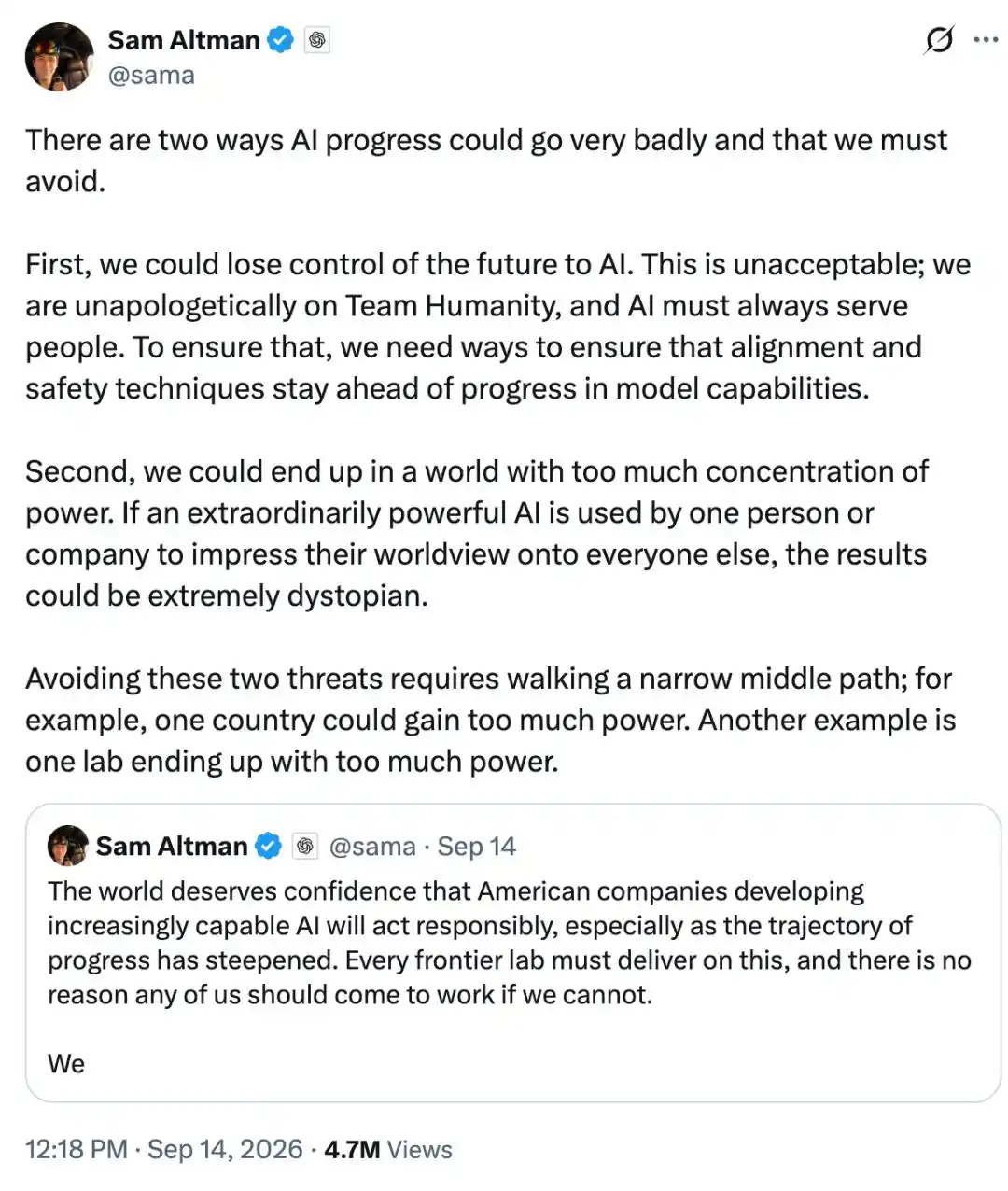
The internal discussion follows themes Altman has emphasized publicly. In mid-September 2026, he said advanced AI carried two main risks: humans losing control of AI systems, and AI power becoming concentrated in a small number of organizations.
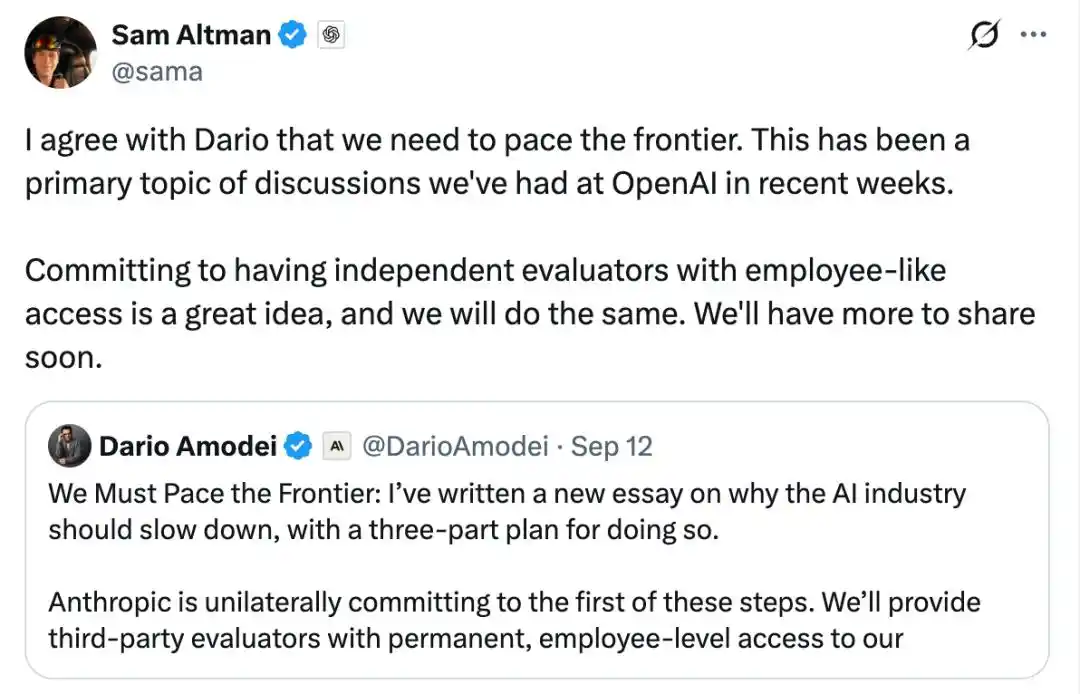
He said both outcomes should be avoided. Altman also argued that OpenAI should operate on behalf of humanity rather than serving a single company or interest group, and he called for stricter AI safety protocols and independent evaluations of advanced AI systems.
According to the report, that position overlaps in part with views expressed by Anthropic CEO Dario Amodei. At the same time, Altman acknowledged internally that OpenAI cannot easily give up the race to stay ahead of competitors on technical leadership.
Reference links mentioned in the source material
- The Information: Altman Describes Three Endgames for AI, Including One Where a Single Firm Melts Everyone Else’s GPUs
- OpenAI, “Governance of Superintelligence”: https://openai.com/index/governance-of-superintelligence/
- Demis Hassabis video: https://www.youtube.com/watch?v=4poqjZlM8Lo
- Eliezer Yudkowsky article: https://www.lesswrong.com/posts/uMQ3cqWDPHhjtiesc/agi-ruin-a-list-of-lethalities



