
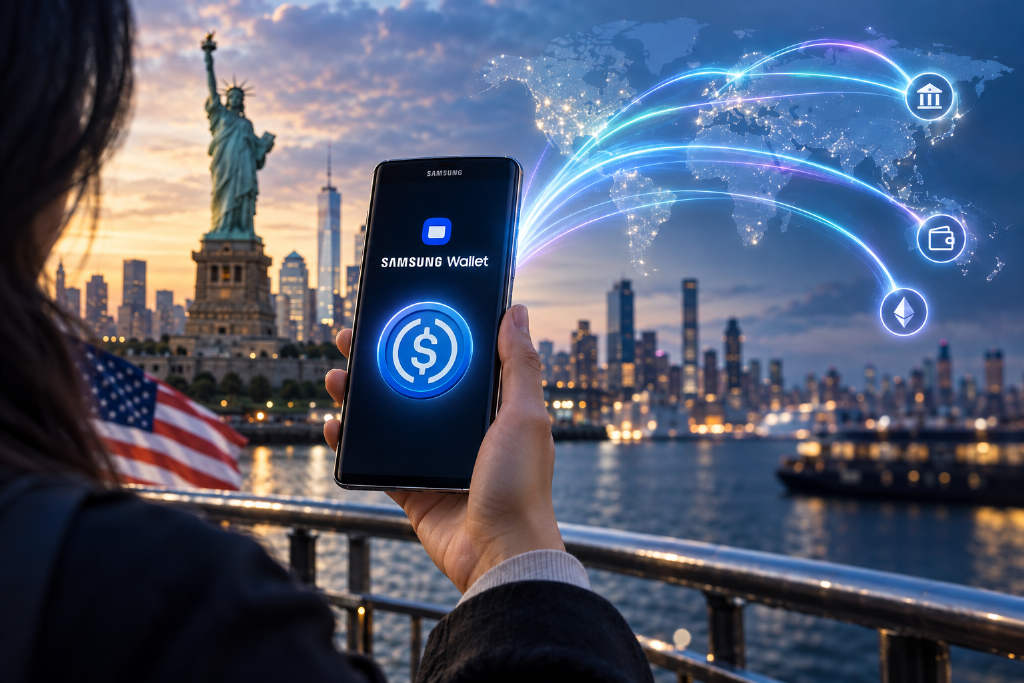
Samsung is bringing stablecoin functionality into its native Galaxy wallet.
Samsung Electronics America said on Oct. 7 that it will start rolling out Samsung Wallet stablecoin features to eligible Galaxy devices in the United States in the last week of October. The first supported asset will be USDC, and users will be able to send funds to overseas crypto wallets as well as eligible bank accounts in more than 60 countries.
Samsung said the launch will cover about 82 million Galaxy devices in the U.S. at rollout. The company also noted that this number refers to compatible devices, not 82 million active users.
USDC will be built into Samsung Wallet
One of the main changes is that users will no longer need to download separate crypto wallets such as MetaMask or Phantom, and they will not need to create wallets or manage private keys on their own.
Samsung said eligible Galaxy users will be able to access USDC directly through the existing Samsung Wallet. The service will require a Samsung Account, identity verification, and biometric authentication. The actual stablecoin accounts, custody, and fund movement will be handled by regulated partners.
Samsung specifically said users will not need to install another app or manage their own private keys. In practice, the blockchain wallet remains there, but it is placed behind a mobile wallet interface that mainstream users already know.
Solana and Sui will serve as underlying networks
Samsung confirmed that the blockchain networks and infrastructure supporting the USDC service will come from partners including Solana and Sui.
The Solana Foundation said Samsung Wallet and Samsung Pay will support stablecoins on Solana. Users will be able to use integrated fiat on- and off-ramps to send USDC for cross-border remittances, with settlement completed in the background on Solana.
Sui separately confirmed that Samsung Wallet will support native USDC on Sui. Sui said its gas-free stablecoin transaction feature allows users to transfer USDC without first holding SUI to pay gas fees, with network-layer fees set at $0.
Transfers will cover crypto wallets, exchange accounts, and bank accounts
The new feature is not limited to crypto-to-crypto transfers.
Samsung said Galaxy users will be able to send USDC directly to compatible overseas crypto wallets or exchange accounts. They will also be able to send funds to eligible bank accounts in more than 60 countries, where recipients will receive local fiat currency.
Samsung said it will not charge a transfer fee when users send USDC to external crypto wallets, although the receiving wallet or exchange may still impose charges. Transfers to overseas bank accounts will carry service fees based on destination and amount.
That shifts Samsung Wallet beyond its existing role as a wallet for payment cards, tickets, and digital keys, and into a stablecoin-based cross-border payments entry point.
Coinbase will custody the USDC balances
Samsung said the arrangement does not make the company a crypto custodian.
According to Samsung, Bastion is providing the stablecoin infrastructure, while USDC held in Samsung Wallet will be placed in sub-custody through Coinbase Prime Vault. Samsung said it is not a bank, remittance provider, or digital asset custodian, and does not directly hold customer funds.
Coinbase also confirmed that USDC will become the default U.S. dollar stablecoin in Samsung Wallet, with Coinbase Prime Vault responsible for custody of the related balances.
Market and transaction figures cited in the rollout
CoinGecko data cited in the report showed USDC with a circulating market capitalization of about $73.65 billion, circulating supply of about 74 billion tokens, and 24-hour trading volume of about $23.4 billion.
On the broader payments backdrop, Sui cited Visa on-chain data showing that global stablecoin transaction volume exceeded $83 trillion over the past 12 months. Sui also said it has processed more than $1 trillion in stablecoin transfers since August 2025.
Even so, the report said the partnership has not lifted token prices out of the broader crypto market weakness in the short term. CoinGecko data on Oct. 8 showed SOL at about $115.1, down about 2.8% over 24 hours, with a market capitalization of about $67.8 billion and 24-hour trading volume of about $2.84 billion. SUI was at about $1.13, down about 3% over 24 hours, with a market capitalization of about $4.67 billion and 24-hour trading volume of about $693 million.
Samsung points to future payment use cases
Samsung has already said the stablecoin feature could later expand to direct online payments in stablecoins and in-store tap-to-pay transactions using Galaxy phones.
If that rollout happens, Samsung Wallet would move beyond simply holding USDC on a phone and could turn stablecoins from a cross-border remittance tool into a payment balance used in everyday consumer transactions.