
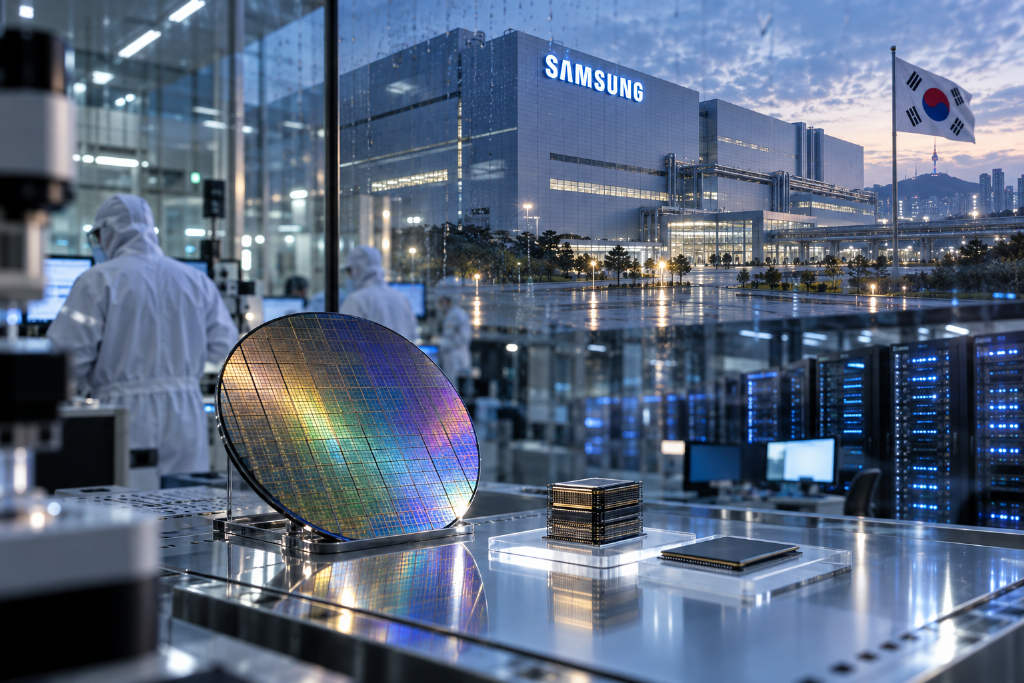
Samsung Electronics is reviewing an expansion of its 4 nm foundry capacity as rising demand for HBM4 base chips adds pressure to advanced-process production, according to a Sept. 21 report by Money Today cited by ChainCatcher.
HBM4 design centers on 1c DRAM and a 4 nm logic base die
The report said Samsung’s HBM4 consists of a 10 nm-class sixth-generation, or 1c, DRAM core die and a 4 nm logic base die. The base die is responsible for high-speed data exchange with GPUs and other AI accelerators.
Samsung is taking a different route from SK hynix, which uses TSMC’s 12 nm process for its HBM4 base chip. Samsung is instead using its own 4 nm process for that component.
4 nm lines are fully loaded
Samsung’s related production line is already running at full capacity and has secured orders tied to Nvidia Groq 3 LPUs, the report said. The company has also recently raised prices for new 4 nm orders and for HBM4 base chips.
Samsung expects third-quarter HBM4 revenue to increase by more than three times from the previous quarter. In the second half, HBM4 is expected to account for well above 60% of total HBM revenue.
Pyeongtaek P4 expansion and next-step plans
Most of the additional expansion at Pyeongtaek P4 will be used for 1c DRAM for HBM. More than half of Samsung’s 4 nm foundry capacity has already been allocated to HBM4 base chips.
HBM4E will also use a 4 nm base chip, and Samsung provided samples to customers in May.
The company is also evaluating a new 2 nm production line for HBM5. Its target is to use a 2 nm process based on gate-all-around, or GAA, architecture and increase TSV density, lifting operating speed by more than 50% compared with HBM4E.
Samsung started first-generation 2 nm mass production in the second half of last year and is advancing second-generation products in the second half of this year.
Citi projects a supply gap next year
Citi expects global HBM bit demand to reach 75.2 billion Gb next year, up 62% year over year, while supply is projected at about 59.4 billion Gb. That implies a gap of about 21%.