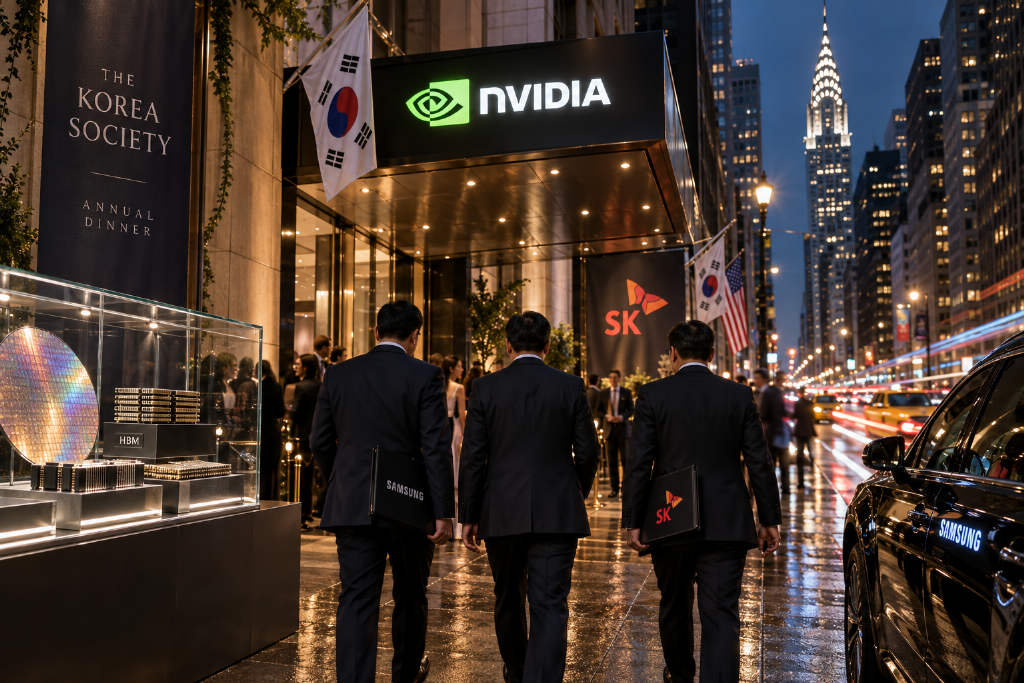
Nvidia2026-09-28 07:45:19Nvidia CEO Jensen Huang to meet Samsung and SK chiefs again in New York on Sept. 28ChainCatcher reported that Nvidia CEO Jensen Huang is set to meet Samsung Electronics Chairman Lee Jae-yong and SK Group Chairman Chey Tae-won again in New York on Sept. 28 local time, roughly two months after the three last met in San Francisco in July. According to business sources cited on Sept. 27, Lee and Chey plan to attend the Korea Society’s annual gala in New York at 6 p.m. that evening, where Huang will appear as this year’s recipient of the Van Fleet Award. The report said Samsung Electronics is pushing forward related cooperation with Nvidia. Industry attention is focused on high-bandwidth memory, while the report also said Samsung Electronics Device Solutions Vice Chairman Jun Young-hyun met Huang during his June visit to South Korea to discuss long-term cooperation on next-generation HBM products including HBM4E and HBM5. The New York meeting may also touch on foundry services and advanced packaging, following June talks on next-generation foundry cooperation.290
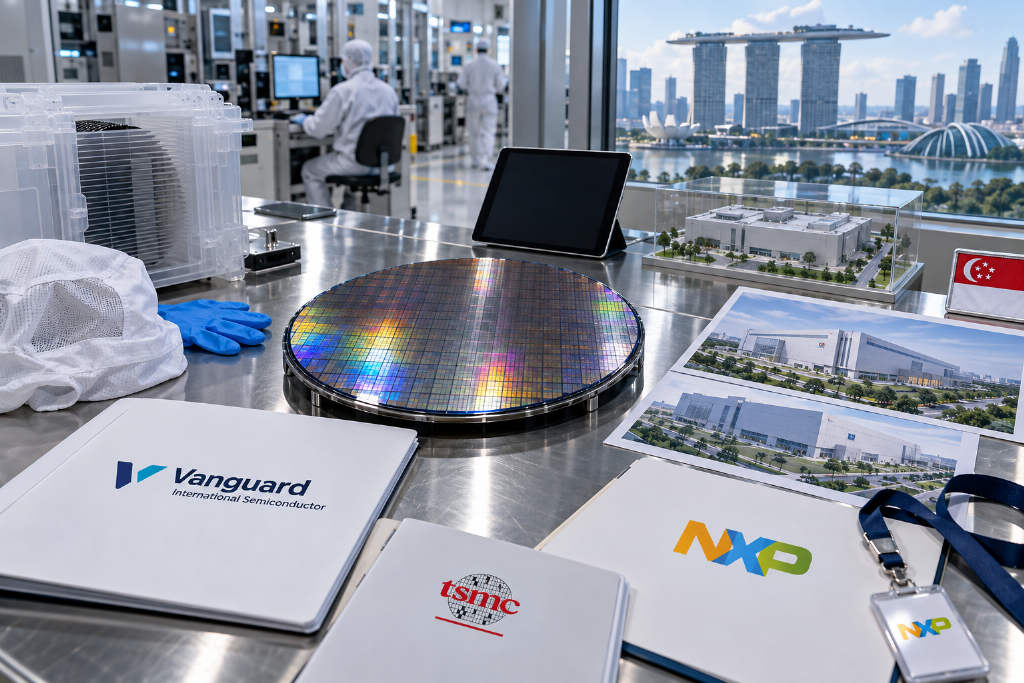
VIS2026-09-28 06:56:56VIS and NXP open Singapore 12-inch fab as VSMC studies a second plantVanguard International Semiconductor (VIS) and NXP Semiconductors have opened VSMC’s first 12-inch wafer fab in Singapore, marking a major step for the joint venture and for VIS’s move from 8-inch into 12-inch foundry manufacturing. The plant officially held its opening ceremony on Sept. 28, 2026, after roughly 22 months of construction from groundbreaking in December 2024. Total investment in the first fab reached $7.8 billion, with planned monthly capacity of 44,000 wafers. The project also highlights the overseas deployment of Taiwan’s semiconductor factory engineering ecosystem. Taiwan Semiconductor Manufacturing Co. (TSMC), a shareholder in VIS, provided technology licensing and facility manpower support, while Taiwanese engineering suppliers including Marketech International, CTCI Advanced Systems, United Integrated Services, and L&K Engineering participated in automation, facility systems, specialty gas and chemical supply, cleanroom work, and electromechanical contracting. According to Bloomberg, the fab will focus on specialty process technologies from 40 nm to 130 nm, covering mixed-signal, power management, and embedded flash applications for automotive and industrial uses. NXP CEO Rafael Sotomayor said the investment is the company’s largest since its 2015 acquisition of Freescale and is intended to support hardware demand tied to "Physical AI" at the edge, including automotive and infrastructure applications. VIS Chairman Fang Leuh said chip shortages are likely to persist for some time and confirmed the company is evaluating the possibility of building a second fab in Singapore, though no capital spending figure has been disclosed.290
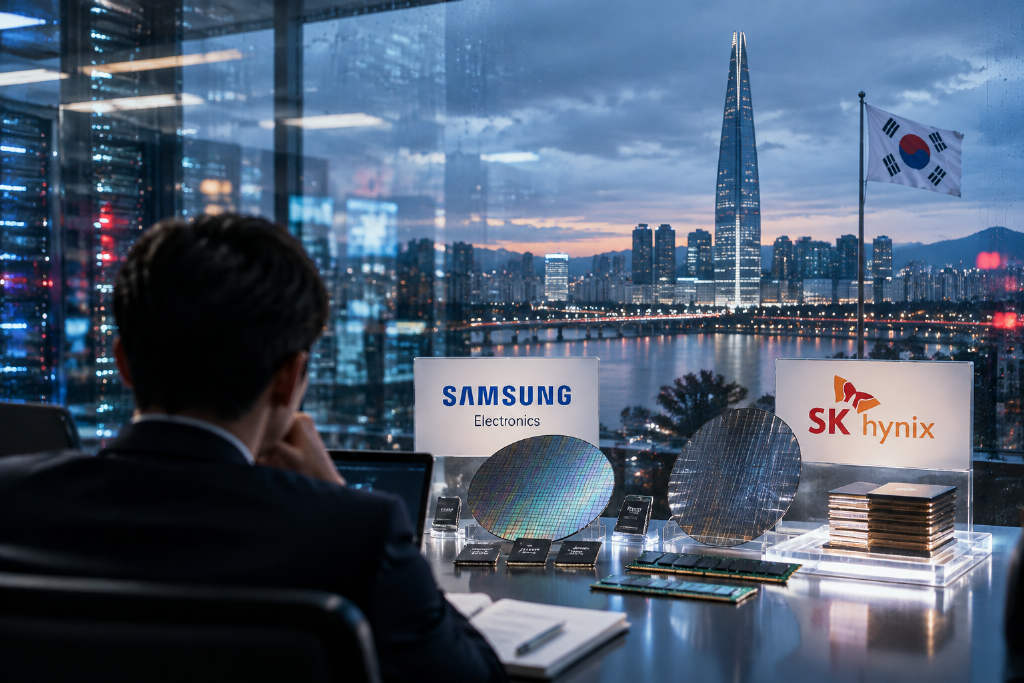
Samsung Elect2026-09-28 05:17:24Samsung Electronics and SK Hynix face a high bar as Q3 earnings test the durability of the AI tradeSamsung Electronics and SK Hynix are heading into third-quarter earnings season with expectations running high, and investors are treating the results as a key read on whether the global AI-driven semiconductor rally still has room to run. Consensus figures cited by Seoul Economic Daily, based on FnGuide data, point to strong revenue and operating profit for both companies, though analyst estimates have been trimmed over the past three months. The reported revisions were linked mainly to a stronger Korean won, which reduced the value of dollar-denominated sales, rather than to weakening memory demand itself. Beyond the headline numbers, the market is watching several deeper questions: whether DRAM and NAND price gains can hold, how much long-term agreements are stabilizing or capping margins, whether HBM4 is beginning to turn into meaningful profit, and whether Samsung’s foundry business can return to the black while its device division copes with rising component costs. The upcoming reports are being watched not just for near-term valuation moves, but for what they say about the staying power of this semiconductor cycle.270
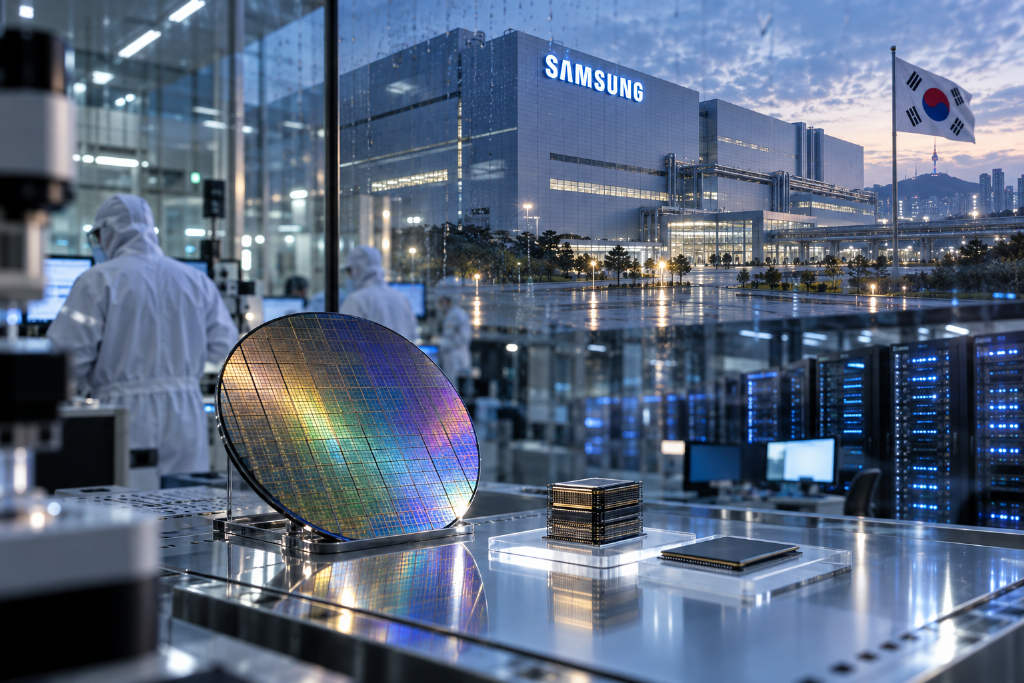
Samsung Elect2026-09-22 06:50:51Samsung weighs 4 nm foundry expansion as HBM4 base chip demand risesSamsung Electronics is reviewing an expansion of its 4 nm foundry capacity as demand for HBM4 base chips increases, according to a Sept. 21 report by Money Today cited by ChainCatcher. The company is pushing ahead with advanced-process capacity growth as the HBM market expands. Samsung’s HBM4 combines a 10 nm-class sixth-generation (1c) DRAM core die with a 4 nm logic base die that handles high-speed data exchange with GPUs and other AI accelerators. Unlike SK hynix, which uses TSMC’s 12 nm process for its HBM4 base chip, Samsung is using its own 4 nm node. The report said Samsung’s relevant production line is already running at full capacity and has taken orders tied to Nvidia Groq 3 LPUs. Samsung has also recently raised prices for new 4 nm orders and HBM4 base chips. The company expects third-quarter HBM4 revenue to rise by more than three times from the previous quarter, with HBM4 accounting for well above 60% of HBM revenue in the second half. It is also evaluating a new 2 nm line for HBM5.470
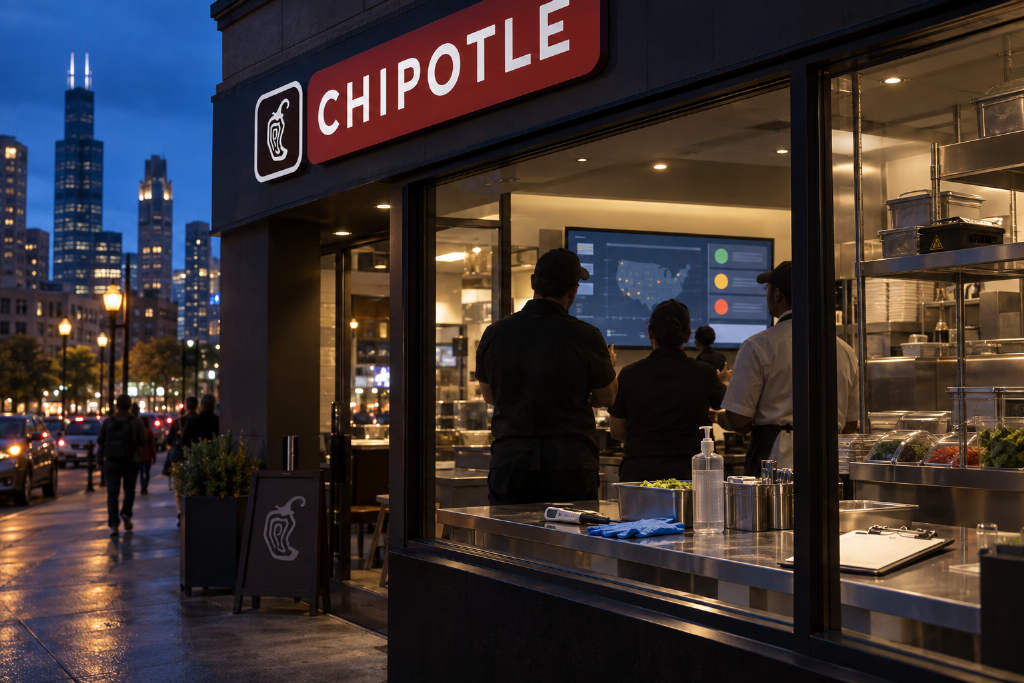
Chipotle2026-09-17 20:46:03Chipotle pilots Palantir-built food safety platform that scores restaurant riskChipotle has confirmed it is piloting a new food safety risk management platform built on Palantir Foundry, according to reporting cited by Decrypt. The system is said to combine health department inspection scores, pest sightings, and employee illness reports to generate an internal risk score for each restaurant. Laurie Schalow, Chipotle’s chief corporate affairs and food safety officer, told Wired the goal is to create a more consistent and centralized view of food safety risk across the chain, but she did not say when the platform will launch, how many stores are using it, whether any consumer data is involved, or whether customers will ever be able to see a store’s score. The partnership has drawn attention because Palantir, co-founded by Peter Thiel in 2003, received early backing in 2005 from In-Q-Tel, the CIA’s venture arm, and the agency became one of its first customers. Decrypt also noted Palantir’s broader government work, including federal contracts, a $175 million U.S. Army AI targeting deal, and work tied to Immigration and Customs Enforcement. Chipotle has not disclosed whether employee illness data in the platform can identify individuals or whether that information is anonymized.460
TSMC2026-09-11 05:30:27TrendForce says TSMC reached 72.5% foundry share as SMIC narrowed the gap with SamsungThe world’s top 10 pure-play foundries posted combined second-quarter revenue of nearly $53.49 billion, up 11.5% from the prior quarter and setting a new high, according to TrendForce research released on Sept. 9. The report said demand for advanced nodes used in AI and HPC processors remained tight, while orders for PMICs, power discrete components and other AI-adjacent chips also increased. Pull-in orders across TV, PC and notebook supply chains added pressure to some mature-node capacity. Taiwan Semiconductor Manufacturing Co. (TSMC) stayed far ahead of the field, reporting close to $40.2 billion in second-quarter revenue, up 12.1% quarter over quarter, with market share rising to 72.5%. TrendForce said strong AI server GPU and XPU demand kept TSMC’s 5/4nm and 3nm lines fully loaded, early stocking for the new iPhone helped sales, and 2nm contributed revenue for the first time. Samsung Foundry remained No. 2 with $3.26 billion in revenue, up 1.8%, though its market share slipped to 5.9%. Semiconductor Manufacturing International Corp. (SMIC) ranked third after revenue climbed 20% to more than $3 billion, lifting its share to 5.4% and bringing it closer to Samsung.600
Samsung Elect2026-09-11 05:26:42Samsung’s 2 nm yield climbs past 70%, but Qualcomm foundry order remains stalled over pricingSamsung Electronics has improved the yield of its 2 nm gate-all-around process to above 70%, up from below 50% at the start of the year, according to a Sept. 11 report cited by South Korean media. Its 4 nm yield was reported at above 80%. Even so, a potential foundry deal with Qualcomm for a 2 nm application processor has been delayed because the two sides have not agreed on pricing, with local outlet The Bell saying mass production within this year is now difficult. KB Securities said the stabilization of advanced-node yields could help Samsung’s foundry business return to profit from the third quarter of 2026. The report also linked the 2 nm improvement to Samsung’s competitiveness in HBM base dies. Separately, KB Securities projected Samsung’s HBM market share to rise from 33% in the second quarter to around 40% in the fourth quarter, with third-quarter HBM4 revenue expected to grow by more than three times quarter over quarter. Samsung is already mass-producing HBM4, offering seventh-generation HBM4E samples, and extending its roadmap to HBM5 and zHBM.1250
Qualcomm2026-09-11 03:27:57Qualcomm and Samsung Foundry Talks Reportedly Stall Over Pricing DisputeTalks between Qualcomm and Samsung Electronics’ foundry unit over a new semiconductor contract manufacturing agreement have reportedly stalled because the two sides remain apart on pricing, according to a Sept. 11 update cited by BlockBeats. Qualcomm is said to be seeking lower prices, while Samsung has not accepted those terms. People identified in the report as industry sources said an application processor, or AP, project that was expected to use Samsung Foundry’s 2nm process for Qualcomm may now be pushed back to next year. With pricing discussions still unresolved, whether mass production can begin within this year has also become uncertain. The report did not provide further details on the proposed pricing terms or a revised production timetable.840