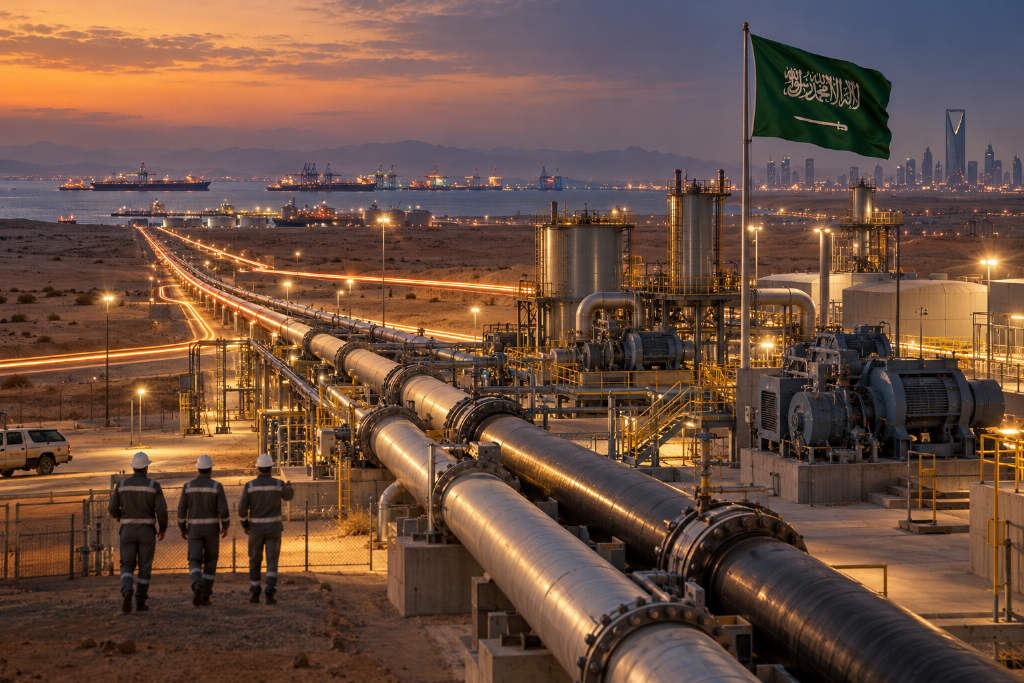
Saudi Arabia plans to raise overland oil export capacity bypassing Hormuz to 10 million barrels a day

Saudi Arabia plans to raise overland oil export capacity bypassing Hormuz to 10 million barrels a day

N
News Editor
2026-10-12 12:21:11
Saudi Energy Minister Abdulaziz bin Salman said the kingdom plans to increase its overland crude transport capacity that bypasses the Strait of Hormuz to 10 million barrels per day within the next two to three years. The move is aimed at reducing reliance on Gulf shipping routes. Saudi Arabia’s East-West pipeline, which links eastern oil fields to the Red Sea port of Yanbu, is currently designed to carry 7 million barrels per day. As of early October, actual throughput had risen to 5.8 million barrels per day, with about 4.5 million barrels exported and the rest supplied to western refineries. Saudi Arabia is also upgrading pump stations along the route and studying temporary conversion of existing gas pipelines for crude transport. Those adjustments could add about 1.2 million barrels per day, with potential capacity rising to 3 million barrels per day if more investment is made in pump stations and compressors. The kingdom is also evaluating dual-use oil and gas pipeline options to switch transport use based on geopolitical risks and seasonal demand.

According to BlockBeats, Saudi Energy Minister Abdulaziz bin Salman said on Oct. 12 that Saudi Arabia plans to raise its overland oil transport capacity that bypasses the Strait of Hormuz to 10 million barrels per day within the next two to three years, in a bid to reduce reliance on shipping routes through the Gulf.

The kingdom’s East-West pipeline currently connects eastern oil fields with the Red Sea port of Yanbu and has a designed capacity of 7 million barrels per day. As of early October, actual daily throughput on the line had climbed to 5.8 million barrels, including about 4.5 million barrels for export, while the remainder was supplied to refineries in western Saudi Arabia.

Saudi Arabia is upgrading pump stations along the route to lift transport capacity. It is also planning a temporary conversion of existing natural gas pipelines for crude oil transport. After those pipeline adjustments, the system could handle about 1.2 million barrels per day. If additional investment is made in pump stations and compressors, potential capacity could rise to 3 million barrels per day.

Saudi officials are also assessing a dual-use oil and gas pipeline network that could switch transport functions based on geopolitical risks and seasonal demand. The broader plan is intended to address possible disruption to shipping through the Strait of Hormuz and security risks on Red Sea routes, while building a more flexible crude export system. Still, the 10 million barrel-per-day overland transport target remains in the planning and construction stage, and whether it is ultimately achieved will depend on pipeline upgrades and related infrastructure investment.

This article was originally published by Bit.Fan. For more cryptocurrency news and market insights, visit www.bit.fan.
100

Disclaimer:

The market information, project data, and third-party content displayed on this platform are for industry information sharing only and do not constitute any form of investment advice or return commitment.

Cryptocurrency trading carries high risks. Users should fully assess their risk tolerance and make independent decisions. All profits, losses, and legal responsibilities are borne by the users themselves.