
Public token sales may be getting a legal route back in the United States.

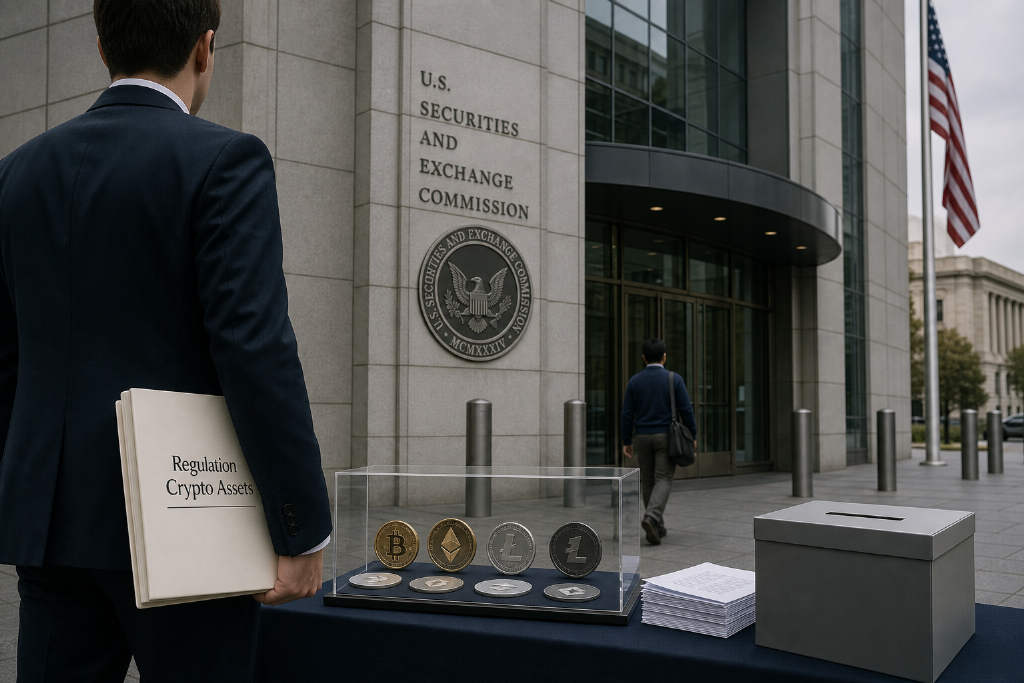
On Aug. 18, the U.S. Securities and Exchange Commission released a draft proposal titled Regulation Crypto Assets. Under the proposal, early-stage projects could raise up to $5 million over as long as four years, while larger projects could raise $20 million or $75 million within a 12-month period. The framework would let projects sell tokens to investors to fund network development without completing a full securities registration process.
That may sound like a return of ICO fundraising, but the SEC is proposing more than a set of offering caps. The draft lays out a lifecycle for tokens, from fundraising to what it describes as a kind of exit from the investment relationship. A project could sell tokens to raise money, but it would need to explain what the funds are for. If the team has not completed the key work it promised, the token would remain tied to regulatory obligations linked to investment terms. Only after those commitments are fulfilled could the token have a chance to move beyond that relationship.
The center of the proposal is not the token by itself. It is the promise attached to the token sale. Developers would need to keep working until the token can effectively “graduate,” and only then would a path open for “dev sell.”
Two exemption tracks and three fundraising caps
The draft gives issuers two main options.
The first is aimed at startups. If a project needs $3 million to build, the more common choices in the past were to raise from venture capital, restrict who could buy, issue tokens outside the United States, or absorb the cost of a securities registration. Under the new proposal, that project could use a startup exemption, raise no more than $5 million over as long as four years, and file with the SEC at the beginning and end of the fundraising period.
The second option is for projects with larger capital needs. One tier would allow up to $20 million in any 12-month period, and a higher tier would allow as much as $75 million. Unlike the $5 million startup exemption, this path could be used more than once, but the requirements are tighter.
Issuers would not be able to sell tokens on the strength of a white paper alone. Both exemptions require disclosure on how the network will be governed, how the product will be developed, what security risks exist in the code, the company’s financial condition, and who is managing the project. The two larger fundraising tiers would also require financial statements and ongoing updates, while the $75 million tier would require an audit.
The SEC did not remove the existing guardrails. Issuers and insiders with serious prior violations would be barred from using the exemptions. Anti-fraud and anti-manipulation obligations would remain in force. If a project also relies on other securities exemptions, it would still need to follow current integration rules for combining offerings.
How a token can “graduate”
The most intricate and most important part of the draft is its decision to separate the token from the investment relationship built around it.
When a project sells tokens to fund a network, buyers are often not receiving only a digital asset that is already usable. They are also counting on the team to finish the product, attract users, increase demand for the token, and create value through those efforts. The SEC refers to that reliance on future managerial work as “investment terms.”
In this framework, the token itself may be only a digital asset. What matters is how it was sold and what the issuer promised to buyers. Those promises can wrap the token in a layer of investment terms. The SEC’s actual focus is that relationship between the issuer and the purchaser.
The proposal also creates an exit route. A token could enter a safe harbor only after the issuer has completed, or permanently stopped, all promised key managerial work, has made no new related promises, and has submitted a public certification and analytical explanation to the SEC.
That is where the idea of “graduation” comes in.
A project may promise to build when it sells tokens into the market. Once the network is built and the key work is done, and once buyers are no longer relying on the team to deliver those earlier promises, the token may “graduate” and the issuer may step out of that stage of the regulatory relationship.
The draft shifts the question away from decentralization
In the past, market participants often asked whether a network had become sufficiently decentralized to decide when a token might no longer be constrained by securities law. If a foundation, development company, or founding team was still visibly active, many took that as a sign that the token still depended on a central actor.
The SEC’s draft asks a different question: what promises were used to sell the token, and have those promises now been completed?

The distinction becomes clear through two examples.
Project A sells tokens after telling investors that the team will build a mainnet, launch transfer and staking functions, and then hand the network to decentralized validators. Later, the mainnet is live and the features work, but validators are still controlled by the team. Because decentralizing the network was itself part of the fundraising promise, the token still cannot “graduate.”
Project B sells tokens after promising only to build a functioning network. It does not say the team must disappear or that the network must reach a particular level of decentralization. Once the network is live and usable, the team may go on fixing bugs, shipping updates, funding developers, and promoting the product. In the SEC’s framing, that kind of ongoing maintenance is not part of the original investment terms. The product investors were waiting for has already been delivered, and the token’s value may begin to come more from utility, network activity, and market supply and demand.
The key issue for the SEC is whether the market is still waiting for the team to complete the promises made during the token sale. The continued presence of a core team is no longer the single measuring stick.
The core team may remain. Unfinished promises may not.
Why teams may choose to say less
This promise-based test could reshape how crypto projects talk about themselves in public.
Corporate securities lawyer Gabriel Shapiro argued that the SEC is tying a token’s ability to move beyond investment terms to the issuer’s public commitments. That creates an incentive for teams to promise less, because fewer promises mean fewer items that must later be proven complete before a token can “graduate.”
In that setting, a roadmap is no longer just a marketing document. If a project promises a mainnet launch, revenue growth, decentralization, or a specific feature set, it will eventually face the same question: has that work actually been finished? The more expansive the story at the fundraising stage, the harder it may be to exit the relationship after TGE.
The draft also introduces a fresh tension. Buyers need enough information to judge whether a project is worth backing, yet issuers may have reason to keep commitments narrow so they can reach the safe harbor sooner. Too little disclosure leaves investors without a clear picture of risk. Too many promises can make graduation much harder.
Airdrops and points campaigns are part of the discussion too
The proposal would also affect how projects design airdrops and points programs.
One scenario is a retrospective airdrop. A project does not promise tokens in advance and instead rewards early users after the fact. Recipients do not pay money, provide services, or take on post-announcement trading or task requirements for that distribution. The draft says that kind of non-security crypto asset airdrop may fall within ground the SEC has already explained before.
The other scenario is a pre-announced points campaign. A project tells users in advance that trading, buying a particular asset, purchasing a service, or completing tasks can earn future tokens. Participants are contributing money, services, or action. That structure is more likely to create investment terms and would count toward the $5 million ICO exemption cap.
That is why some market participants have linked the draft to Hyperliquid’s still-unconfirmed Season 3 airdrop. If a project rewards past behavior only after the fact, the legal relationship is much simpler. If it announces points rules in advance and uses future tokens to drive trading volume, the campaign takes on extra regulatory weight.
The information available today does not show that Hyperliquid knew in advance where SEC policy was heading, and that connection remains market speculation. More importantly, the SEC itself is still asking for comment. Questions such as how to value airdropped tokens and whether the startup exemption needs special rules have not been settled.
Still a draft, with public comments to come
Regulation Crypto Assets is still only a proposal. The SEC’s three current commissioners all voted in favor, but the rule must still go through a public comment process.
The old version of ICO fundraising — “my project is cool, send me money” — is not what this proposal brings back. Under the draft, how much a project can raise would be capped by the exemption tier it uses. Whether a token can “graduate” would depend on what the team told the market at the start, and what it later actually finished.