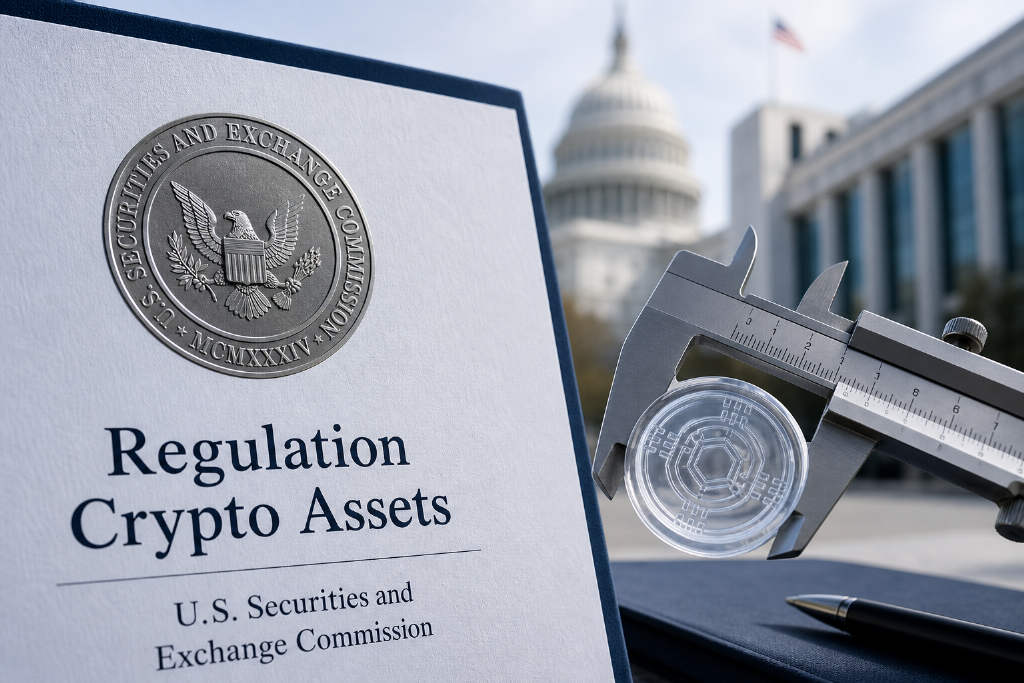
Meng Yan2026-09-10 11:36:44Meng Yan breaks down SEC crypto asset proposal in 10-point Q&AMeng Yan published a 10-question explainer on the U.S. Securities and Exchange Commission’s proposed Regulation Crypto Assets framework, focusing on where the proposal stands, how fundraising exemptions would work, and what it could mean for token financing. He said the proposal remains in the public comment stage, which runs through Oct. 20, and described the rulemaking path as public comment, adoption of a final rule, formal publication and statutory review, followed by automatic effectiveness 30 days later. He added that, if the process proceeds smoothly, the rule could take effect in the first half of 2027, though it could also be delayed indefinitely. The Q&A also covered rolling 12-month fundraising caps, investor exit rights, participation by non-accredited investors, and the proposal’s relationship with the Clarity Act. Meng said Tier 1 projects would face a $20 million cap every 12 months, while Tier 2 projects would face a $75 million cap. He described the proposal as highly significant and said it would amount to permitting compliant ICOs, while warning that if the Clarity Act does not pass, the regulatory framework may remain unsettled and policy reversals cannot be ruled out.720
SEC2026-08-28 12:03:47SEC moves to reopen ICO fundraising in the U.S., but demand may be the harder problemThe U.S. Securities and Exchange Commission has proposed reopening public token sales to American investors, a sharp turn from the crackdown that followed the 2017 ICO boom. Under the proposal released earlier this month, crypto startups could raise up to $5 million a year without completing full SEC registration, while larger projects could raise as much as $75 million annually. The change is meant to give legitimate crypto teams a legal path to raise capital from the public. The obstacle, as the analysis argues, is that the market that once powered ICOs no longer exists in the same form. Investor attention has narrowed around Bitcoin and a small group of major tokens, while faster-moving speculative capital has shifted toward perpetual futures, prediction markets, and even some artificial intelligence-related stocks. Venture investors have also cooled on token deals, with activity falling sharply since 2025 and many firms broadening their focus into AI, robotics, and other frontier technologies. Backers of the SEC proposal say it still matters because it gives serious builders a workable route to launch token networks and fund development in the U.S. Critics and cautious supporters alike note that legal issuance does not create investment demand on its own. As GSR analyst Carlos Guzman put it, the era when a white paper and an idea were enough to raise money is over.1000
SEC2026-08-28 03:48:23Bloomberg: SEC crypto fundraising proposal seeks to revive the ICO modelThe U.S. Securities and Exchange Commission has proposed a new framework for crypto asset fundraising that, according to Bloomberg, is meant to reopen a path for ICO-style issuance. Under the proposal, startups would be allowed to raise as much as $5 million over four years, while larger projects could raise up to $75 million annually without completing full SEC registration. The plan marks a notable shift in how token fundraising could be handled under U.S. securities rules. Even so, the market this proposal would enter looks very different from the one that fueled the 2018 ICO boom. ICO fundraising reached $3 billion in January 2018 alone, but venture-backed token trading activity has since fallen sharply. At the same time, speculative capital has moved into perpetual futures, prediction markets and AI-related stocks. Industry figures quoted by Bloomberg were cautious about the proposal’s practical impact. Dragonfly partner Tom Schmidt said it was better than nothing, though he added it would have been more useful a few years ago. Pantera Capital partner Cosmo Jiang argued that the previous situation, where meme coins were legal but tokens with real utility were not, ran against how a capitalist system should work. One analyst also said the ICO of 2026 will not resemble the ICO of 2018.990
SEC2026-08-28 02:30:45SEC proposal could reopen public token sales, but ICO demand has faded, Bloomberg reportsThe U.S. Securities and Exchange Commission is considering a framework that would reopen public token sales to American investors, according to Bloomberg. Under the proposal released this month, crypto startups could raise up to $5 million, while larger projects could raise as much as $75 million a year without going through a full SEC registration process. The framework would still require issuer disclosures and could carry meaningful compliance costs, while rules for secondary trading after issuance remain complicated. The proposal also suggests that an investment contract attached to a token would not necessarily follow the token forever. Instead, it could terminate once the issuer has completed, or permanently stopped, the managerial efforts promised to investors. Even so, market appetite appears weaker than it was during the ICO boom. Speculative capital is now concentrated more heavily in Bitcoin, a small group of major tokens, perpetual futures, prediction markets, and AI-related equities. Crypto venture participation in token financings has also dropped, and some large venture firms have widened their focus to AI, robotics, and other frontier technologies.980
SEC2026-08-26 13:50:56SEC crypto asset proposal seen as unlikely to spark another ICO boomThe U.S. Securities and Exchange Commission’s proposed "Regulation Crypto Assets," released on Aug. 18, would create two exemptions for certain investment contracts tied to crypto assets, opening defined fundraising channels for token issuers in the United States. One exemption would let startups raise up to $5 million in a single offering over four years, while another would allow eligible issuers to raise as much as $75 million in any 12-month period, with the possibility of conducting separate offerings in later years. Lawyers and regulatory specialists quoted in the report said the framework is more structured than the market environment seen during the 2017 ICO cycle. Winston & Strawn partner Drew Hinkes said a project could theoretically raise $75 million every 12 months if each round is genuinely independent. Sidley fintech and blockchain practice head Lilya Tessler, however, said follow-on fundraising would not be automatic: issuers would need to refile offering materials, undergo SEC staff review, and continue filing annual and semiannual reports. The proposal would also cap participation by non-accredited investors at 10% of the greater of annual income or net worth. Duke University financial regulation expert Lee Reiners said the limited first-round cap could make early token allocations more attractive, but he does not expect a return to the ICO frenzy of 2017, noting that as many as 90% of projects that raised through ICOs from 2017 to 2019 ultimately failed. The SEC estimates about 130 offerings a year would use the two exemptions, while roughly 475 issuers could rely on a broader investment contract safe harbor.910
SEC2026-08-26 13:52:58SEC proposes crypto asset rule with $5 million startup cap and $75 million annual exemptionThe U.S. Securities and Exchange Commission has proposed a new "Regulation Crypto Assets" framework that would create two exemptions for certain investment contracts tied to crypto assets. Under the proposal, startups would be allowed to raise up to $5 million in a one-time offering over four years, while eligible issuers could raise up to $75 million during any 12-month period and potentially conduct additional rounds in later years. Legal and regulatory specialists quoted by Cointelegraph said the structure could offer token issuers a clearer fundraising route in the United States, though it would not amount to automatic approval for repeat offerings. Issuers seeking follow-on raises would still need to file updated offering materials, undergo SEC staff review, and continue periodic reporting. The proposal also places limits on non-accredited investors, capping purchases at 10% of the higher of income or net worth, while leaving open unresolved questions around whether some secondary-market token transfers could still be treated as securities transactions.880
SEC2026-08-26 13:30:00SEC’s proposed crypto asset rules could ease token fundraising, but not revive the 2017 ICO boomThe U.S. Securities and Exchange Commission’s proposed Regulation Crypto Assets framework could open a clearer route for token fundraising in the United States, including an exemption that would allow qualifying issuers to raise up to $75 million in any 12-month period. Lawyers and regulatory observers quoted by Cointelegraph Magazine said that structure could support staged fundraising and make early-round allocations more attractive, especially if projects return to market as their networks mature and valuations rise. Still, the proposal is not widely seen as a trigger for a fresh ICO frenzy. Duke University lecturing fellow Lee Reiners said the setup is unlikely to recreate the speculative conditions of 2017, pointing to investor caution after the last cycle, weak tokenomics in many earlier projects, and the reputational damage left behind. The SEC itself estimates about 130 offerings a year would use the two exemptions, while around 475 issuers could rely on the broader safe harbor for investment contracts. The proposal also leaves a difficult compliance question unresolved: when a token begins trading on the secondary market, it may still carry an investment contract if buyers continue to rely on the issuer’s promises or managerial efforts. That, according to the article, could create fresh legal uncertainty for issuers, exchanges and other trading venues even if primary issuance becomes easier.860
SEC2026-08-21 15:53:26Galaxy Research Head Says SEC Is Proposing Crypto-Only Rules That Could Open a Legal Path for Token Issuance in the U.S.Galaxy research head Alex Thorn said the U.S. Securities and Exchange Commission proposed Regulation Crypto Assets, or Reg Crypto, on Aug. 18. He said the framework is designed specifically for crypto asset issuance and sales, rather than applying stock rules to tokens. The proposal could allow eligible token projects to issue to the public, including non-accredited investors, while also creating a process for token-related investment contracts to end once conditions are met. According to Thorn, the proposal would cover crypto assets that are not securities themselves but were issued or sold as part of an investment contract. He said the framework has four stages: fundraising, disclosure, development, and exit. The fundraising stage includes two new exemption paths, including a startup exemption that would allow up to $5 million over four years and a larger exemption similar to Regulation A that would allow between $20 million and $75 million over 12 months. Issuers would also need to disclose token supply, unlock schedules, minting and burning mechanisms, governance rights, smart contract details, source code, and project progress. Thorn said the proposal is notable because it introduces a “token lifecycle” approach, where a token can begin as part of an investment contract and later exit that status through a defined process. The SEC expects about 475 issuers a year could use the investment contract safe harbor, while about 130 projects are expected to use the new fundraising exemptions. Thorn said the near-term impact may be more about resolving existing regulatory uncertainty than triggering a new wave of token launches. The proposal is still in draft form and faces potential regulatory, state-level, and congressional hurdles.1200