
This article was originally published by Bit.Fan. For more cryptocurrency news and market insights, visit www.bit.fan.
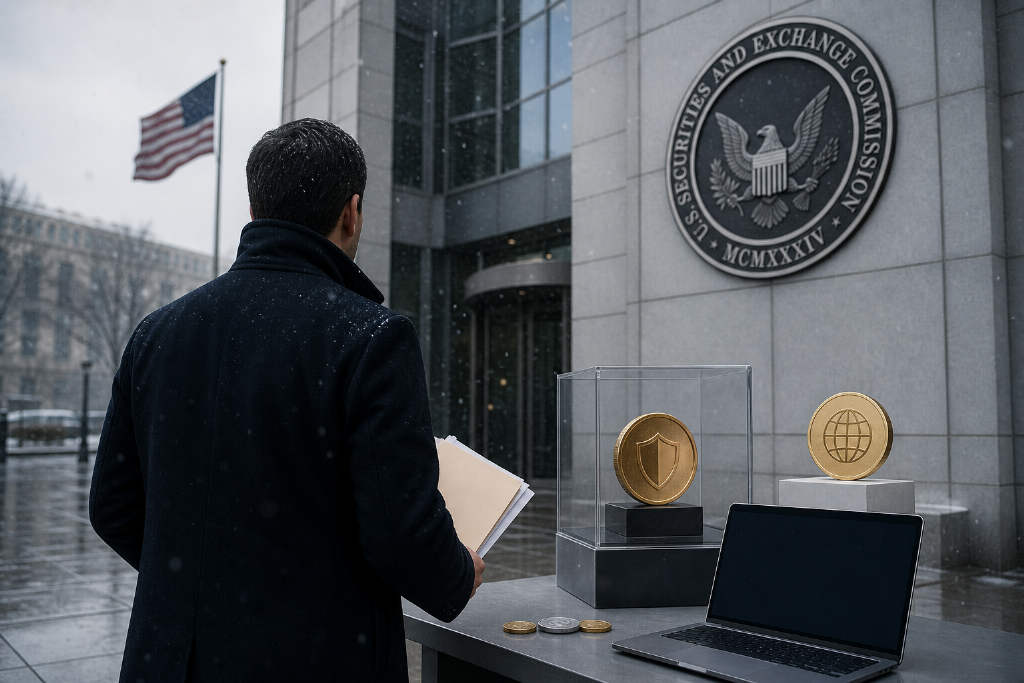
SEC Draft Reopens a Legal Path for Token Fundraising, and Tokens May Now ‘Graduate’
N
News EditorThe U.S. Securities and Exchange Commission released a draft rule, Regulation Crypto Assets, on Aug. 18 that would give token issuers a new legal fundraising route. Startups could raise up to $5 million over as long as four years, while larger projects could raise $20 million or $75 million in 12-month windows under different tiers. The proposal does more than set caps: it ties token fundraising to disclosures on governance, development, security risks, finances and management, and it introduces a “graduation” concept based on whether the issuer has completed the promises made when selling the token.
Under the draft, the SEC would focus on the investment relationship created by the fundraising process rather than on whether a token is “sufficiently decentralized.” Issuers would need to state what the money will be used for, and the token could only move into a safe harbor after the project’s key commitments are fully completed or permanently abandoned, followed by a public certification and analysis filing. Gabriel Shapiro, a corporate securities lawyer, said the framework could push teams to say less and promise less in public.
The proposal could also affect airdrops and points programs. Retrospective airdrops that reward past behavior may fit within the SEC’s earlier guidance, while pre-announced point campaigns that link future tokens to trading, purchases or tasks are more likely to create an investment relationship and count toward the $5 million startup exemption. The rule is still only a draft, and the SEC is seeking public comment.
The U.S. Securities and Exchange Commission has opened a fresh legal path for token fundraising.
On Aug. 18, the SEC released a draft rule called Regulation Crypto Assets. Under the proposal, startups would be allowed to raise up to $5 million over as long as four years. Larger projects would have two higher tiers, allowing them to raise up to $20 million or $75 million within a 12-month period. The projects would not need to complete the full securities registration process in order to sell tokens to investors and fund network development.
But the proposal is not just about fundraising limits. It is built around the idea that a token can move from launch to what the draft calls a kind of “graduation.”
A project may sell tokens to raise money, but it must explain what the funds will be used for. If the team has not completed the key work it promised, the token would remain tied to an investment relationship and still face regulatory obligations. Once those commitments are fulfilled, the token may be able to exit that layer and move into a safe harbor.
The draft gives issuers two routes.
The first is aimed at early-stage teams. A project that needs $3 million to build may previously have had to rely on venture funding, limit buyers and issue tokens outside the U.S., or spend heavily on securities registration. Under the new proposal, it could use a startup exemption, raise up to $5 million over no more than four years, and file notices with the SEC at the start and end of the fundraising period.
The second route is for projects with larger capital needs. The first tier allows up to $20 million in any 12-month period. The second tier allows up to $75 million. Compared with the $5 million startup exemption, these routes can be used repeatedly, but the disclosure burden is heavier.
A white paper alone would not be enough. Both exemptions require disclosure on network governance, product development plans, code security risks, financial condition and the people managing the project. The larger tiers also require financial statements and ongoing updates, and the $75 million tier would require an audit.
The SEC is not removing the existing guardrails. Issuers and insiders with serious violations would still be barred from using the exemptions. Anti-fraud and anti-manipulation rules would still apply. If a project uses other securities exemptions at the same time, it would still need to follow the existing aggregation rules.
The most important part of the draft is how it separates the token itself from the investment relationship built around it.
When a project sells tokens to fund a network, buyers often acquire more than a digital asset that can already be used. They are also expecting the team to deliver the product, attract users, increase token demand and profit from that work. The SEC describes that dependence on future team effort as an investment relationship.
The token can be just a digital asset. But the way it is sold, and the promises made to buyers, may wrap it in that investment layer. That is the relationship the SEC wants to regulate.
To leave that layer behind, an issuer would have to complete, or permanently stop, all of the key managerial efforts it promised, stop making new related promises, and then file a public certification and analysis with the SEC. Only then could the token enter the safe harbor.
That gives tokens a formal notion of “graduation.” A project sells tokens while promising to build. Once the work is done and buyers are no longer waiting on the team to fulfill those promises, the token can graduate and the issuer can step back.
This also changes the old debate over whether a token is “sufficiently decentralized.” The draft asks a different question: what did the project promise when it sold the token, and have those promises now been completed?
Take Project A. It sold tokens and told investors that the team would build the mainnet, launch transfer and staking features, and then hand the network over to decentralized validators. If the mainnet goes live and the features work, but the team still controls the validators, the token cannot graduate, because decentralization itself was part of the fundraising promise.
Project B made a narrower promise. It said only that it would build a working network, without promising that the team would disappear or that the network would reach a specific level of decentralization. Once the network launches and the product becomes usable, later bug fixes, version upgrades, developer grants and product promotion may be normal maintenance rather than part of the original investment relationship. The value of the token begins to come more from real usage, network operation and market supply and demand.
The SEC’s focus is whether the market is still waiting for the team to finish what it promised when the token was sold. The mere fact that a core team still exists is no longer the universal test.
Core teams can stay. Unfinished promises cannot.
That framework will likely affect how projects market themselves.
Gabriel Shapiro, a corporate securities lawyer, said the SEC has linked a token’s ability to move beyond an investment relationship to the issuer’s public commitments. That creates an incentive for teams to say less and promise less. The fewer promises a project makes, the less it has to prove before graduation.
Roadmaps may no longer function as simple marketing copy. If a project promises a mainnet launch, revenue growth, decentralization or a specific feature set, it will later have to answer the same question: were those commitments completed? The more fully a story is told at the fundraising stage, the harder it may be to exit after the token generation event.
There is also a new tension. Buyers need enough information to judge whether a project is worth backing, while issuers have an incentive to keep promises smaller so they can reach the safe harbor sooner. Too little disclosure leaves investors unable to assess risk. Too many promises make graduation difficult.
The proposal could also reshape airdrops and points programs.
In one case, a project does not promise a token in advance and later rewards early users. If recipients did not pay money or provide services for the airdrop, and they do not need to trade or complete tasks after the announcement, the distribution may fit within the SEC’s earlier guidance on non-security crypto asset airdrops.
In another case, a project tells users in advance that trading, buying an asset, purchasing a service or completing tasks will lead to future tokens. Once participants have paid money, provided services or taken actions, the distribution is more likely to create an investment relationship and may count toward the $5 million ICO exemption.
That is why some market participants have linked the draft to Hyperliquid’s still-unconfirmed Season 3 airdrop. If a project only rewards past behavior after the fact, the legal relationship is simpler. If it announces point rules in advance and uses future tokens to attract trading volume, the program could carry additional regulatory baggage.
There is no evidence that Hyperliquid knew about the SEC’s policy direction in advance, and that connection remains speculation. The SEC itself is still seeking comment on how to value airdropped tokens and whether the startup exemption needs special rules.
For now, Regulation Crypto Assets is only a draft. All three sitting SEC commissioners voted in favor, but the rule still needs to go through the public comment process.
The old ICO pitch — “my project is cool, send me money” — is not coming back. In the future, how much a project can raise will be determined by exemption caps, and whether a token can graduate will depend on what the team said to the market and what it actually delivered.
4500
Disclaimer:
The market information, project data, and third-party content displayed on this platform are for industry information sharing only and do not constitute any form of investment advice or return commitment.
Cryptocurrency trading carries high risks. Users should fully assess their risk tolerance and make independent decisions. All profits, losses, and legal responsibilities are borne by the users themselves.