
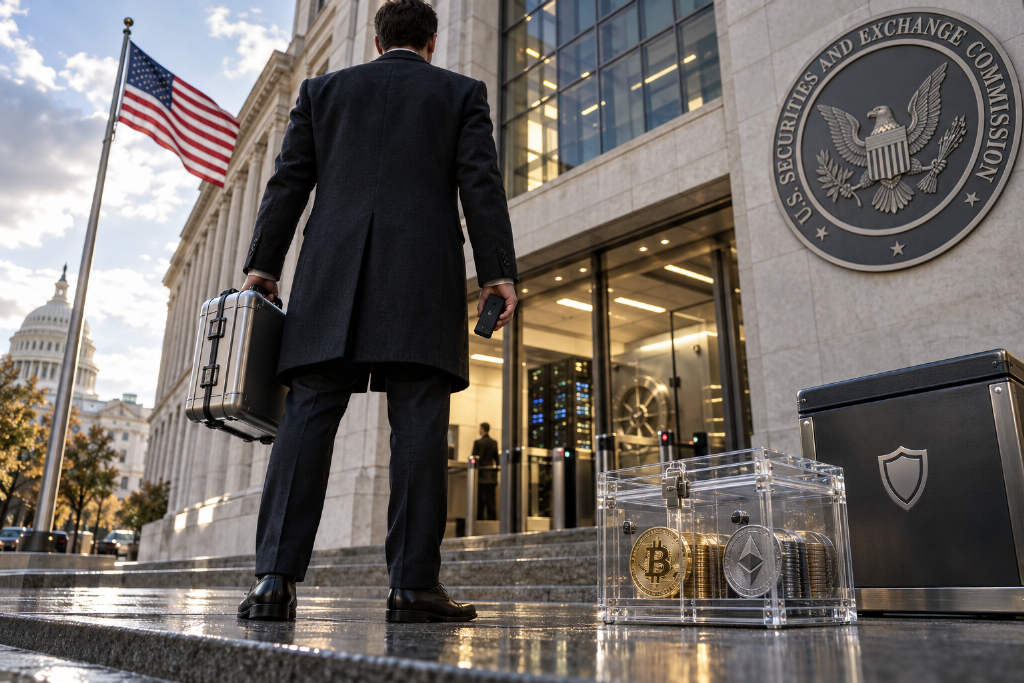
The US Securities and Exchange Commission has proposed easing the rules that govern how investment advisers and funds hold crypto assets, a move that could remove a practical barrier that has kept some firms from offering digital asset investments to clients.
Under the proposal released Thursday, investment advisers would be allowed to hold client crypto assets themselves when no eligible crypto custodian is available, provided they meet a set of conditions. The proposal also would let state trust companies serve as crypto custodians.
SEC Chair Paul Atkins said in a statement, "The crypto asset market has grown from a niche curiosity into a multi-trillion-dollar asset class to which investors actively seek exposure. Unfortunately, our rules and regulations have not kept pace."
The proposal focuses on a basic custody problem in the crypto market. Investment advisers can struggle to find a qualified custodian for a particular token, which limits what they are able to offer clients.
The Digital Chamber had already raised concerns about the shortage of qualified crypto custodians. In a submission to the SEC in May 2025, the group said some advisers had declined token allocations or asked portfolio companies to keep holding them until custody became available.
In a statement on Thursday, SEC Commissioner Hester Peirce compared that uncertainty to a regulatory "roller coaster," saying advisers had been "gritting their teeth and holding on for dear life" while waiting for workable custody rules.
Self-custody would require safeguards
Under the SEC plan, advisers that want to self-custody client crypto would need to determine that no permitted custodian is available for each asset and review that determination every quarter. If a custodian later becomes available, the assets would have to be transferred as soon as reasonably practicable.
Self-custody also would come with requirements tied to private keys, cybersecurity and segregation of each client’s holdings. Any transfer of a self-custodied crypto asset would need approval from at least two authorized individuals.
SEC Commissioner Mark Uyeda said the proposal recognizes that adviser custody creates "an inherent conflict of interest," and added that advisers’ fiduciary duties would continue to apply when they hold clients’ crypto.
The proposal also would let regulated funds keep crypto assets in self-custody with their investment adviser, as long as the adviser satisfies the self-custody requirements and the fund’s board oversees the arrangement.
State trust companies would be another option
Using a state trust company — a financial firm authorized by a US state to safeguard assets on behalf of others — would come with a separate set of conditions.
Those conditions include confirming that the state trust company is authorized by the relevant state authority to provide crypto custody, has reasonable procedures to protect crypto assets from loss, theft or misappropriation, has audited financial statements and internal control reports, and keeps client holdings separate from the company’s own assets.
The proposal package also includes changes to audit, recordkeeping and disclosure requirements. The SEC will accept public comments for 60 days after the proposal is published in the Federal Register.
The latest move adds to a broader effort by the SEC and the Commodity Futures Trading Commission to provide clearer crypto rules under their existing authority after the CLARITY Act failed to advance in the Senate last month. The CFTC has submitted a crypto-market proposal for White House review, while the SEC has opened a path for trading tokenized stocks.