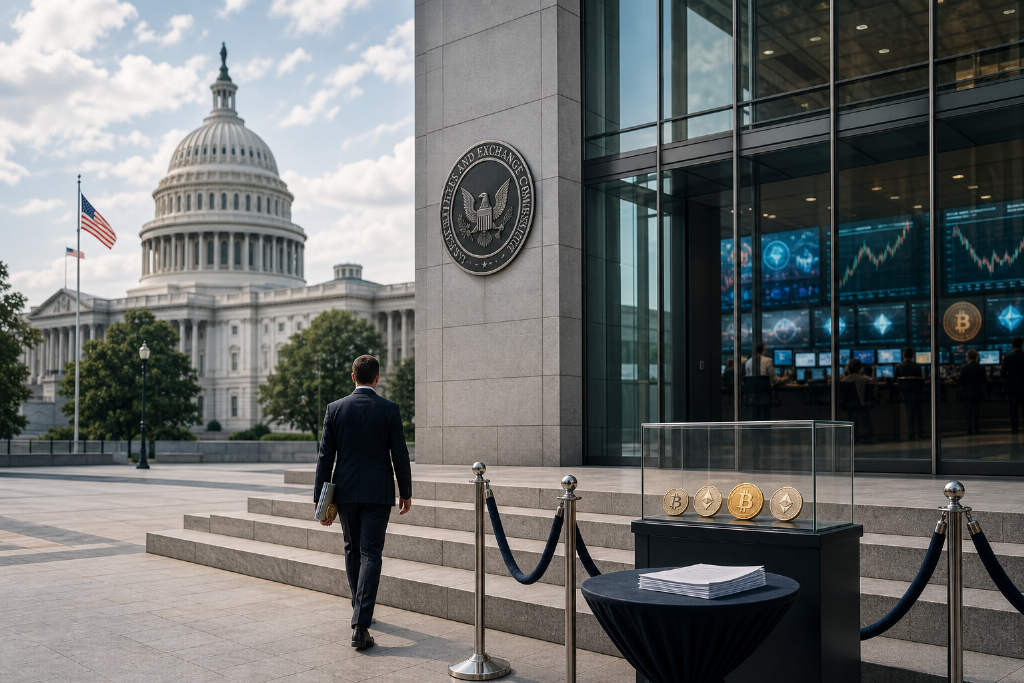
SEC proposal could reopen public token sales, but ICO demand has faded, Bloomberg reports

SEC proposal could reopen public token sales, but ICO demand has faded, Bloomberg reports

N
News Editor
2026-08-28 02:30:45
The U.S. Securities and Exchange Commission is considering a framework that would reopen public token sales to American investors, according to Bloomberg. Under the proposal released this month, crypto startups could raise up to $5 million, while larger projects could raise as much as $75 million a year without going through a full SEC registration process. The framework would still require issuer disclosures and could carry meaningful compliance costs, while rules for secondary trading after issuance remain complicated. The proposal also suggests that an investment contract attached to a token would not necessarily follow the token forever. Instead, it could terminate once the issuer has completed, or permanently stopped, the managerial efforts promised to investors. Even so, market appetite appears weaker than it was during the ICO boom. Speculative capital is now concentrated more heavily in Bitcoin, a small group of major tokens, perpetual futures, prediction markets, and AI-related equities. Crypto venture participation in token financings has also dropped, and some large venture firms have widened their focus to AI, robotics, and other frontier technologies.

Public token sales could be opened again to U.S. investors under a rule proposal released by the U.S. Securities and Exchange Commission this month, according to Bloomberg.

Under the proposal, crypto startups would be allowed to raise up to $5 million, while larger projects could raise as much as $75 million a year without completing a full SEC registration process.

The setup differs from the 2017 ICO boom. Issuers would still need to provide disclosures, and the framework could impose relatively high compliance costs. Rules governing secondary-market trading after issuance also remain complicated.

The proposal would also allow an investment contract attached to a token to terminate once the issuer has completed, or permanently ceased, the managerial efforts it promised to investors, rather than having that contract remain with the token indefinitely.

Market demand, however, has shifted. Speculative capital is now more concentrated in Bitcoin and a handful of major tokens, as well as perpetual futures, prediction markets, and AI-themed stocks. At the same time, the number of token financings backed by crypto venture capital has dropped noticeably, and some large VC firms have expanded their focus into AI, robotics, and other frontier technologies.

For comparison, ICOs raised about $3 billion in a single month at their peak in January 2018.

Tom Schmidt, a general partner at Dragonfly, said the proposal is “obviously better than nothing,” but argued that the more urgent issue is the set of regulatory questions that the CLARITY Act, now stalled in Congress, was supposed to address, rather than fundraising.

Carlos Guzman, a research analyst at GSR, said ICOs in 2026 are not the same as they were in 2018, and that the period when projects could raise money on the strength of a white paper and a vision alone is over.

This article was originally published by Bit.Fan. For more cryptocurrency news and market insights, visit www.bit.fan.
9900

Disclaimer:

The market information, project data, and third-party content displayed on this platform are for industry information sharing only and do not constitute any form of investment advice or return commitment.

Cryptocurrency trading carries high risks. Users should fully assess their risk tolerance and make independent decisions. All profits, losses, and legal responsibilities are borne by the users themselves.