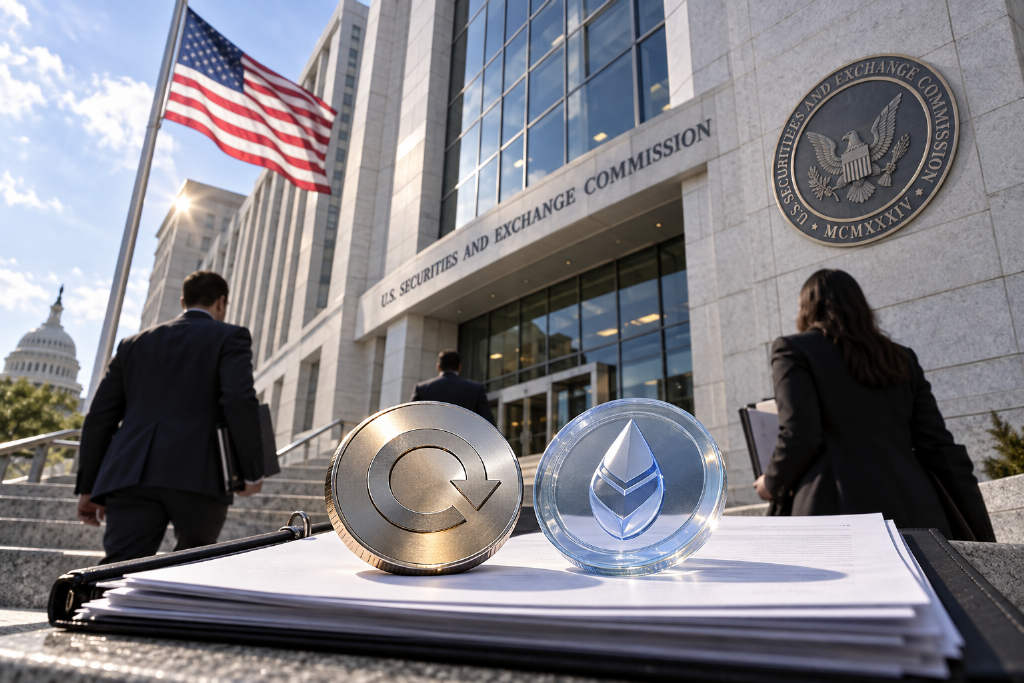
U.S. Securities and Exchange Commission staff have issued new frequently asked questions that address token buybacks and liquid staking, according to TheDefiant. The guidance says qualifying staking receipts fall into non-security categories. It also restates an earlier staff position tied to maintenance and development funding. The article summary available from the source does not provide additional detail on the scope of the FAQ, the specific token structures covered, or any named projects. Even so, the update points to continued staff-level clarification around how certain crypto arrangements are viewed under existing securities frameworks. The report was published by TheDefiant on Sept. 25, 2026.
Staff at the U.S. Securities and Exchange Commission have released new FAQs covering token buybacks and liquid staking, according to TheDefiant. The update says qualifying staking receipts fall into non-security categories. It also reaffirms an earlier staff position on maintenance and development funding.
FAQ focuses on buybacks and liquid staking
TheDefiant reported that the new frequently asked questions address two main areas: token buybacks and liquid staking. In the liquid staking portion, qualifying staking receipts are described as falling outside security classifications.
Earlier funding view is restated
The report also says the FAQs restate a prior SEC staff position related to maintenance and development funding. No additional details were included in the source summary provided here.
This article was originally published by Bit.Fan. For more cryptocurrency news and market insights, visit www.bit.fan. Disclaimer:
The market information, project data, and third-party content displayed on this platform are for industry information sharing only and do not constitute any form of investment advice or return commitment.
Cryptocurrency trading carries high risks. Users should fully assess their risk tolerance and make independent decisions. All profits, losses, and legal responsibilities are borne by the users themselves.